

- Home
- Chairlifts
- Glossary
Glossary
Welcome to the Skilifts.org Glossary, here you'll find a complete A to Z of all the lingo and jargon used in the aerial and surface lift industry, filled with dozens of terms associated with the technology, operation and characteristics of lifts.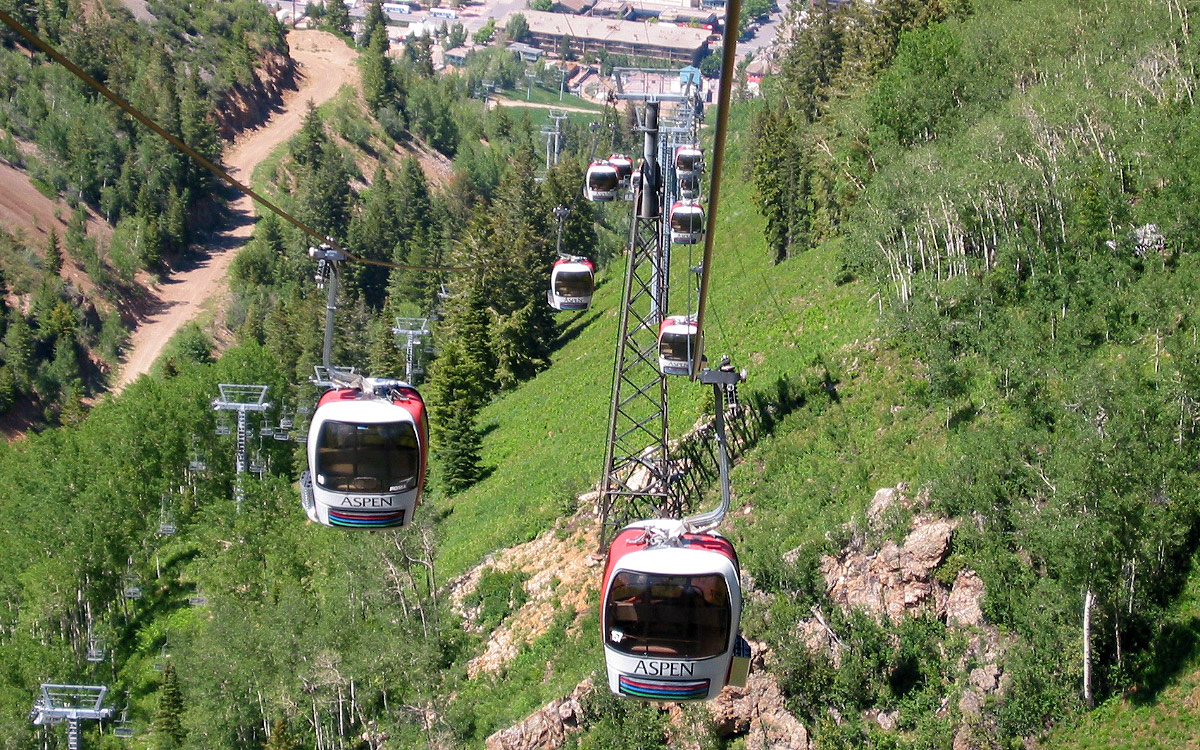
Aerial lifts are part of the ropeway family and inlcude any lift in which persons are transported while suspended off the ground, including . Aerial lifts include ropeways that transport material or passengers while suspended off of the ground
Aerial lifts include chairlifts, gondolas and trams.
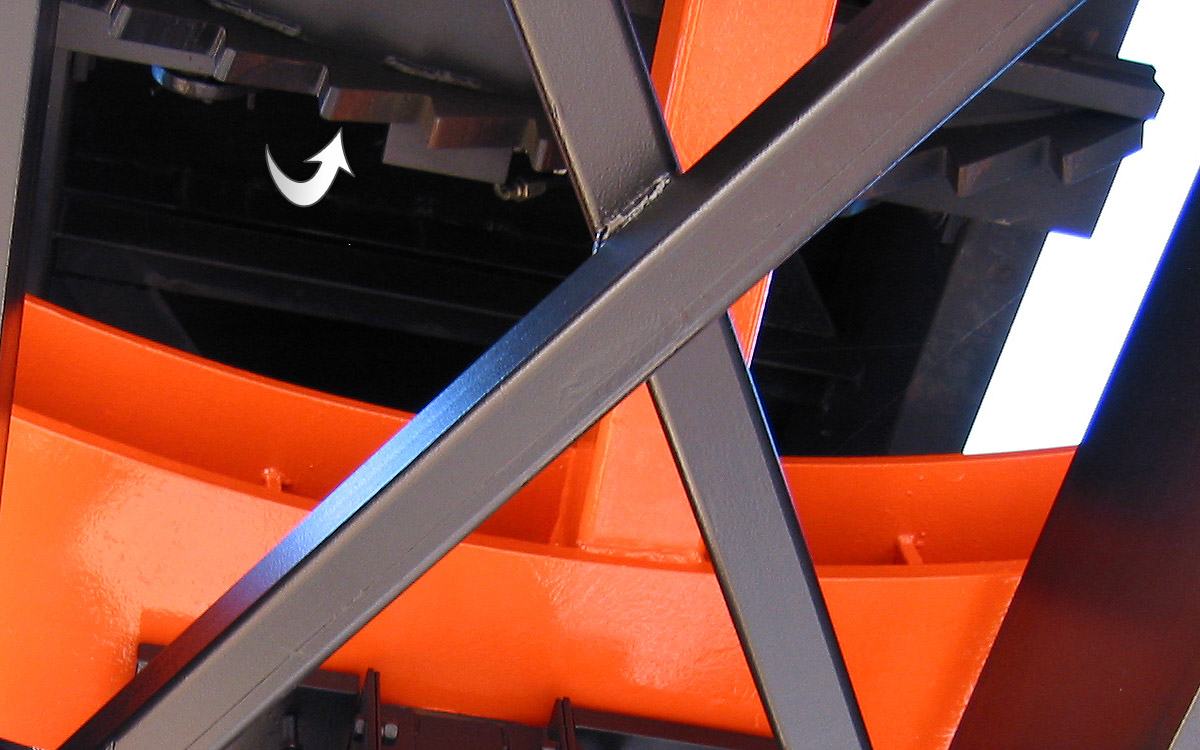
A mechanical system which prevents the weight of passengers on a lift from making the lift roll backwards in the event of engine or gearbox failure. Some modern lifts are designed to run in reverse for special purposes.
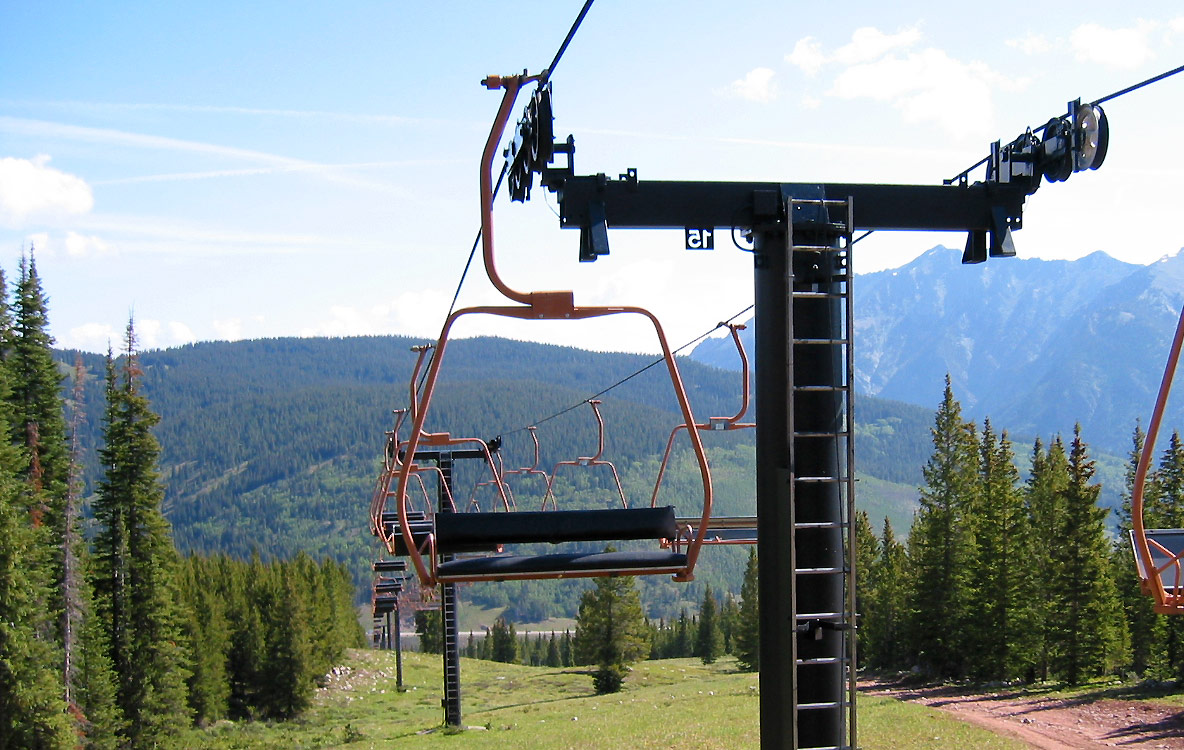
A carrier where the frame wraps around the outside and is connected to the hanger arm from the top. Today, it's the primary carrier design used on new lifts compared to its counterpart, the center pole carrier.
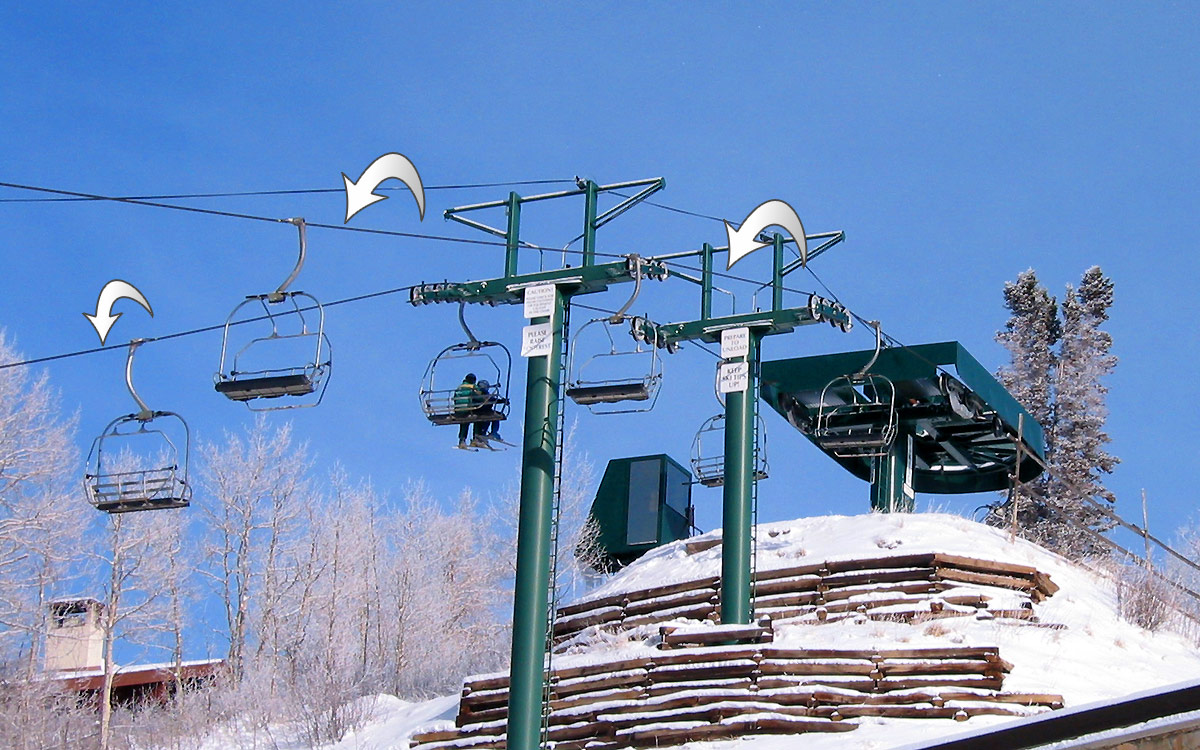
Difference in cord angles between towers. Also called breakover angle.
One of several devices used to detect a cable coming off the sheave wheels, a brittle bar is a metal bar connected to a safety circuit. Should the cable come off the sheave wheel, it strikes a brittle bar, breaking it. The interruption of the circuit causes the lift to stop. They are also used to detect overtravels on counterweights and to check proper positioning of certain grip components while passing through lift terminals. (see also Rope Position Detector).
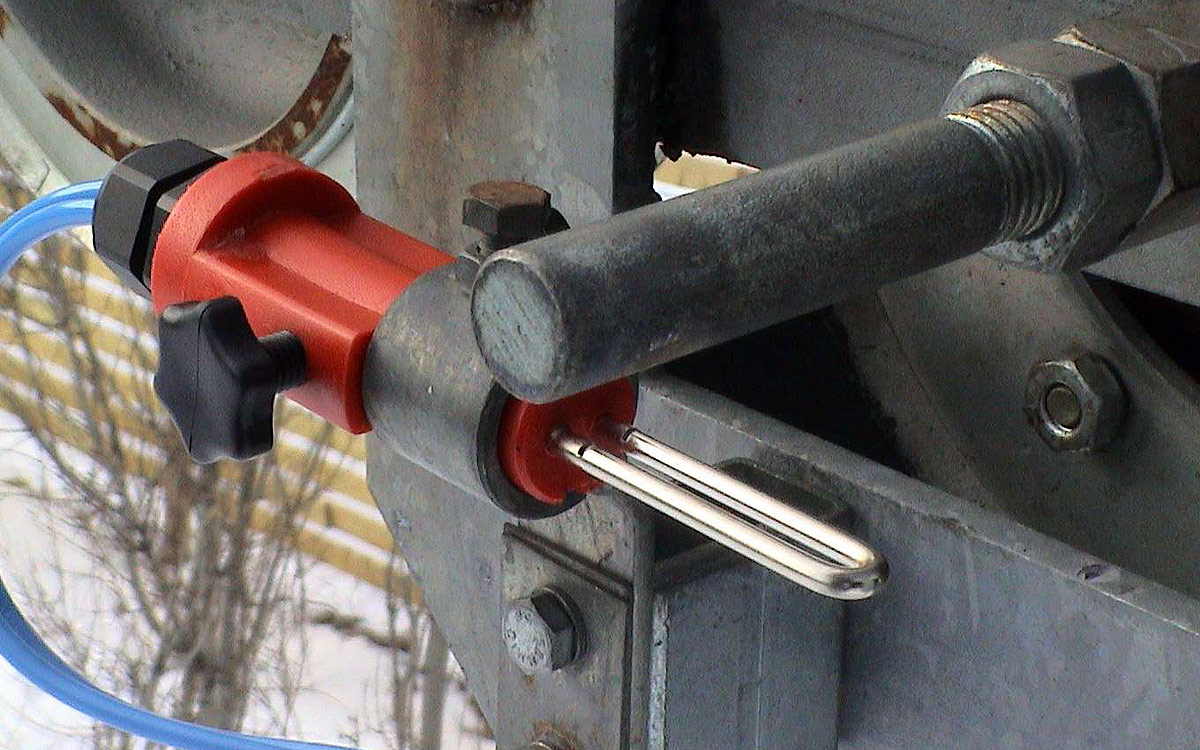
A break fork is a safety device that when broken, causes a circuit to open which shuts down the lift.
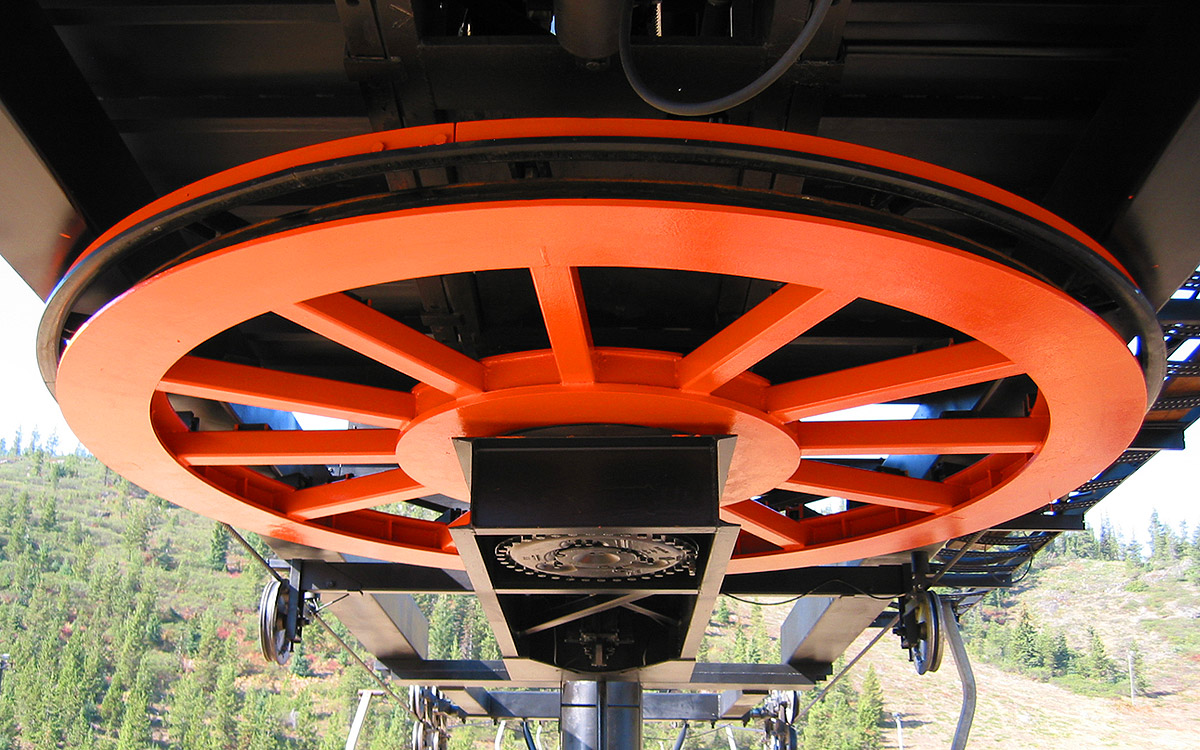
Large-diameter metal wheels used to change the direction of a haul rope. They're found at the top and bottom of lifts, along with mid-stations to change the direction of the haul rope. A bullwheel may also be referred to as the drive sheave.
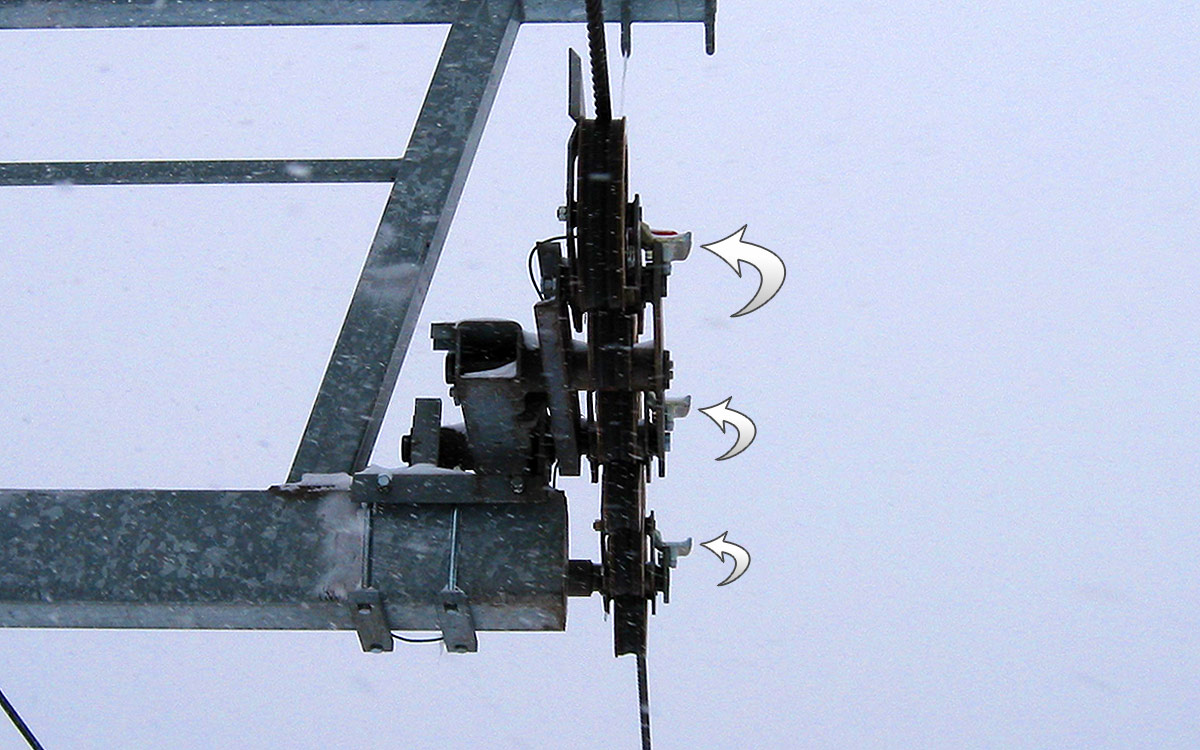
A metal protuberance on the sides of sheave trains which catches the haul rope and prevents it from dropping to the ground, in the unlikely event that the haul rope comes off the sheave wheel.
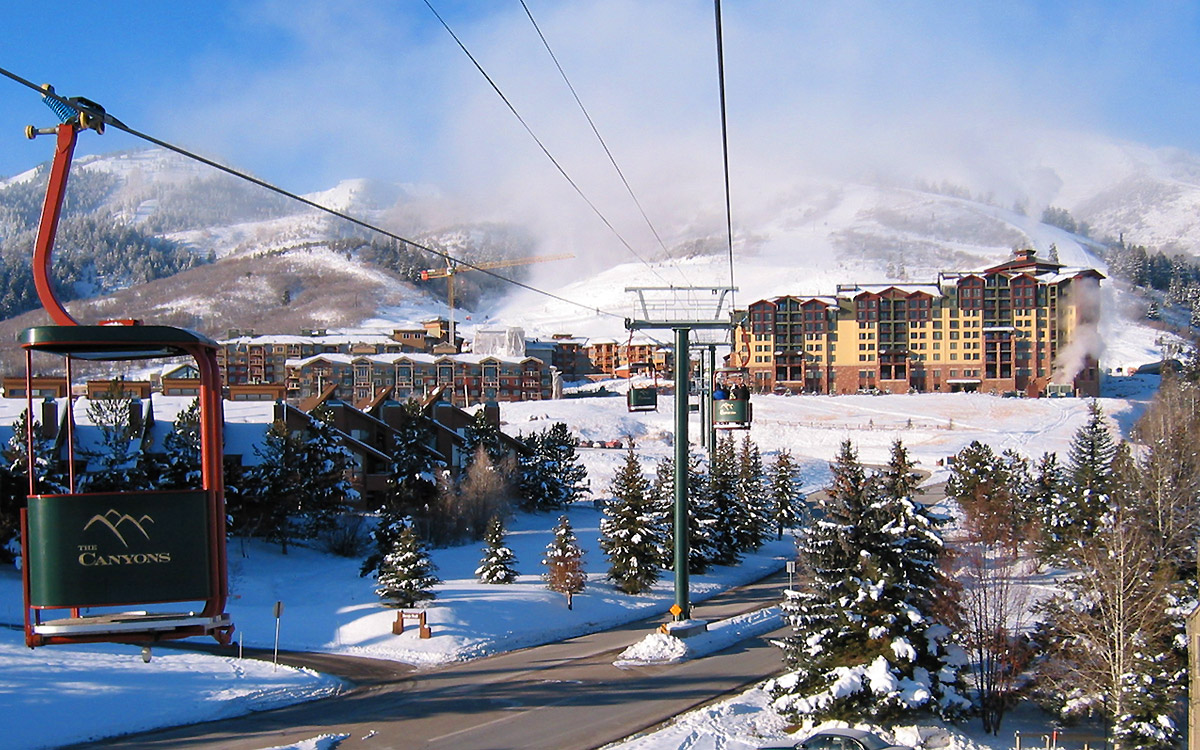
Mechanically and operationally, Cabriolet lifts are nearly identical to gondolas. The principal difference is that the carriers (cabins) are open, and passengers stand rather than sit. They tend to be rather short and are used primarily as "people movers," rather than to take skiers to the top.
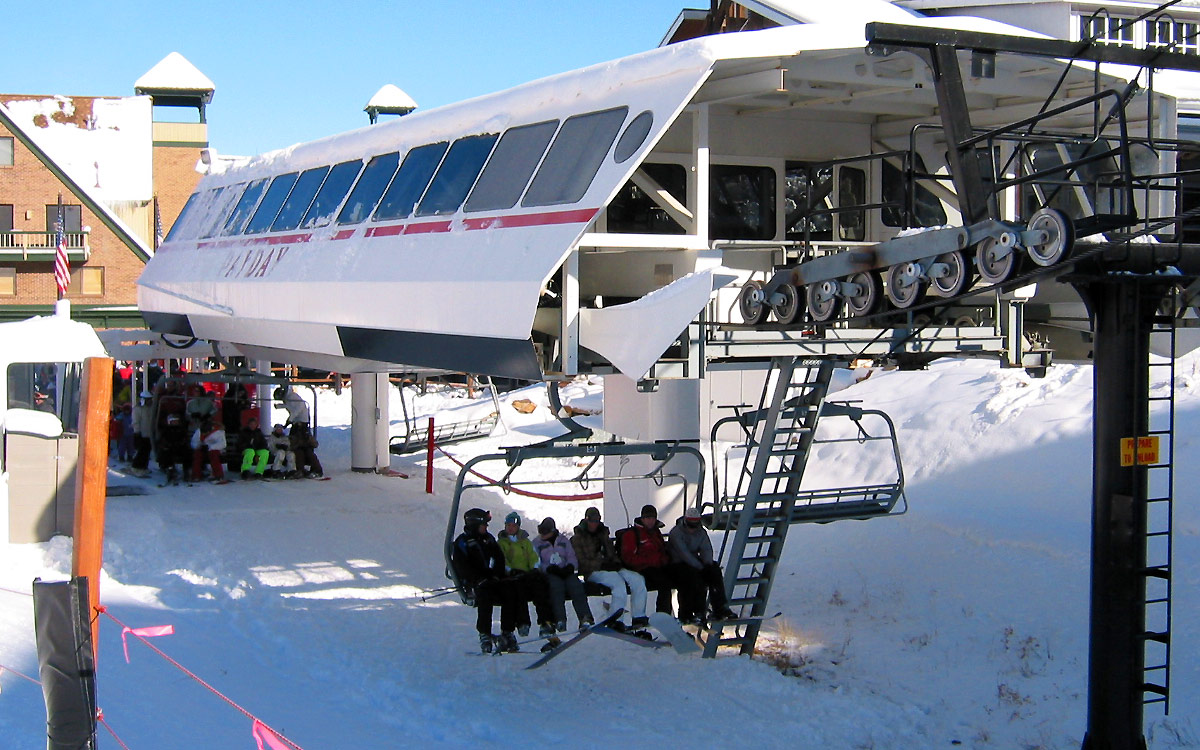
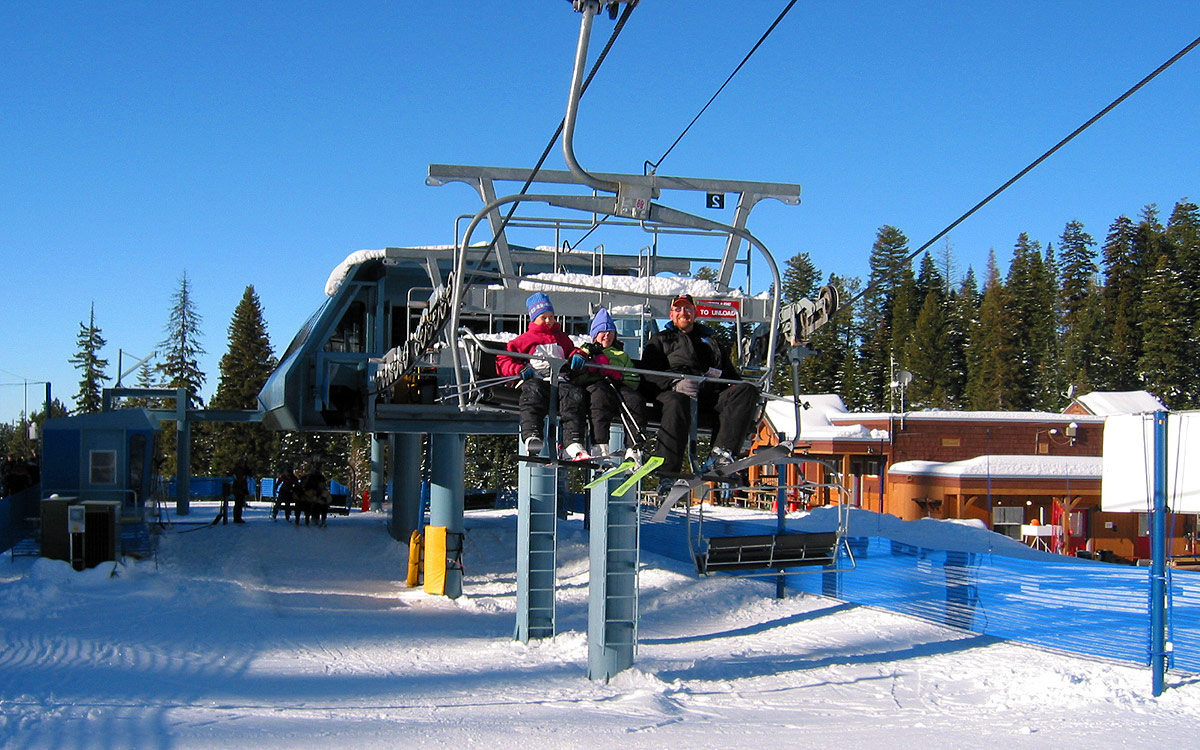
A generic term for the device on or in which customers ride. They can be chairs, gondola cabins, tram cabins, T-bars, etc.
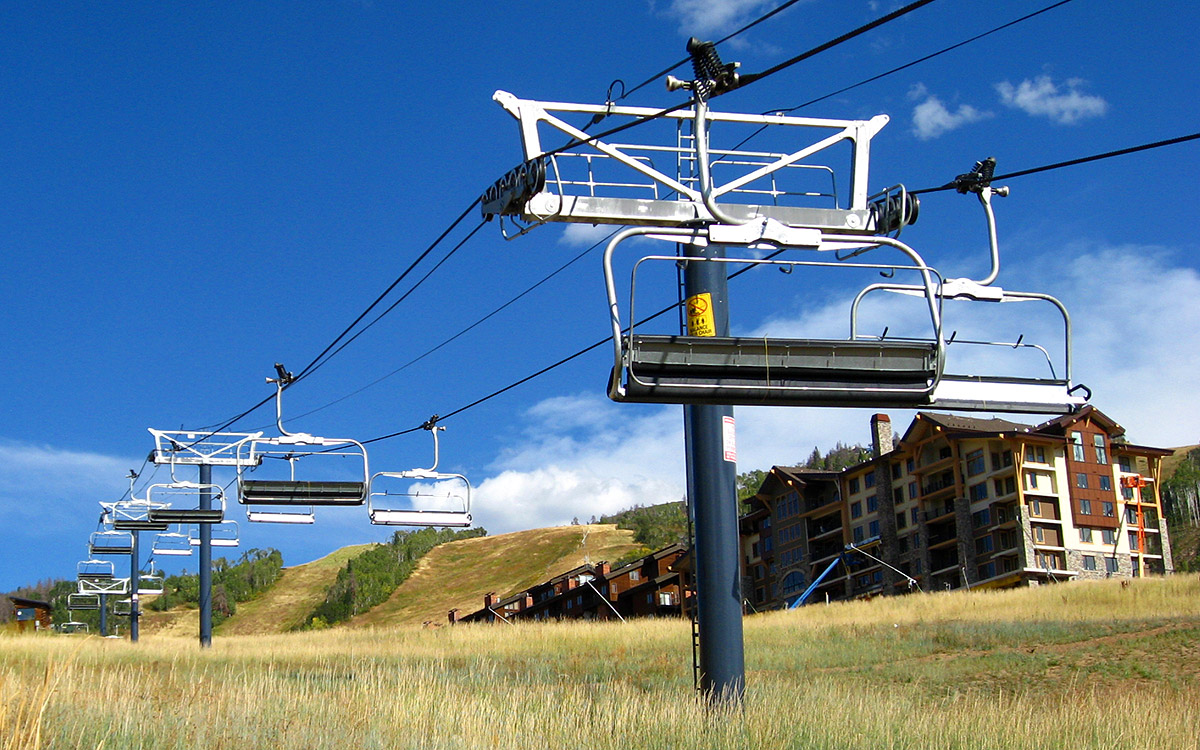
Can refer to either the time interval between carriers as they move through the terminal or the distance between carriers themselves. Typically, fixed grip lifts send a carrier past the load line every six seconds or so - a "six second" spacing. When used to describe distance, refers to the linear distance between the carriers. The design spacing is maintained on detachable lifts by means of a device called a spacer.
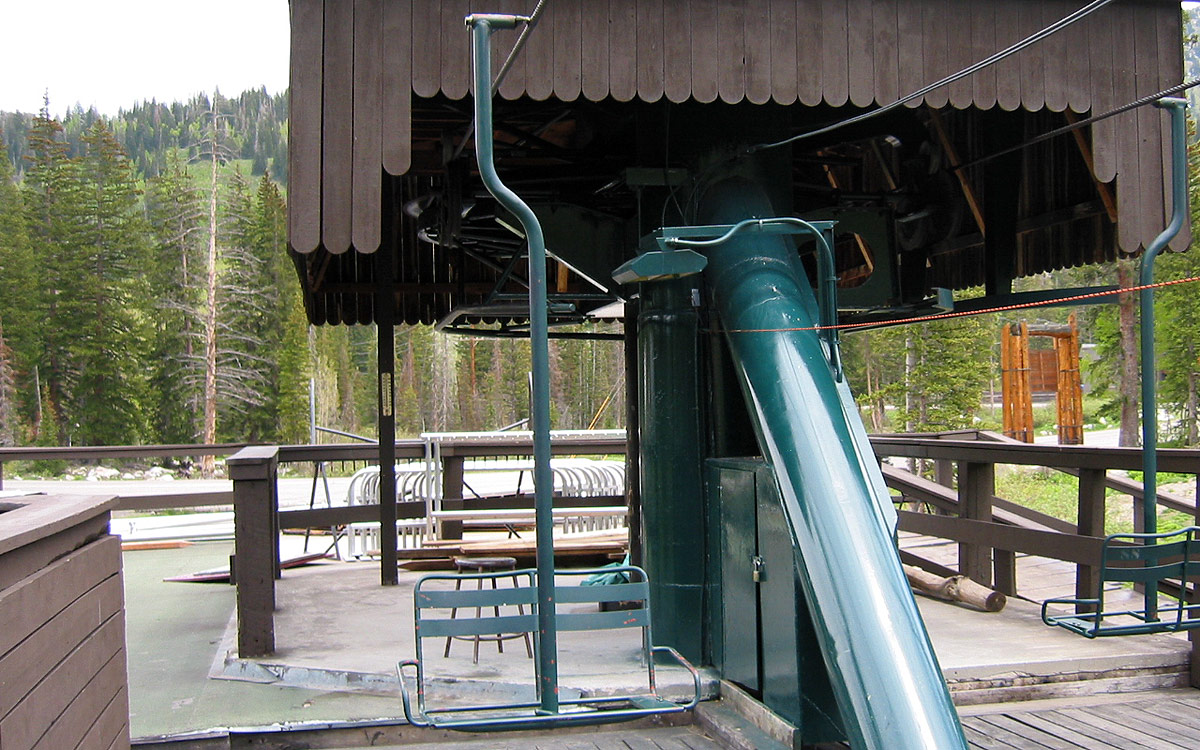
A carrier where the hanger arm extends down to the portion of the chair where the rider sits. Today, the center pole carrier design has been replaced by the more popular and preferred bail carrier design.
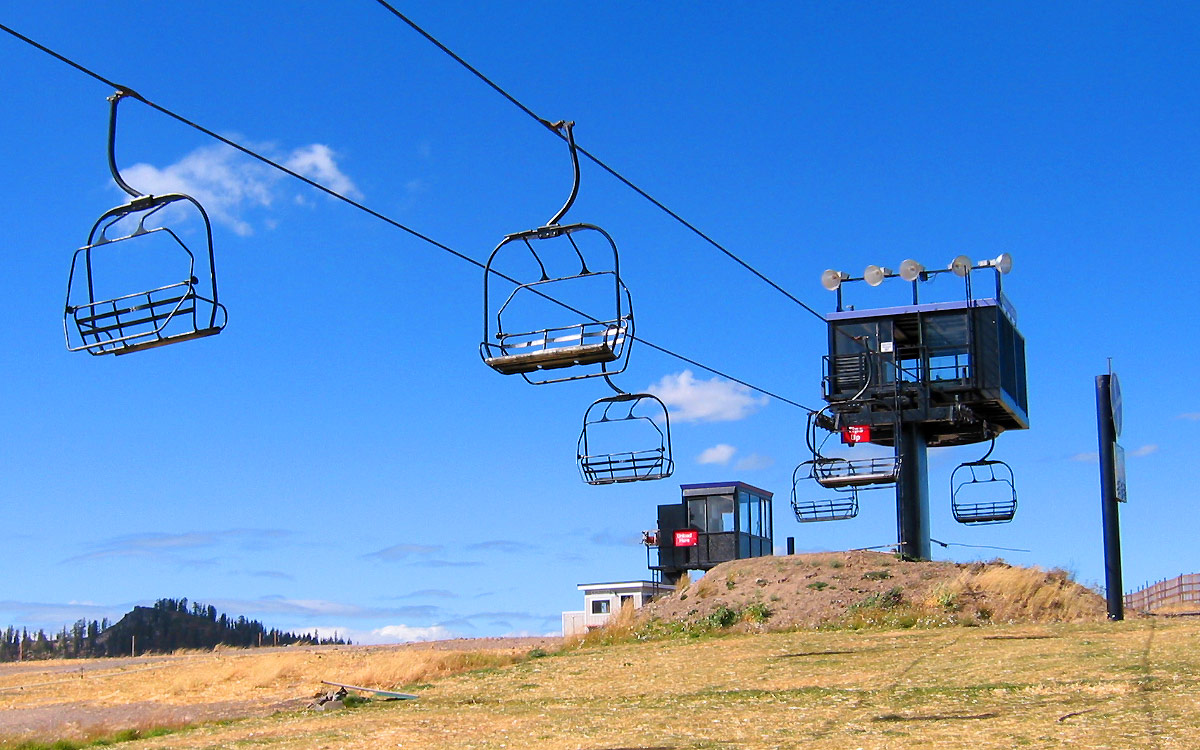
Any form of open lift in which passengers sit in a chair while being transported. Some chairlifts have "bubbles," or fiberglass shells, which can be pulled down to protect passengers from inclement weather.
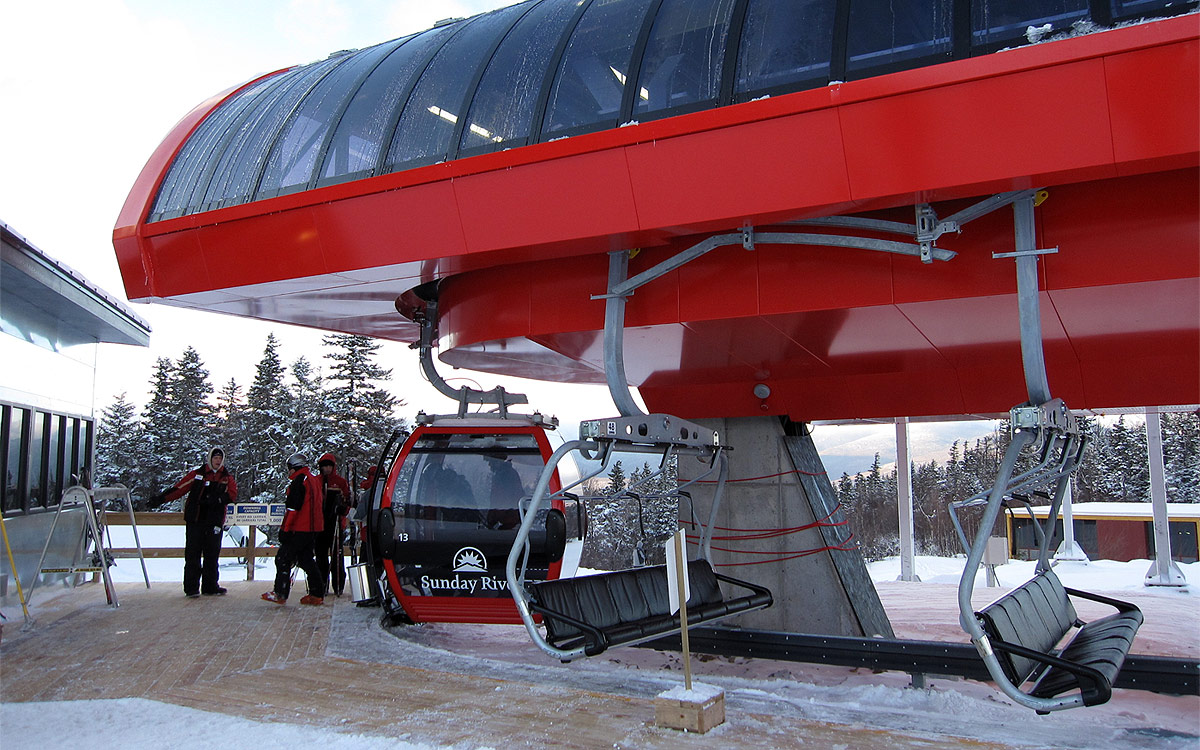
A ski lift that combines the elements of a chairlift and a gondola together.
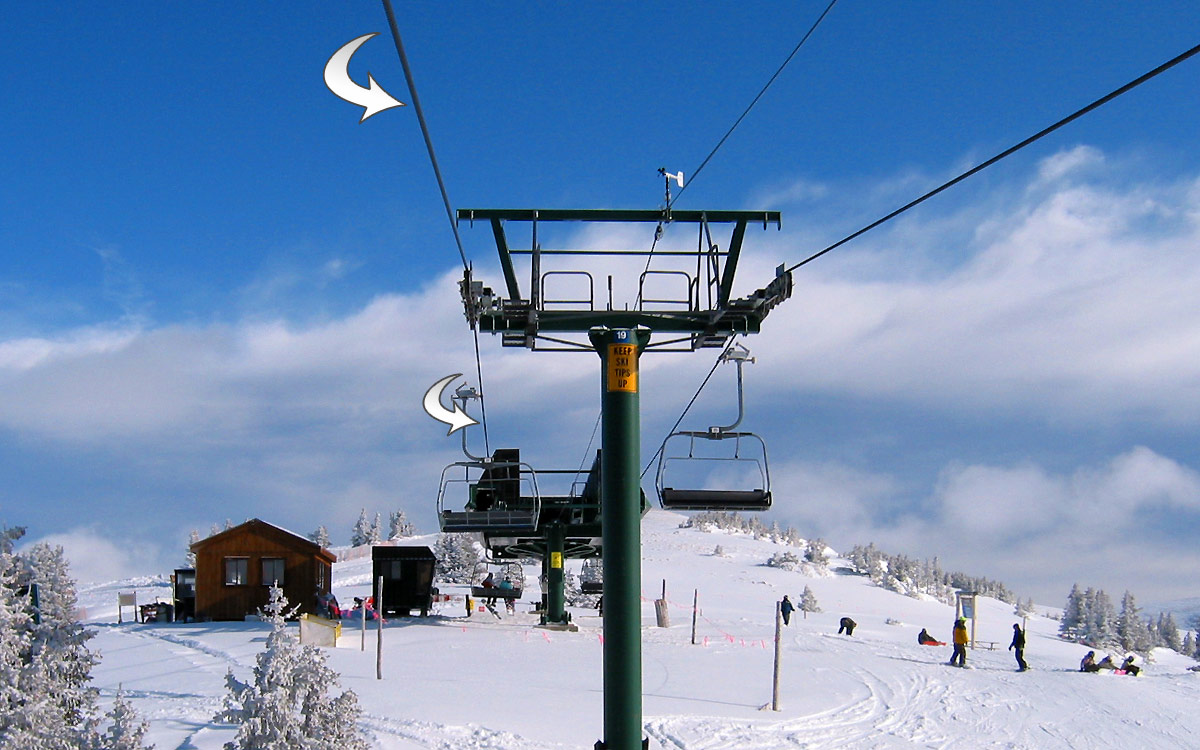
The change of angle between the slope of the haul rope and horizontal; measured at the tower cross arm.
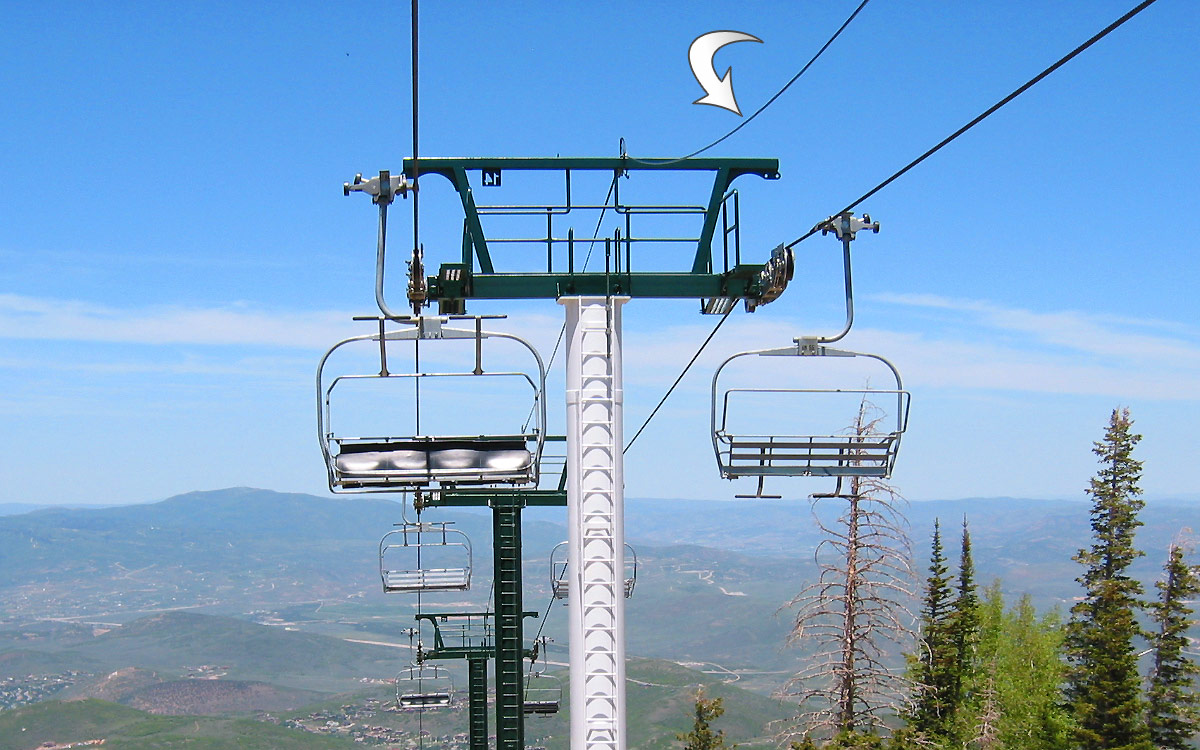
This is the cable you generally see running down the middle of the lift, supported on the lift frame of the tower head. The comm line carries the data signals from each tower's safety and operating circuitry, as well as phone lines between the base, summit and mountain dispatch.
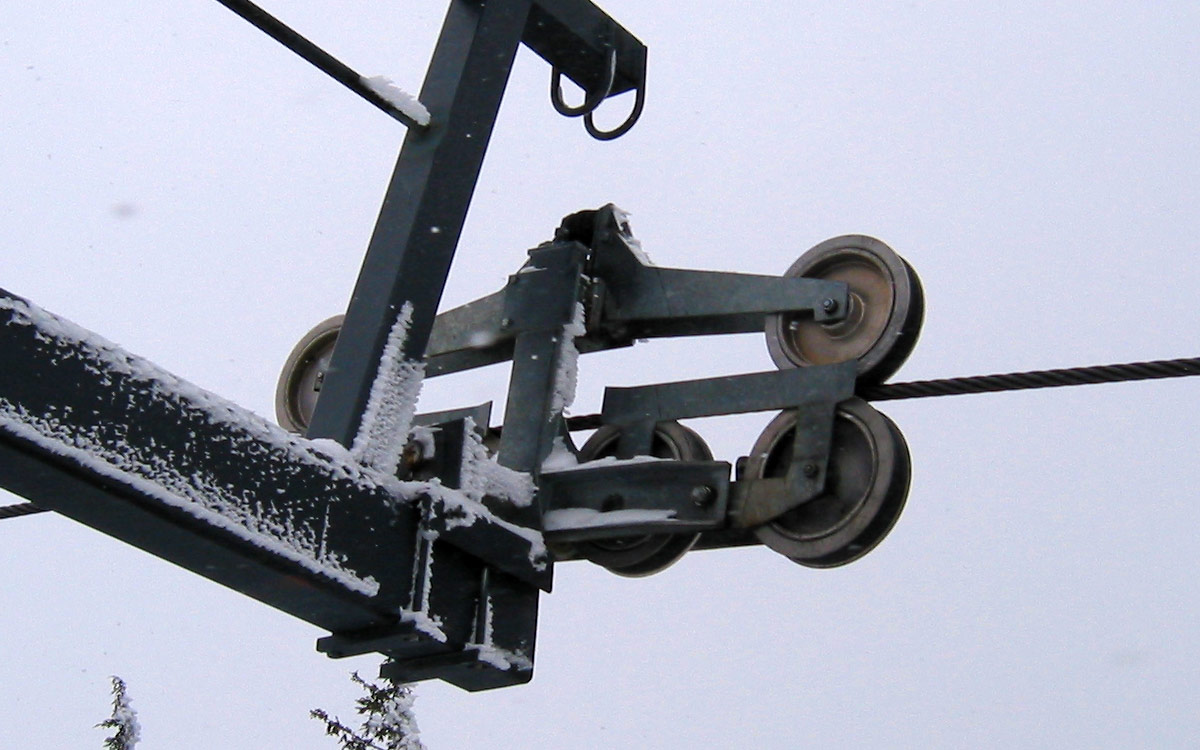
Compression Assemblies: An assembly of sheaves that support and holds down the haul rope. This type of assembly controls the haul rope for both positive and negative loads. This assembly is common in steeper spans with little slope change and at loading towers. Also called trap assembly.
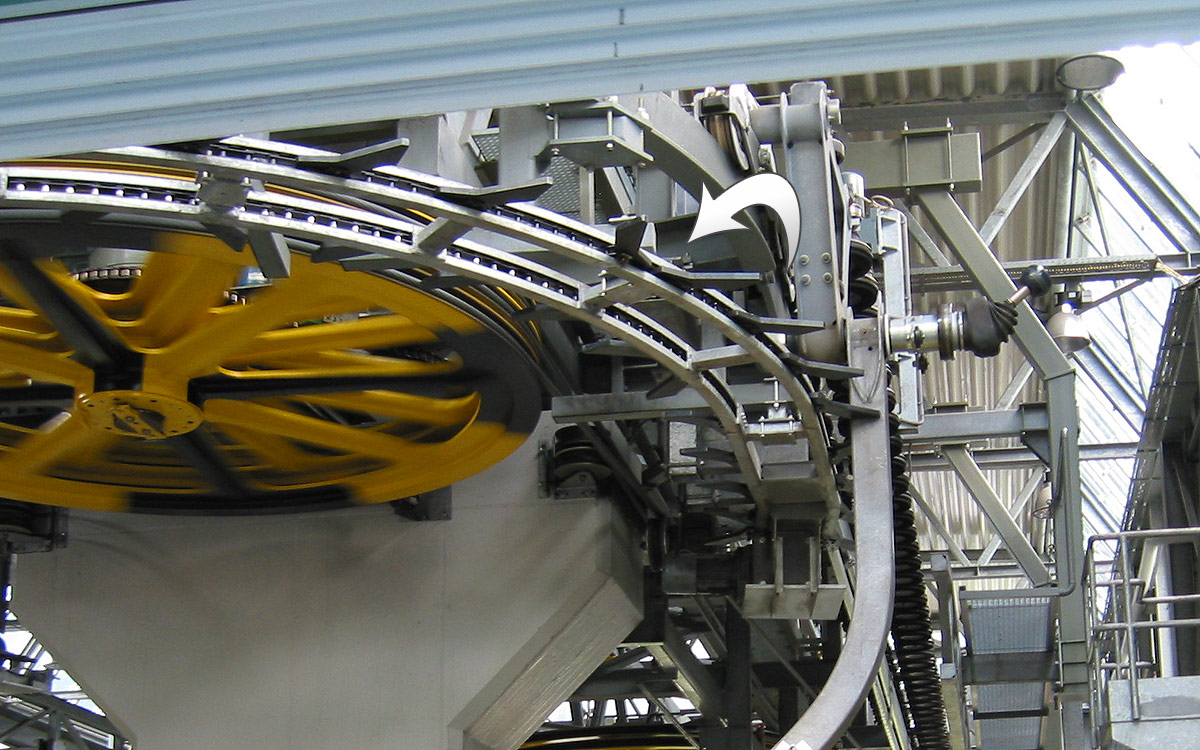
A system consisting of a track and drive system which transports carriers through the terminal on a detachable lift (gondolas, detachable chairlifts). Conveyors are usually powered by power takeoff wheels driven by the haul rope, to ensure that carrier spacing remains constant.
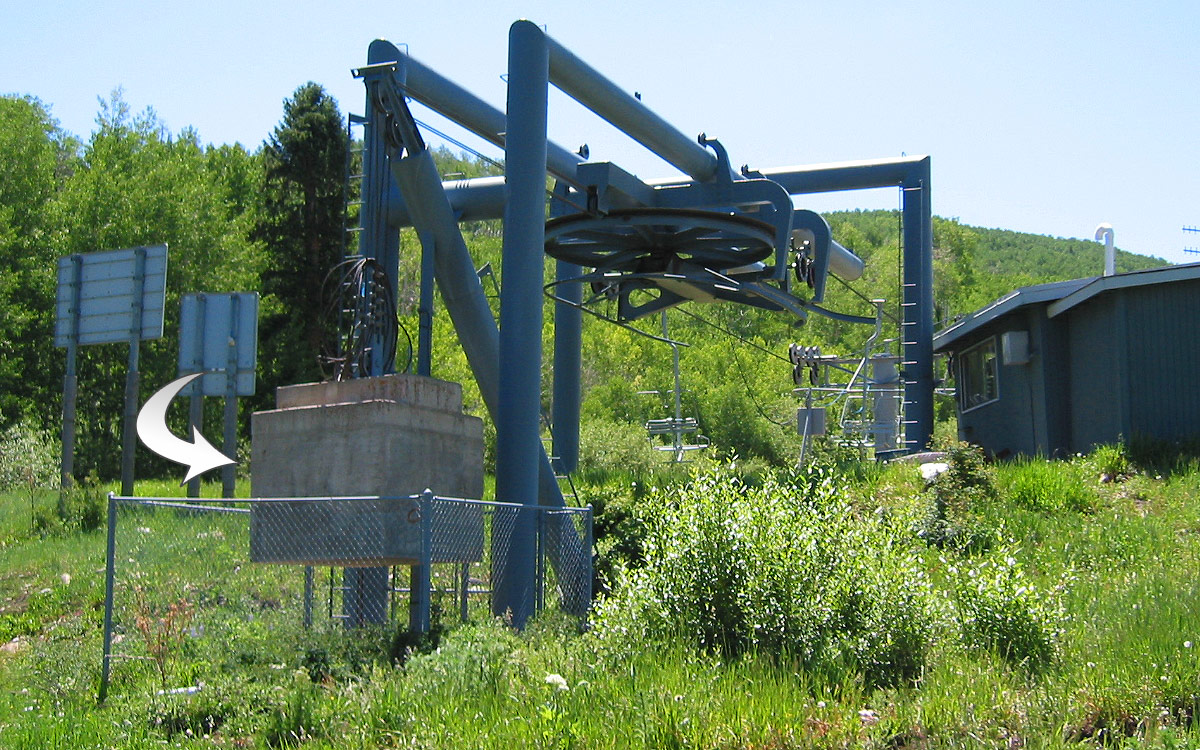
A massive weight at either the top or bottom of a lift, attached to the bullwheel, which keeps correct amount of tension on the haul rope - and therefore, the appropriate amount of friction between the haul rope and the wheel. Today, many new lifts are tensioned by either pneumatic or hydraulic tensioning systems instead of counterweights.
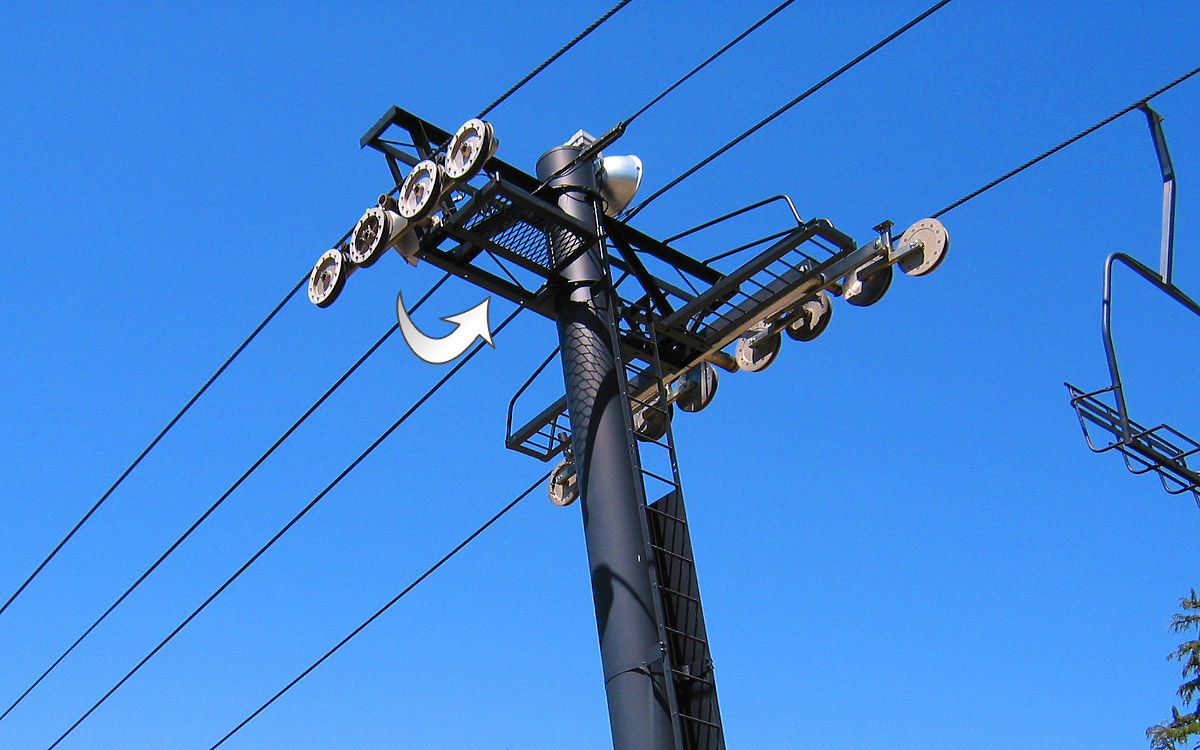
The horizontal arm on top of a tower, to which the sheave wheels are attached.
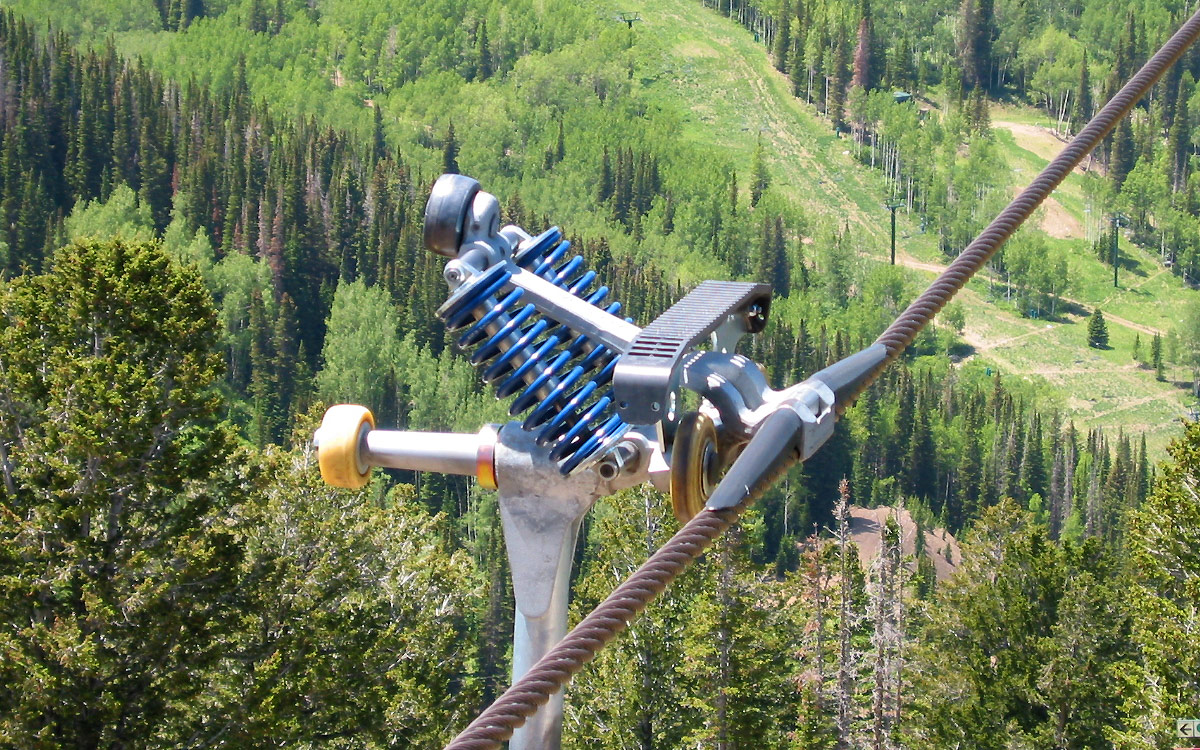
A lift (gondola, chairlift) which detaches from the haul rope to go through the terminals. This process allows carriers to move slowly through the terminals, making it easier to get on and off, and travel rapidly on the line, giving skiers and snowboarders a fast lift ride. See grip.
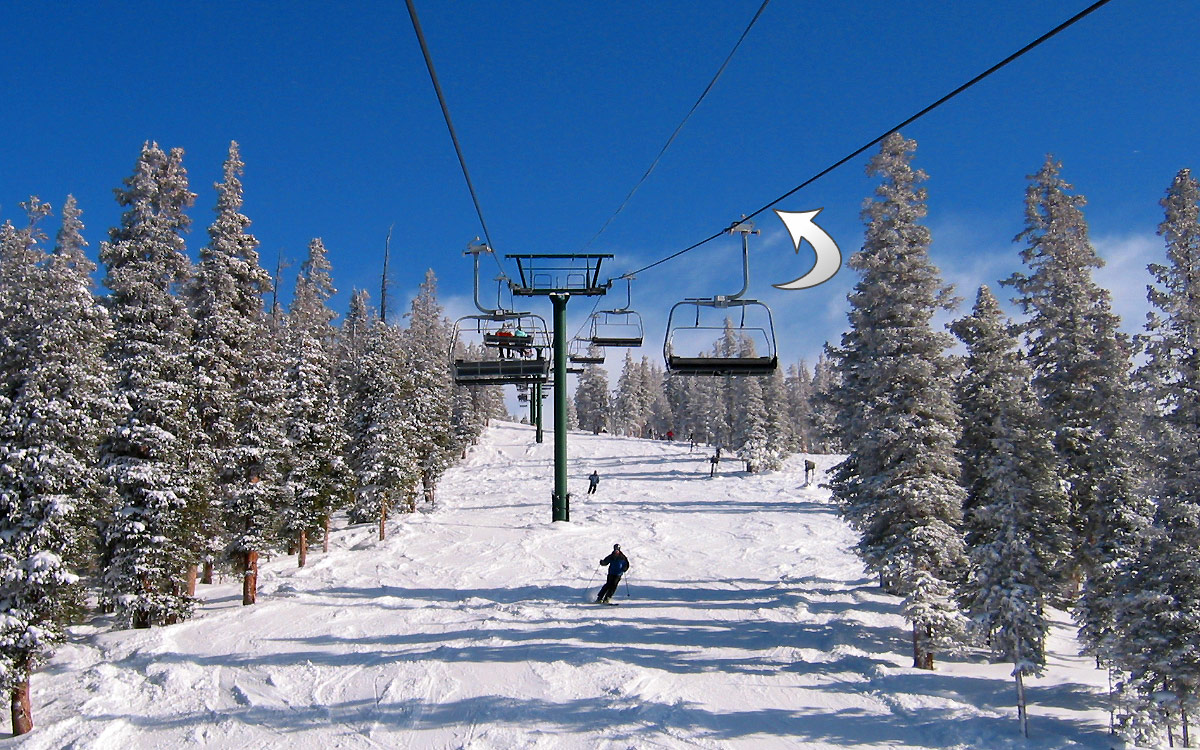
The side of the lift that the haul rope goes down the hill.
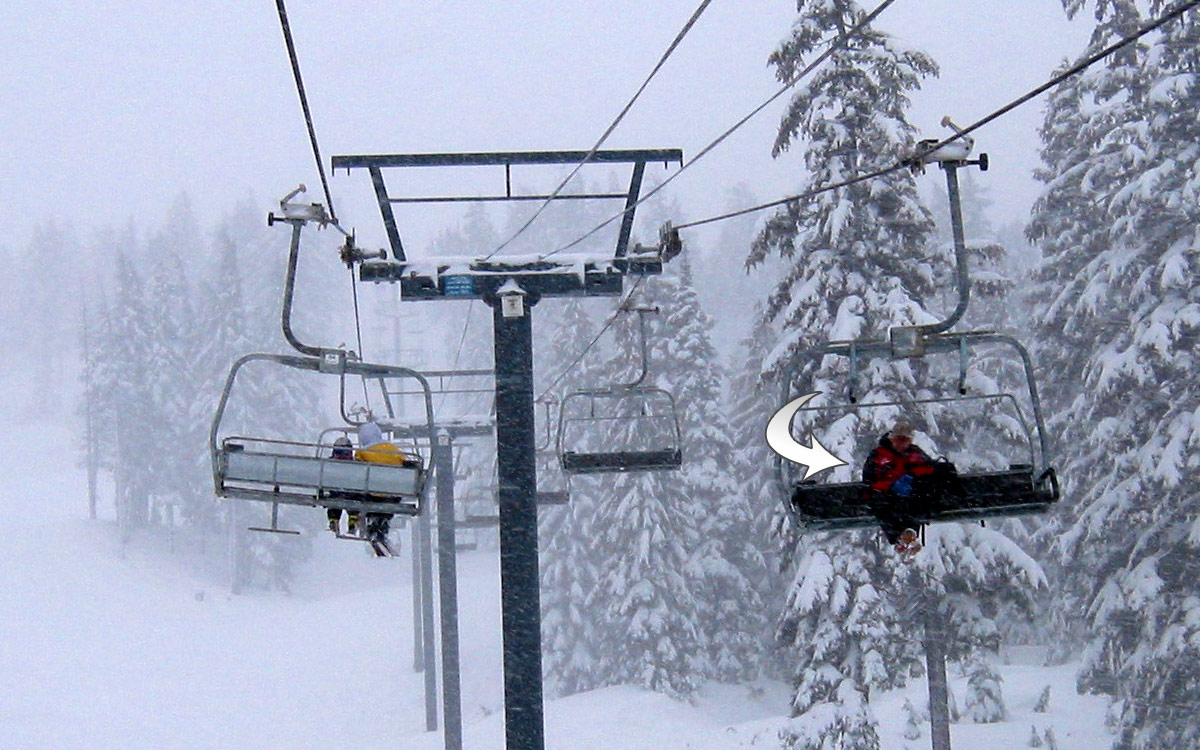
The process of letting passengers ride down the lift, instead of up it. Many lifts are limited in their download capacity; others can transport passengers at 100 percent capacity in either direction.
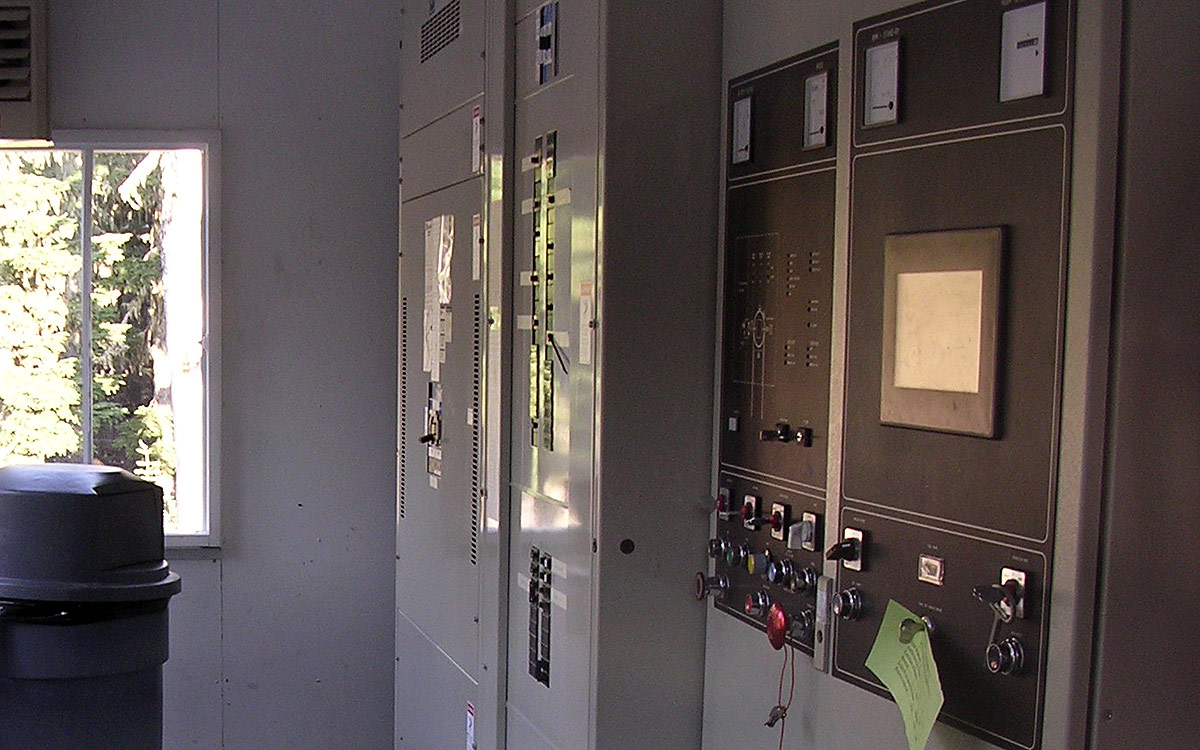
The "brains" of the lift. The drive is the electronic circuitry which controls the amount of voltage sent to the primary motor of the lift and controls its speed. Modern lifts are powered by Direct Current, controlled by the drive, which allow them to operate very smoothly and efficiently. The drive is also tied in with all of the lift's inline safety circuitry, which shuts down the lift automatically in the event of a problem on the line or in one of the terminals.
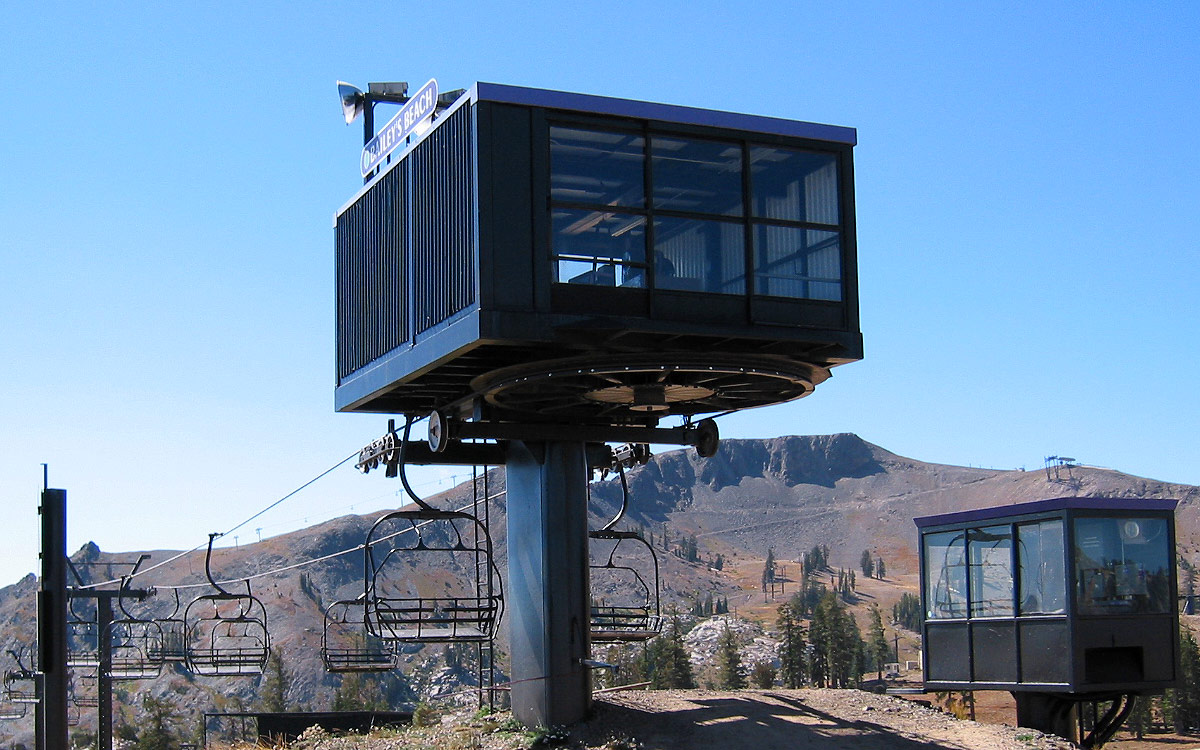
The terminal which houses the motor, gearbox, auxiliary engine and drive and safety circuitry. It can be at either the top or the bottom of the lift ("top drive," "bottom drive.") A top drive lift is slightly more energy efficient than a bottom drive lift, but requires the ski area to run electric service to the summit, which can be very costly.
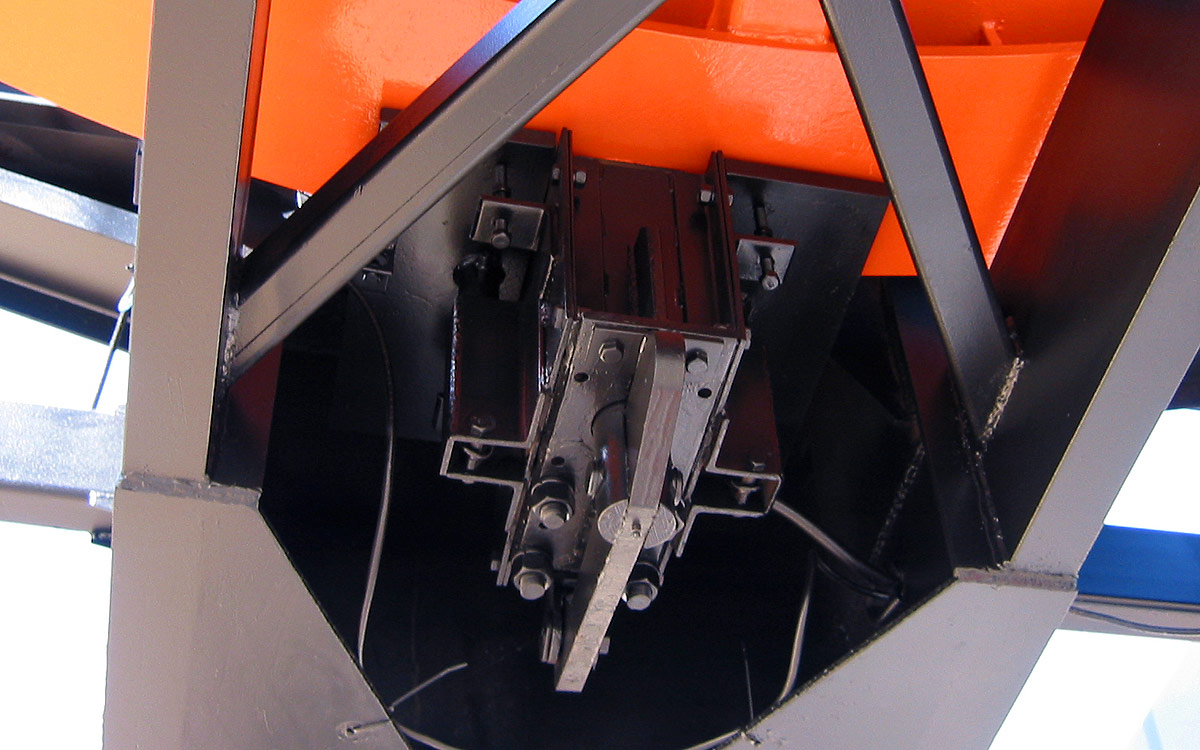
A brake which is used in emergencies to help stop the lift in case of a roll back or something drastic will happen. The brake acts directly on the bullwheel which stops the lift with great force.
Only used to unload passengers from the lift in the event of a power failure, or a failure of the prime mover.
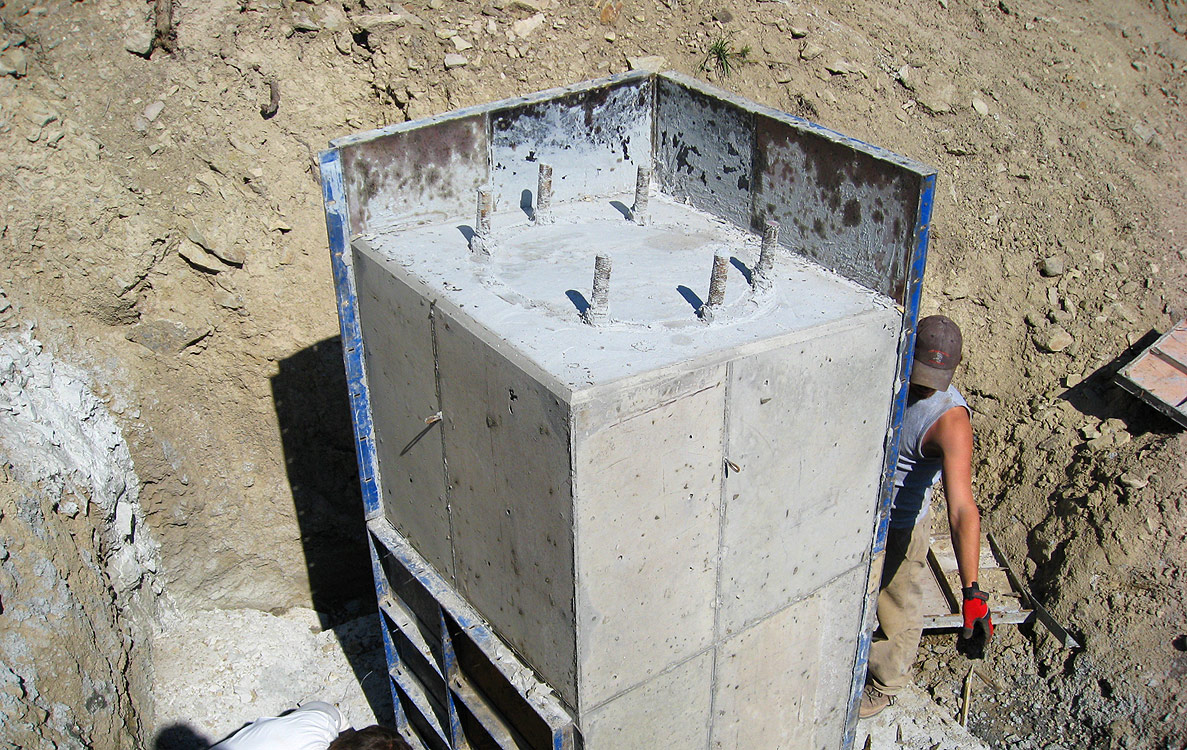
A foundation is a structure that transfers loads to the earth. Foundations are designed to have an adequate load capacity with limited settlement by a geotechnical engineer, and the foundation itself is designed structurally by a structural engineer. The primary design concerns are settlement and bearing capacity.
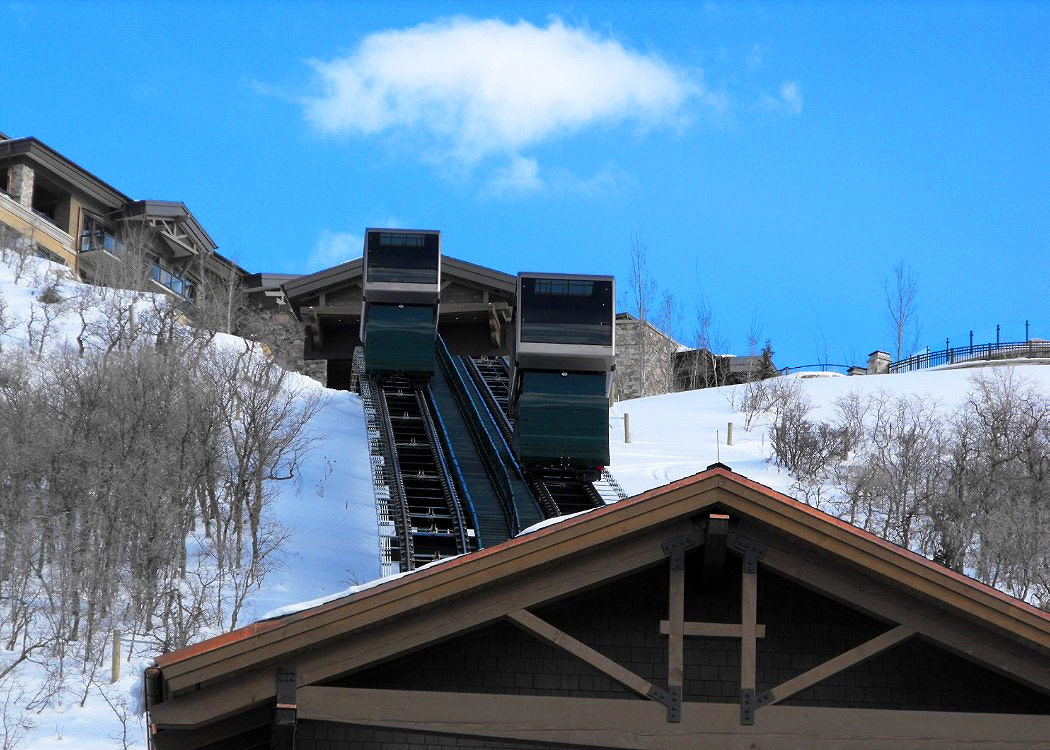
A type of lift which uses a car traveling on steel rails, as a carrier. Most funiculars are "jigback" lifts, meaning that the weight of a car coming down counterbalances the weight of a car going up. Some funiciulars use two tracks, and some use just one, switching into two tracks in the middle of the line to allow the cars to pass. Most funiculars are in Europe.
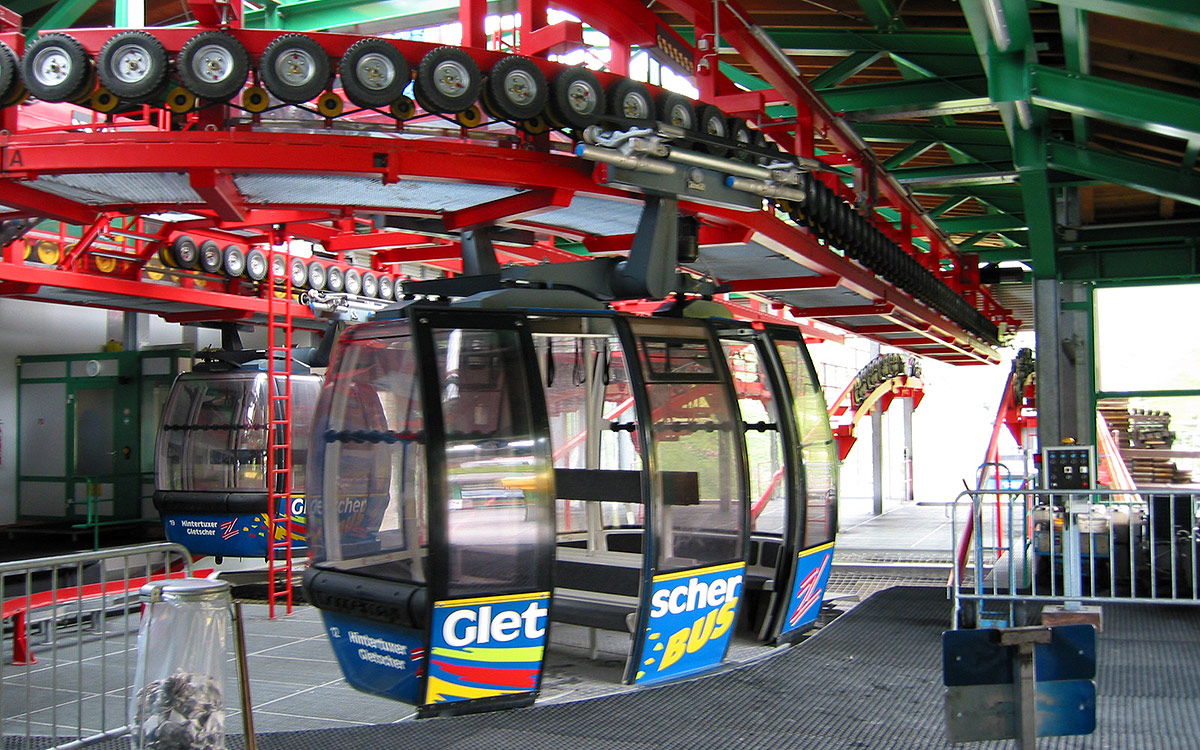
A comparatively new type of lift which is essentially a dual-monocable gondola with large cabins. The dual ropes make the funitel capable of long spans between towers and makes the cabin less susceptible to wind. Only a handful have been built, mostly in Europe.
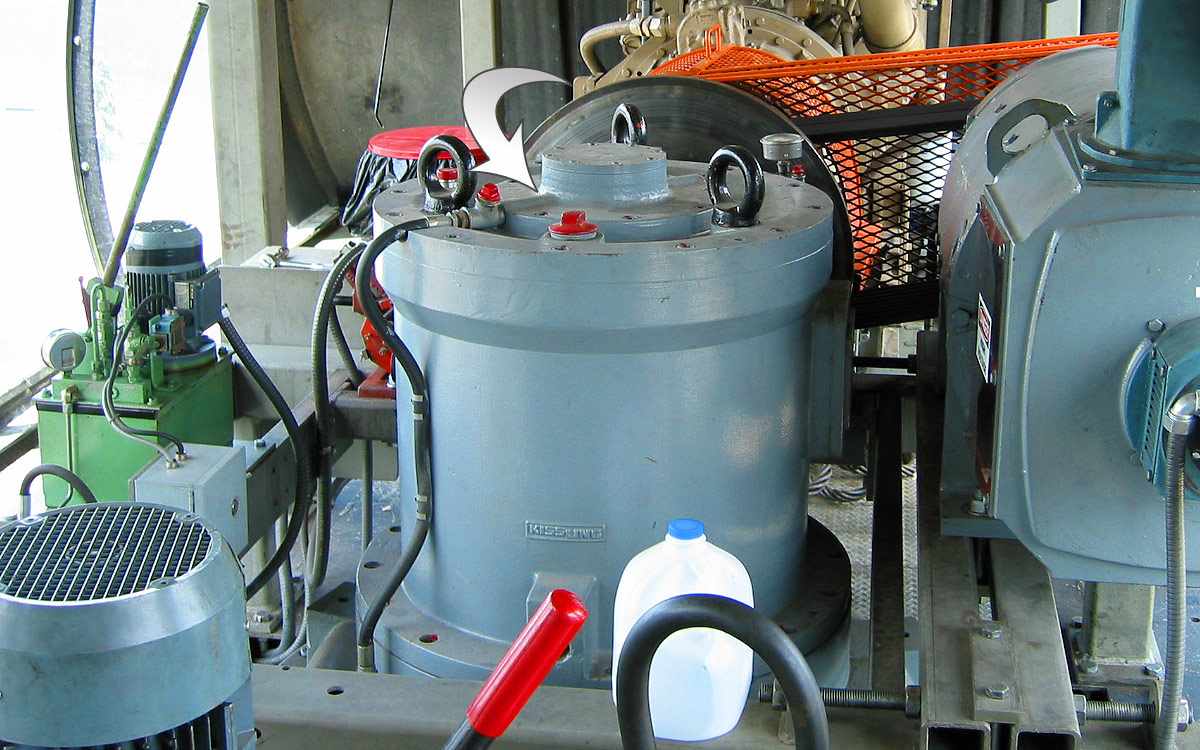
The lift's transmission. The gearbox takes power from the motor or auxiliary and transfers it to the bullwheel at the drive terminal.
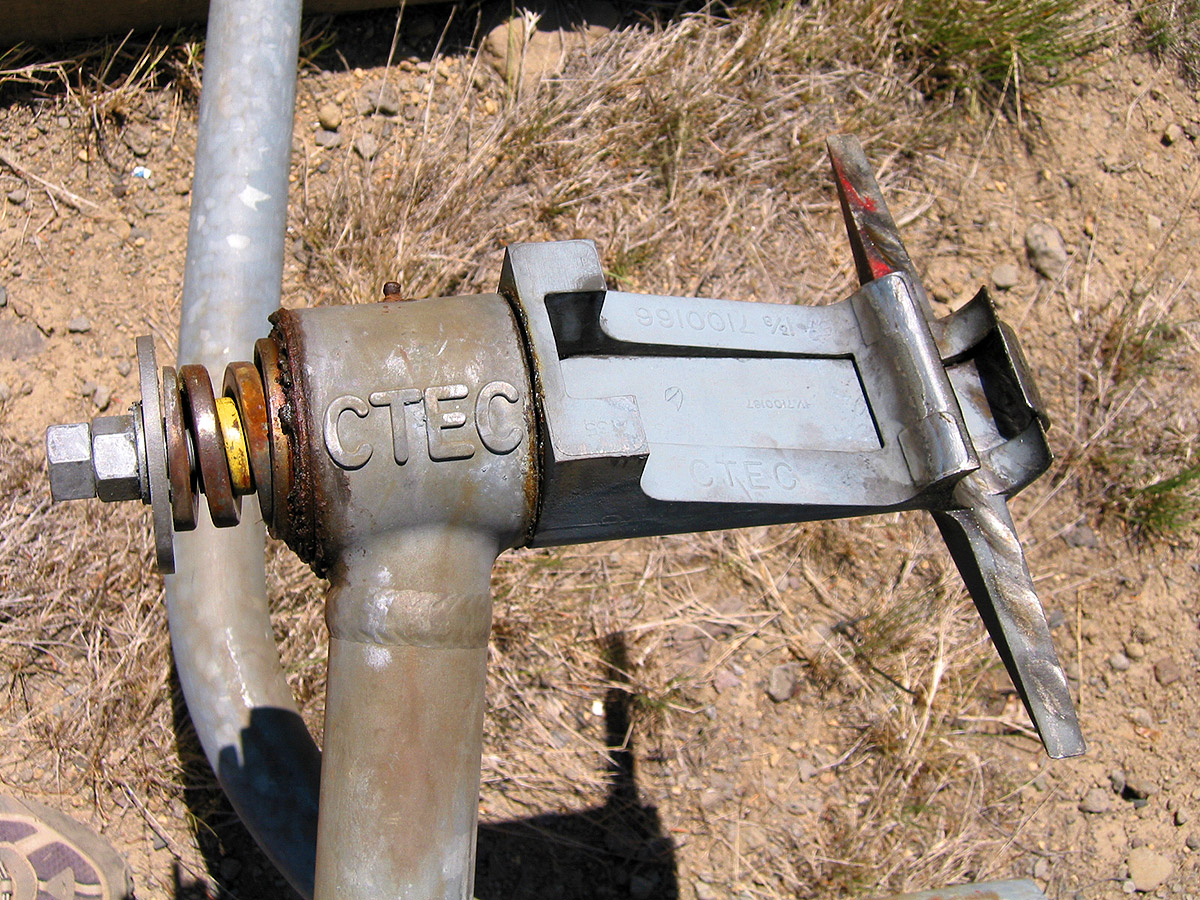
The mechanism by which the carrier is attached to the haul rope. Grips can be either fixed, meaning that the grip is clamped into a precise location and remains there, or detachable, meaning that the grip contains a complex system of springs and clamps which allow it to be automatically attached or detached to the haul rope in the terminals.
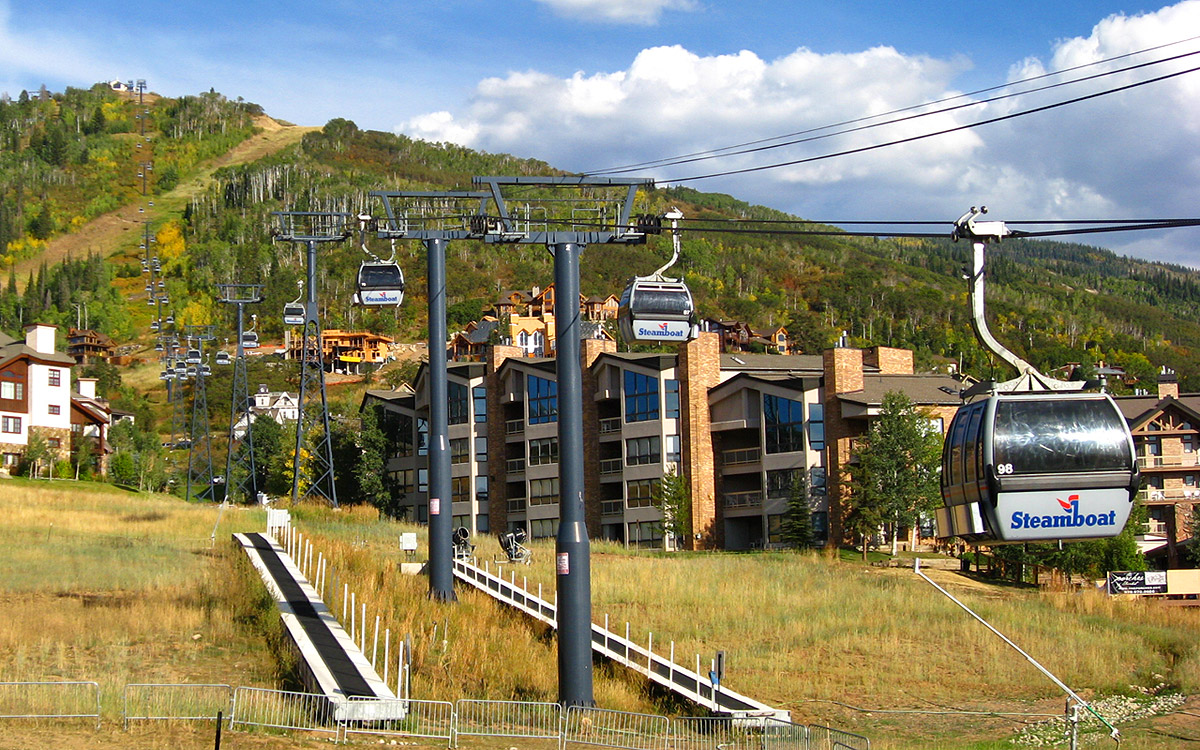
A type of lift which transports passengers in multiple detachable enclosed cabins. Gondola cabins have ranged in size from as small as two persons to upwards of twenty. Modern gondolas use what's called "monocable" design, meaning that the haul rope both moves and supports the weight of the cabin and its passengers, much like chairlifts. Some older gondolas used a two-rope system, including a track rope (which supported the weight) and a haul rope (which moved the car).
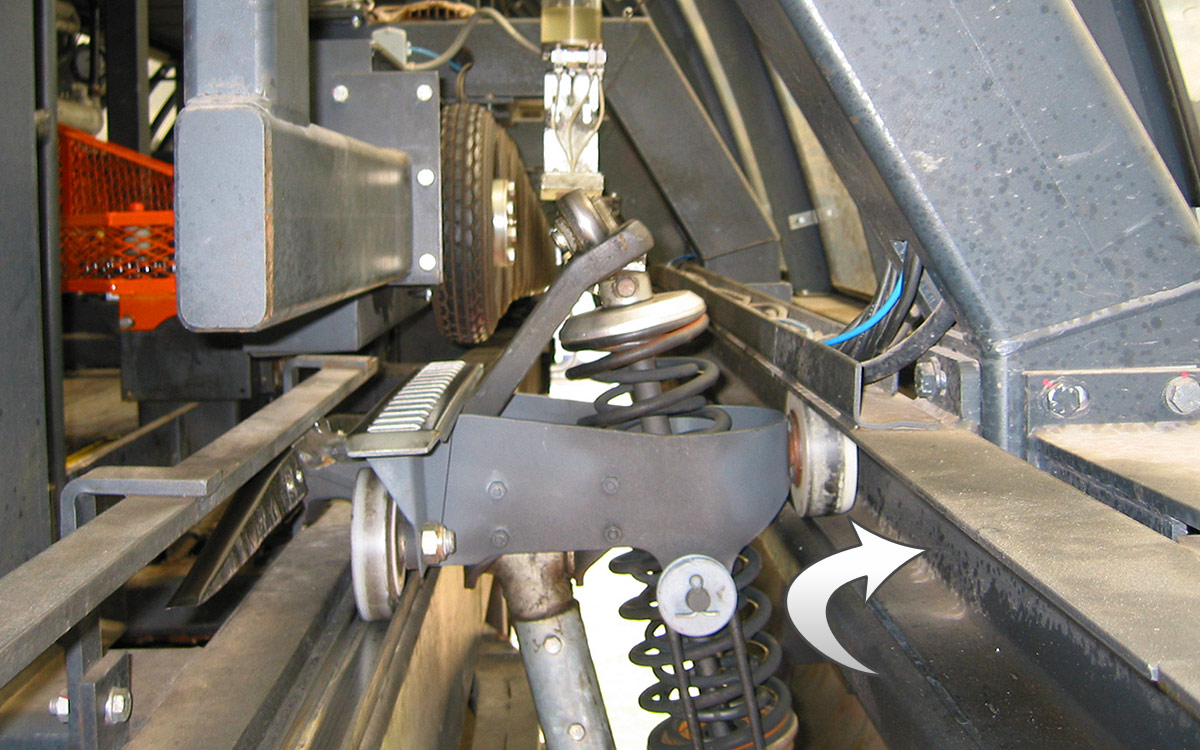
A guidance rail which high speed detachable lifts have that stabilize the carrier as it enters and moves around the terminal.
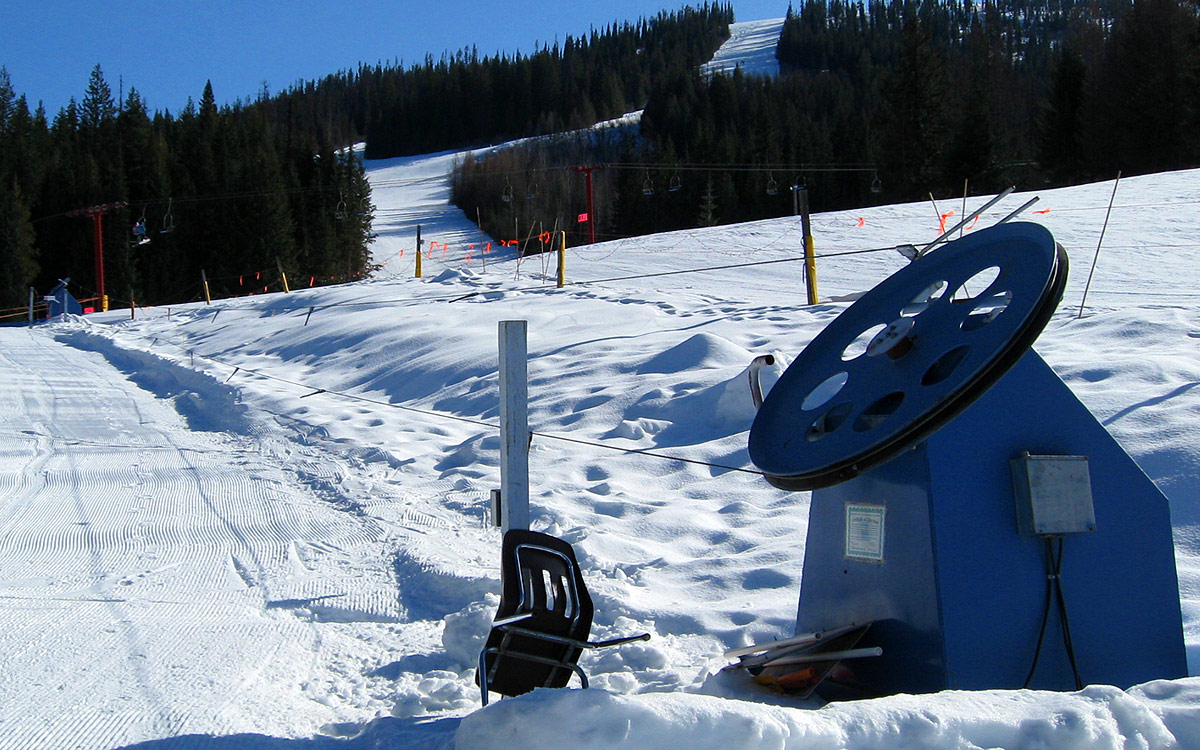
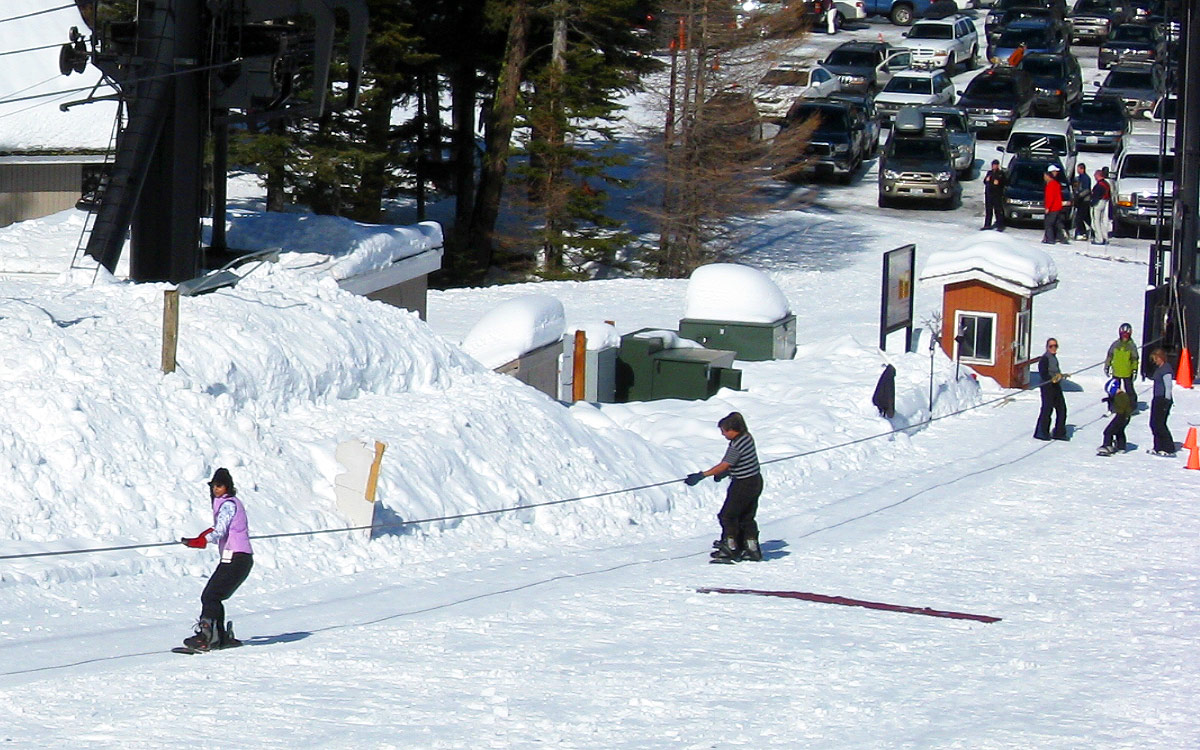
A modern variant of the rope tow, which uses a thin wire rope (under high tension) and plastic handles, which skiers and riders hold on to while being towed up the hill.
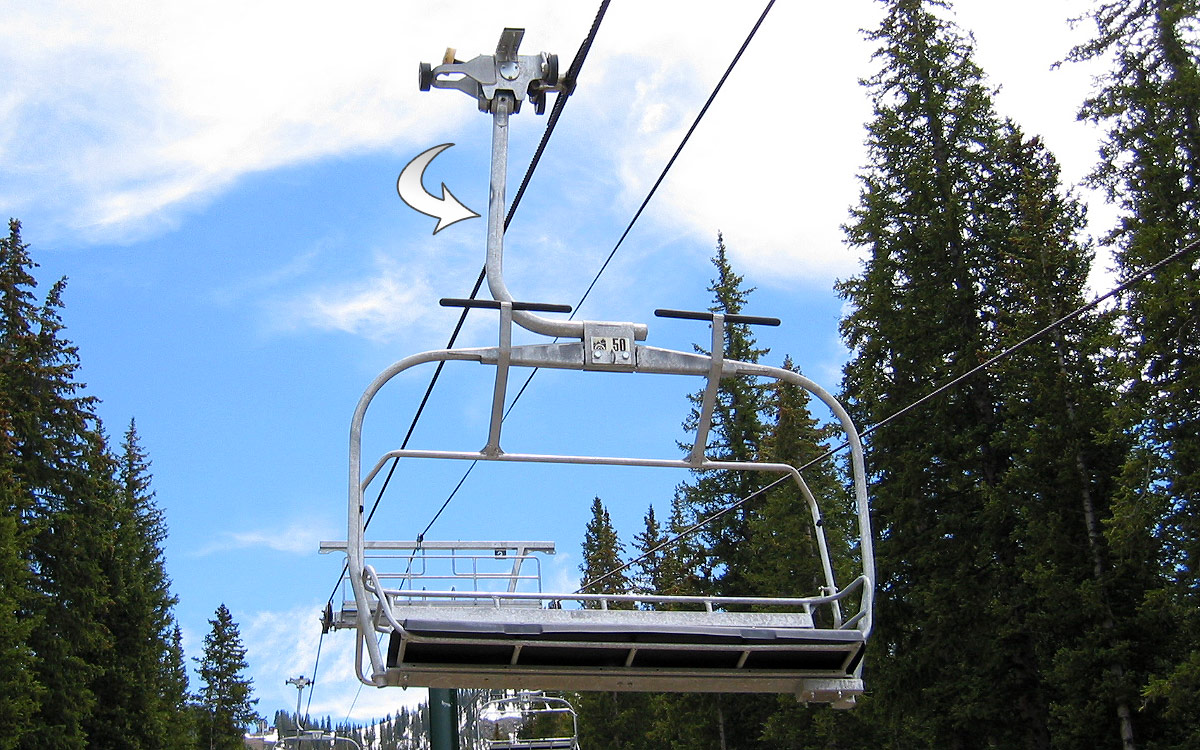
The hanger arm is a metal stem that connects the carrier to the chair's grip.
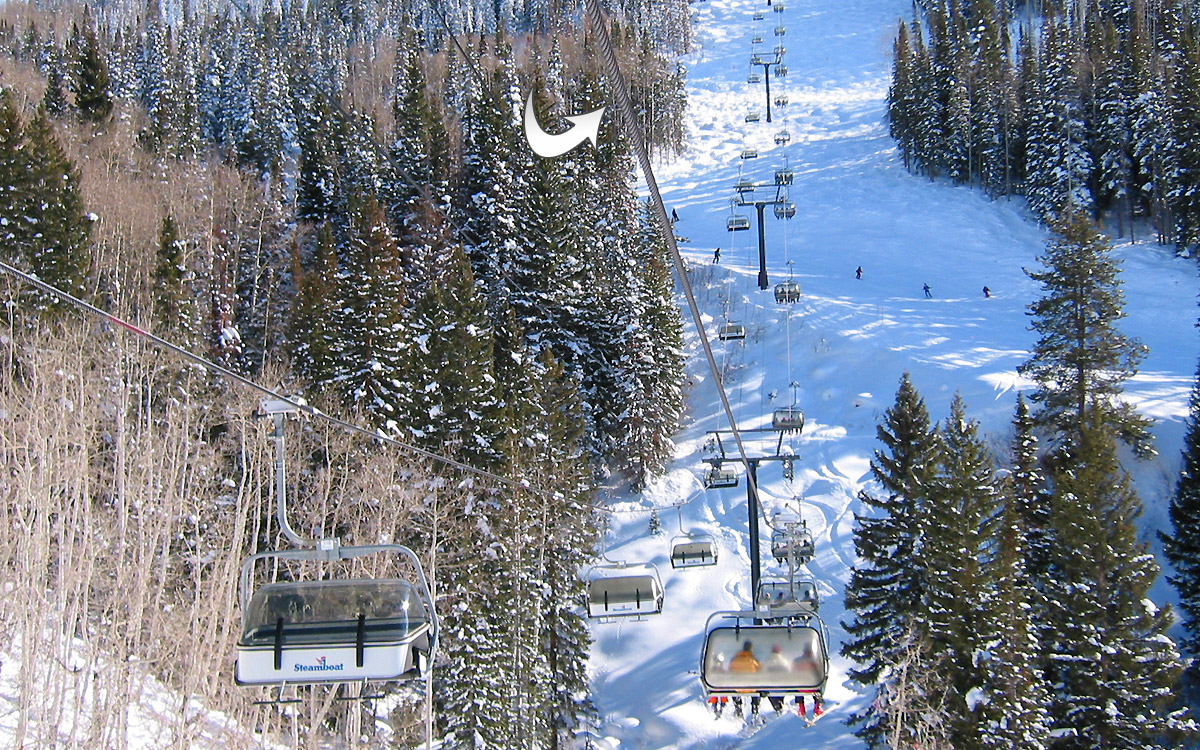
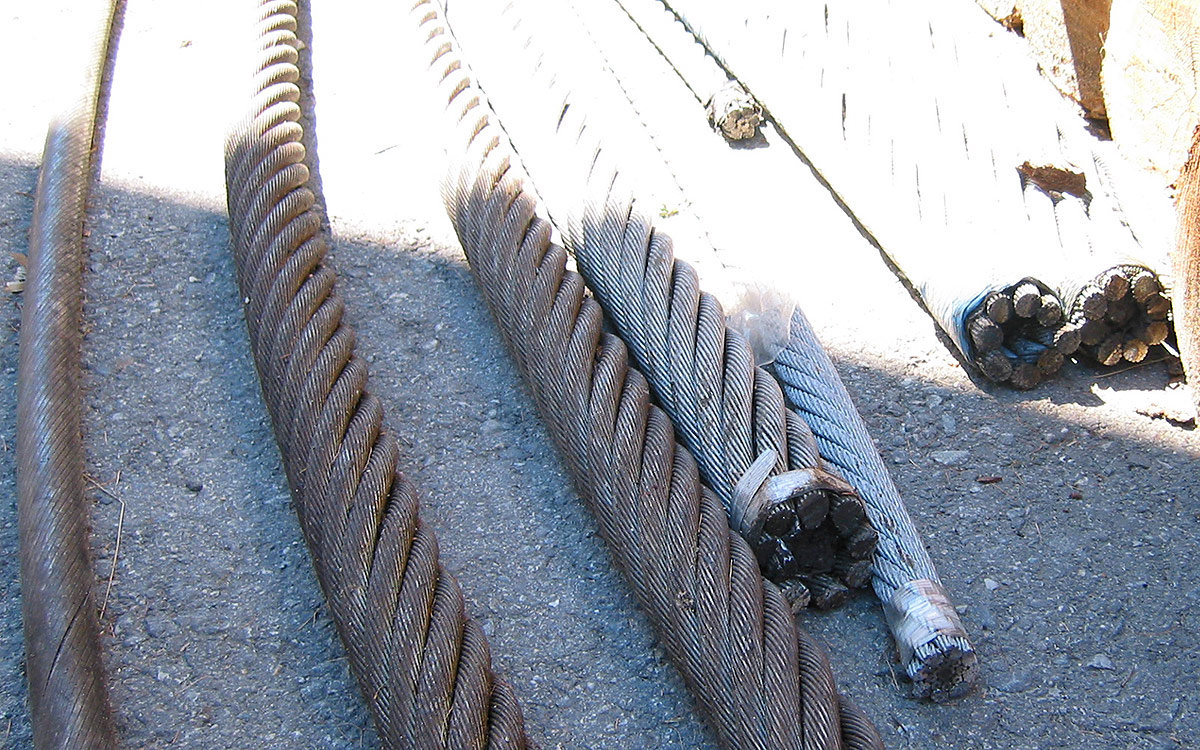
A wire rope which moves the carrier up the hill. In modern monocable design, it also supports the weight of a carrier and its passengers.
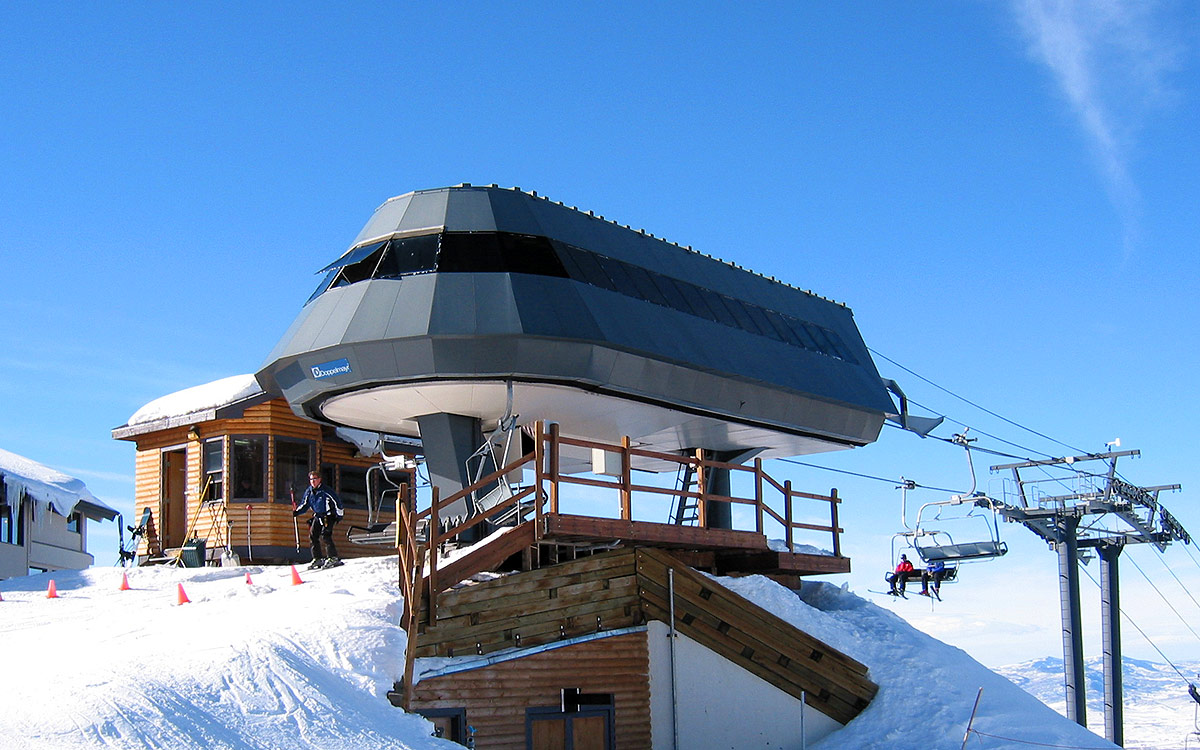
A quad chairlift with carriers which detach and slow for loading, reattaching them so that they can travel faster than a fixed-grip quad. The average speed of a high-speed quad is around 1,000 feet per minute.
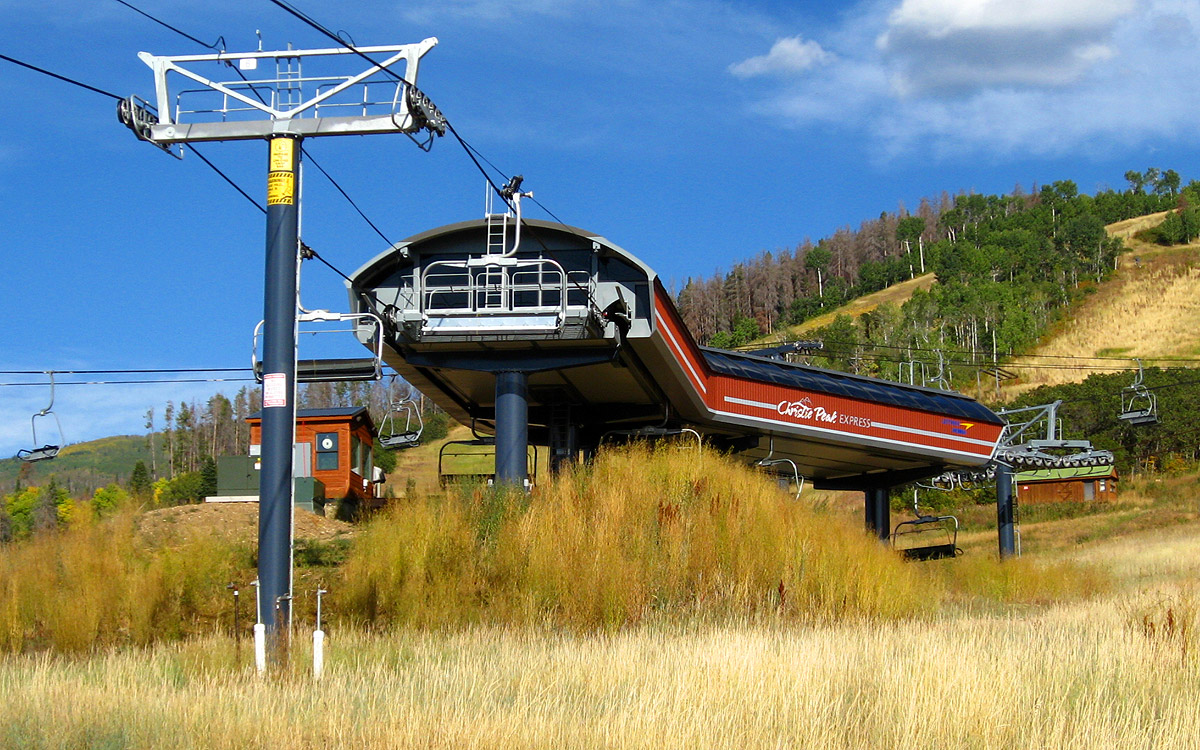
A high-speed six-pack is exactly the same as a high-speed quad except that it features carriers capable of holding six passengers at a time rather than four.
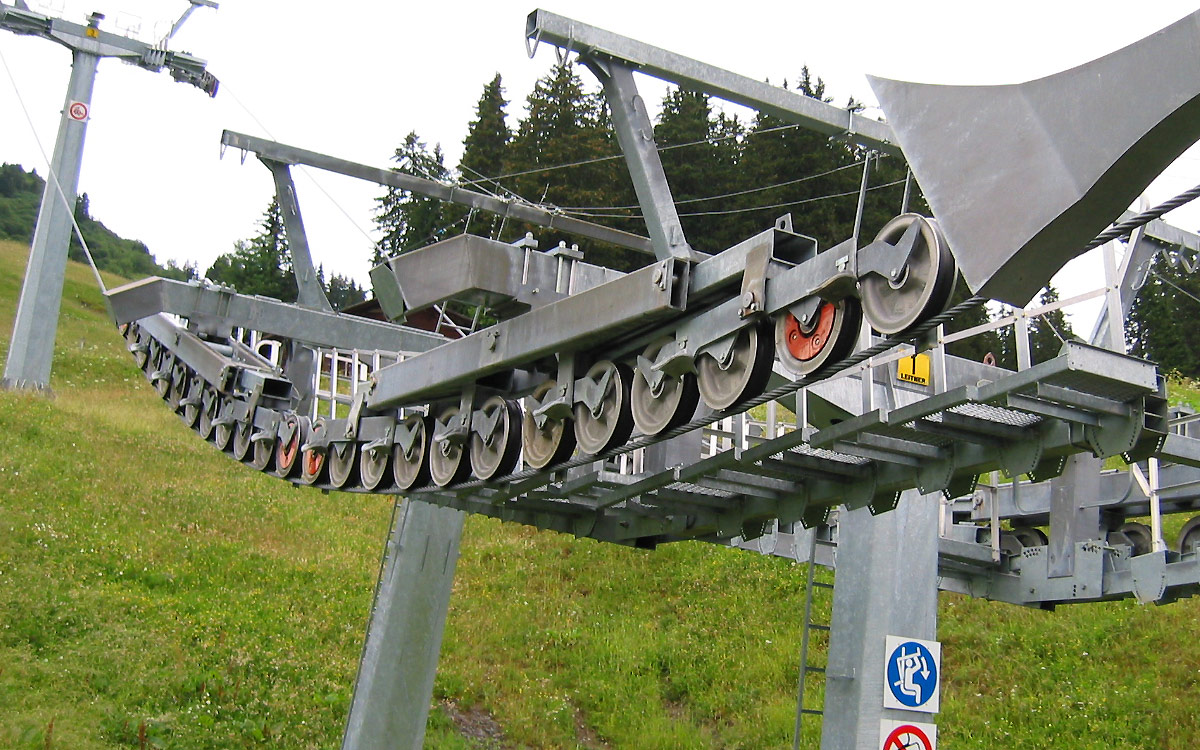
An assembly of sheaves that hold down the haul rope. Also called depression assembly.
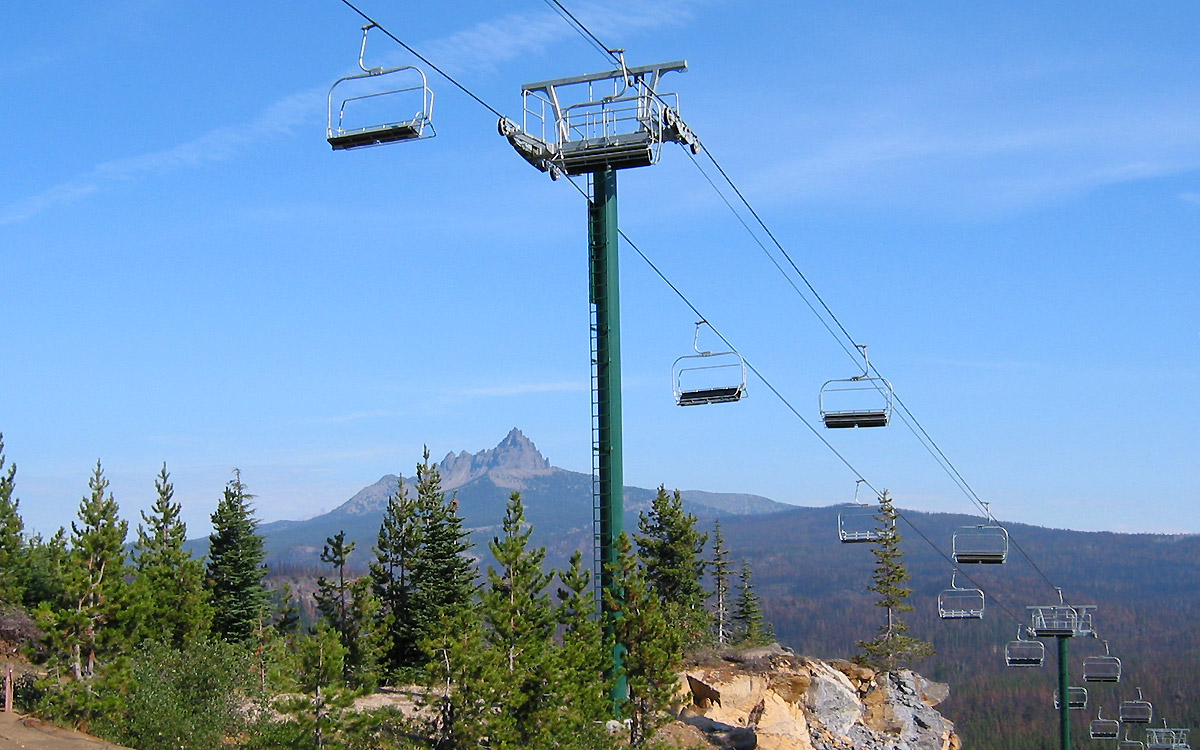
Any lift tower which is not also a drive or return terminal. Towers are typically numbered, which makes them handy landmarks.
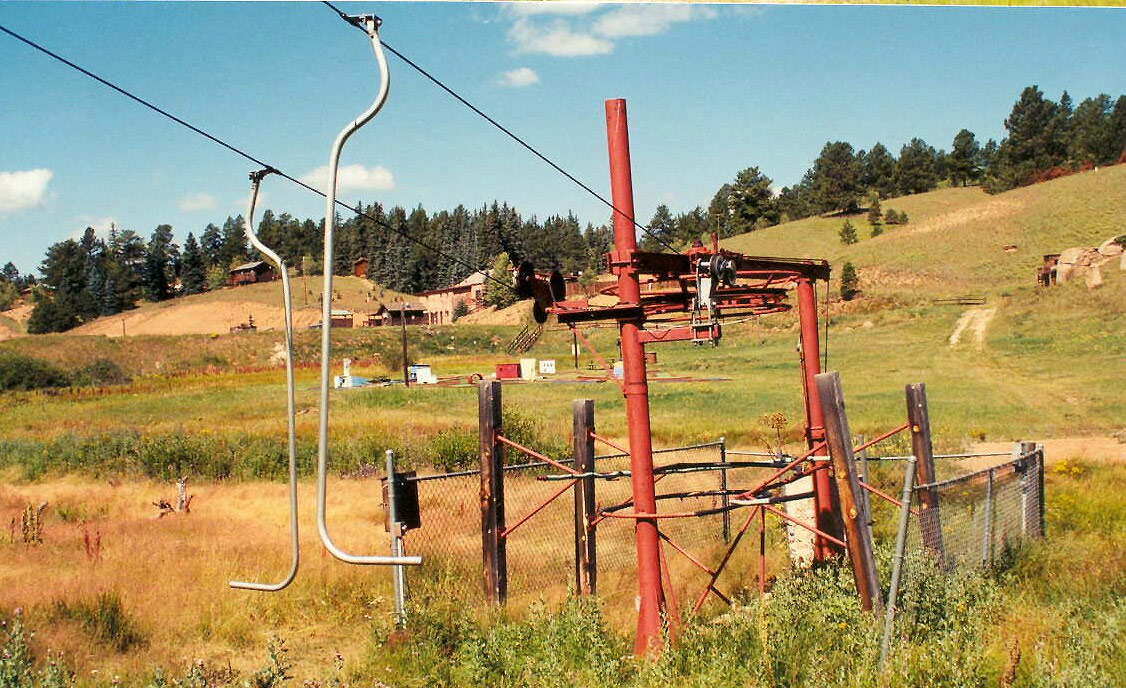
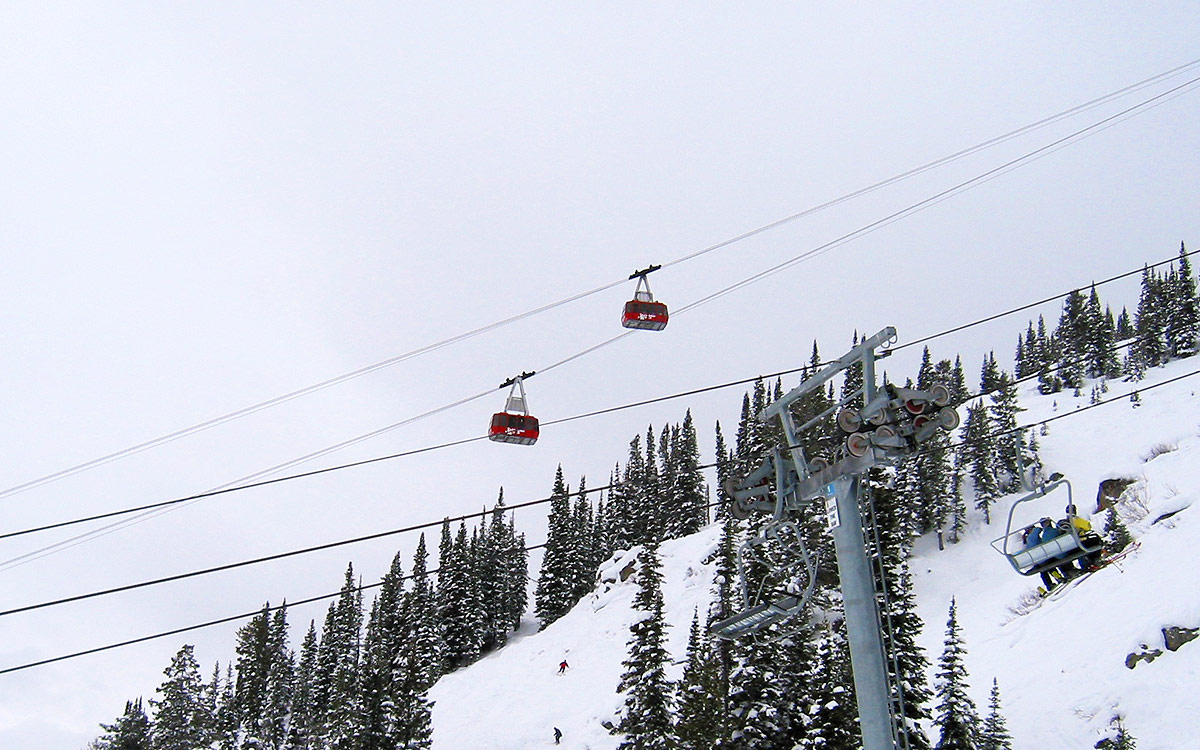
Any type of lift with just two carriers that counterbalance each other. One carrier goes up while the other goes down, and vice versa. Jigback lifts include Funiculars and Trams.
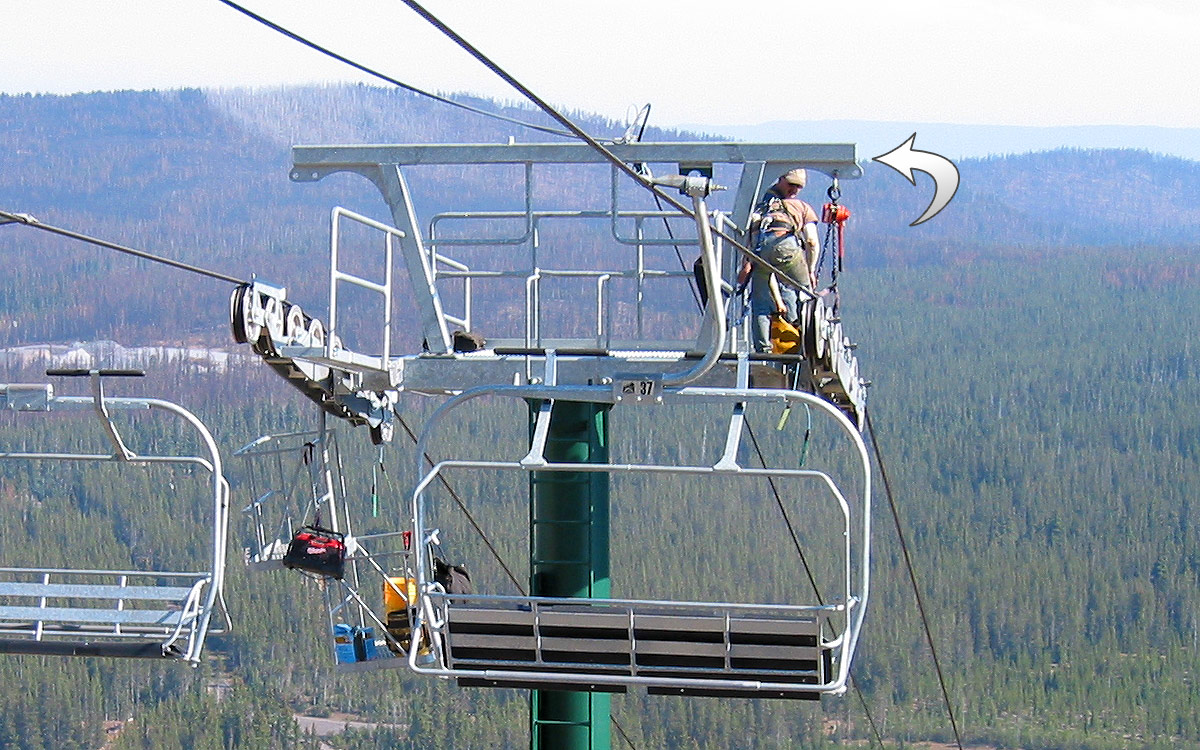
The superstructure on top of an in-line tower, to which mechanics can attach a device to hoist the haul rope for maintenance or repair purposes.
An inspection of the line of the lift by ski area personnel, done by riding the lift. On the line check, the inspector observes the behavior of the lift and looks and listens carefully to each tower, to ensure that everything is functioning properly.
The speed at which a haul rope travels. A fixed grip chairlift usually has a line speed of between 400 and 500 feet per minute; Poma lifts can approach 700 feet per minute, and modern detachable lifts can travel more than 1,000 feet per minute.
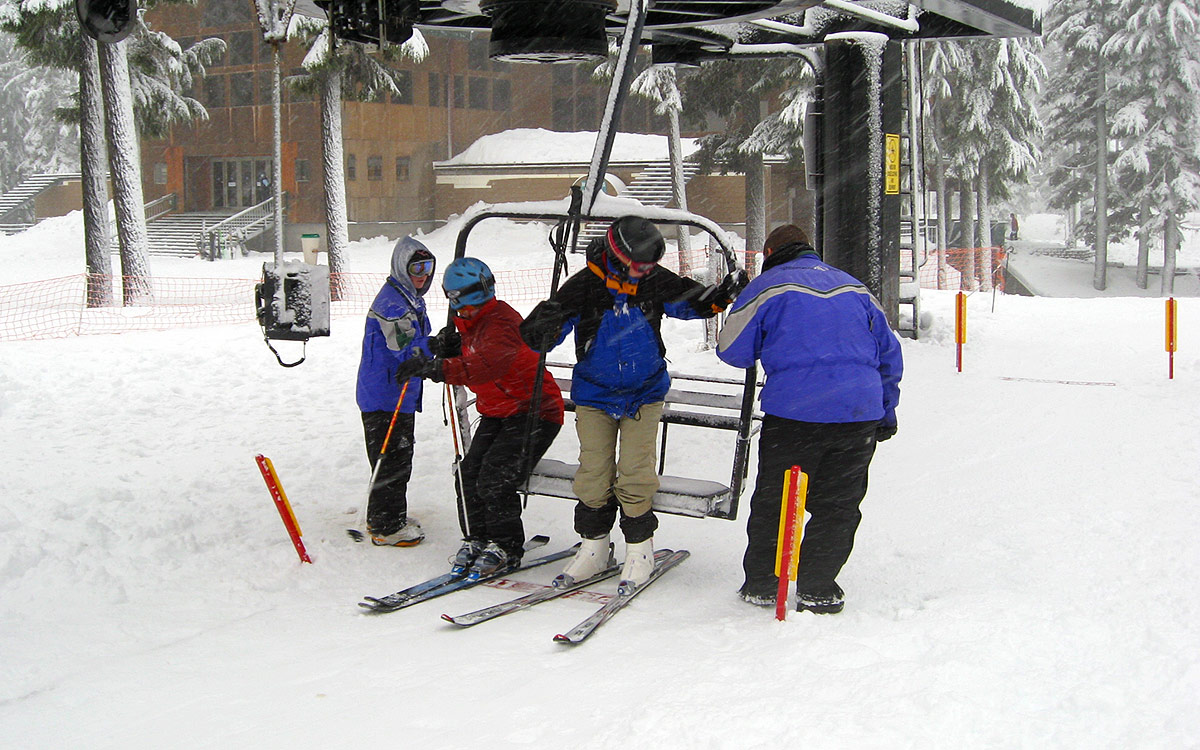
A line, designated either by signs on either side or by a board placed in the snow, on along which all passengers loading a chair should be aligned just before boarding a chairlift or surface lift. Having everyone evenly aligned makes it easier for the lift operator to give everyone a smooth load.
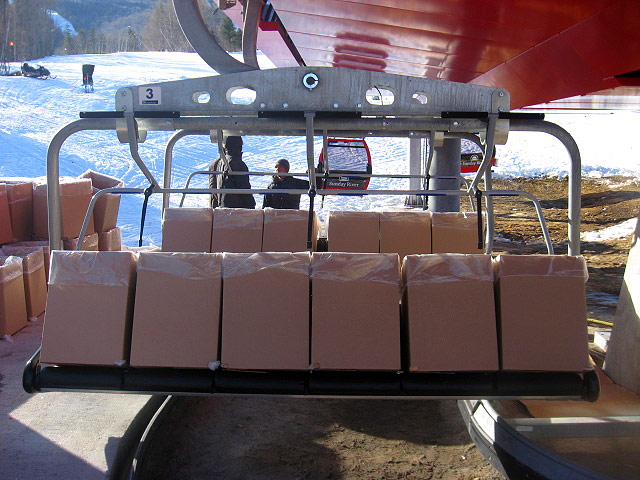
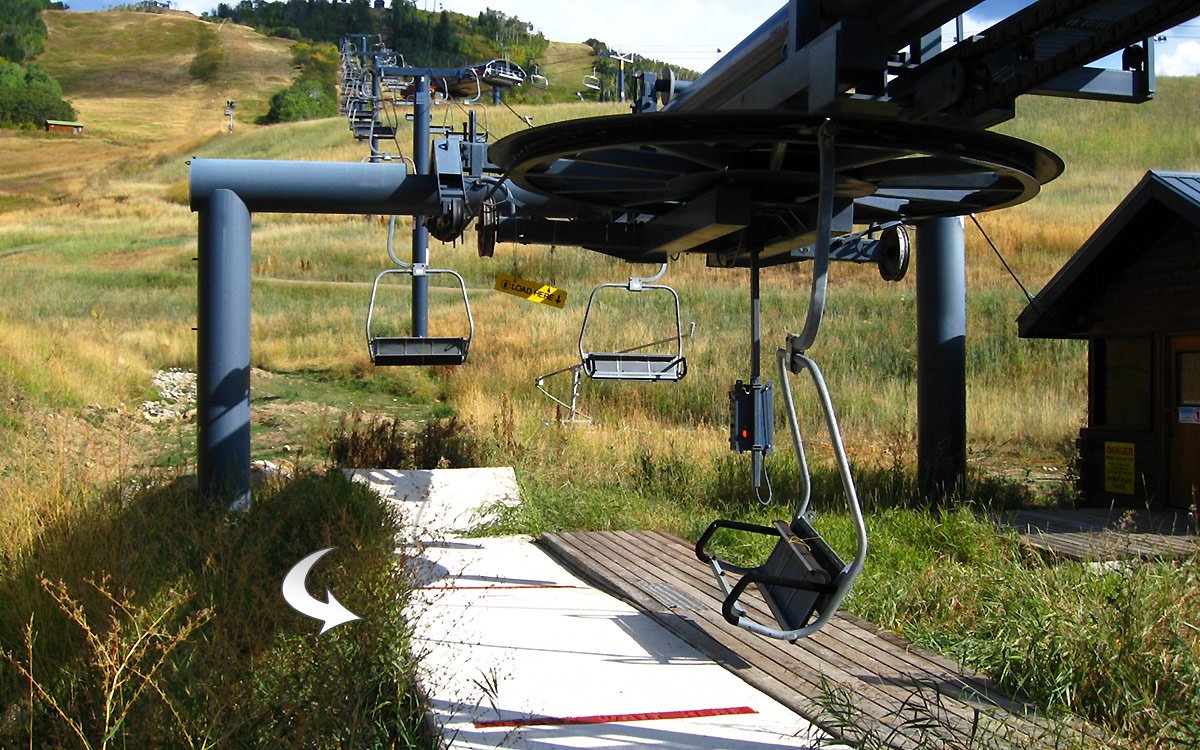
The area between the lift maze and the lift portal (the last stage of the load terminal before you're out on the line). There's lots going on in the loading area - pay attention to what's going on around you!
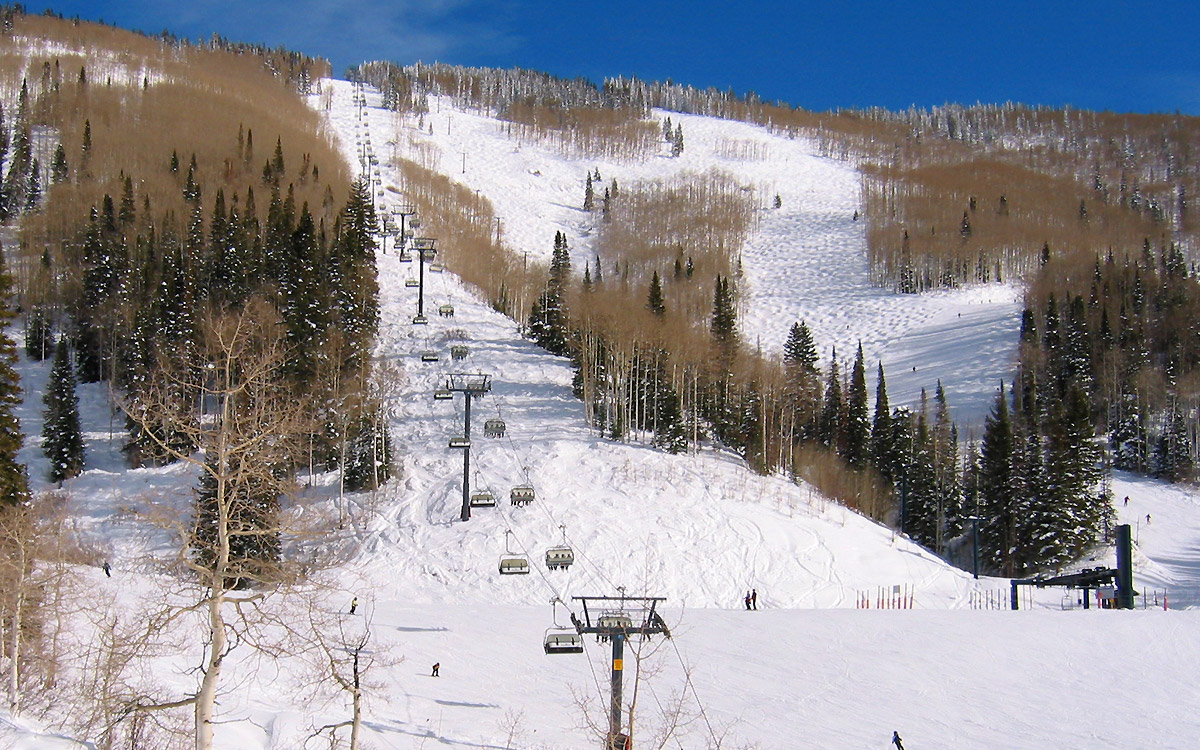
A broad term for the area of the lift between the terminals, including the inline towers, the tower heads and the sheave trains.
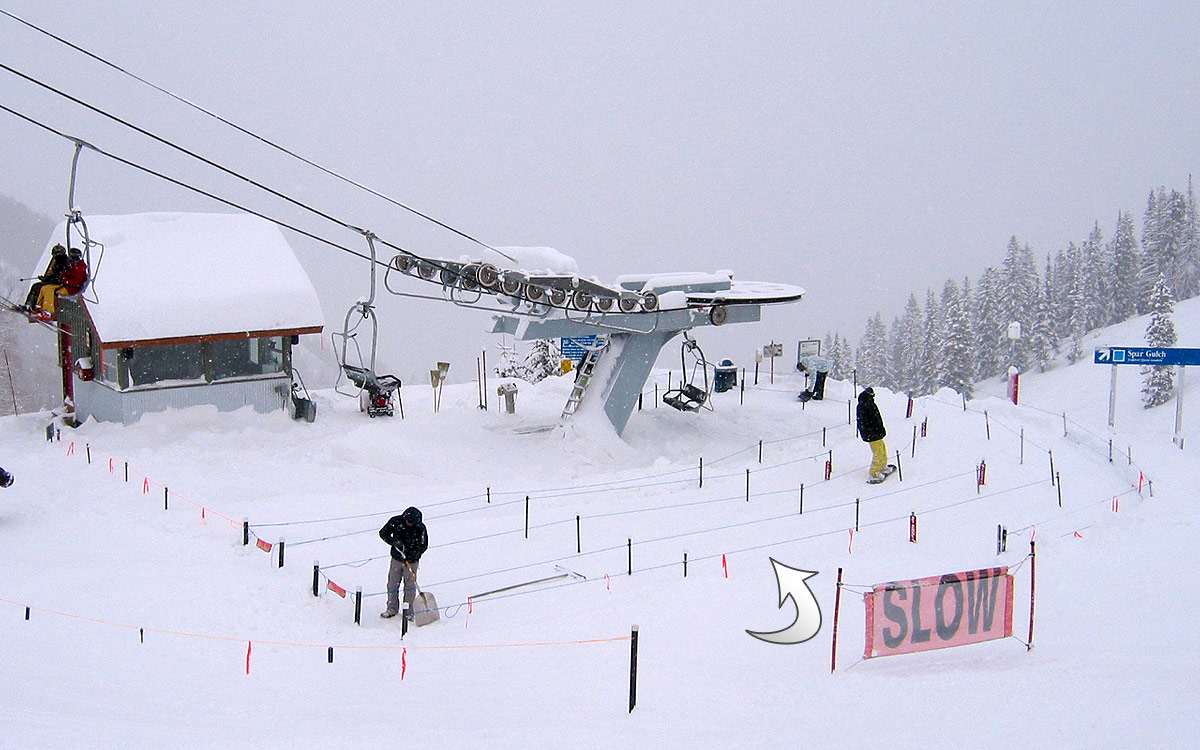
The area in which skiers and snowboarders gather while waiting to board a lift. Mazes are designed to optimize chairlift loading. Skiers and riders often call mazes "lift lines."
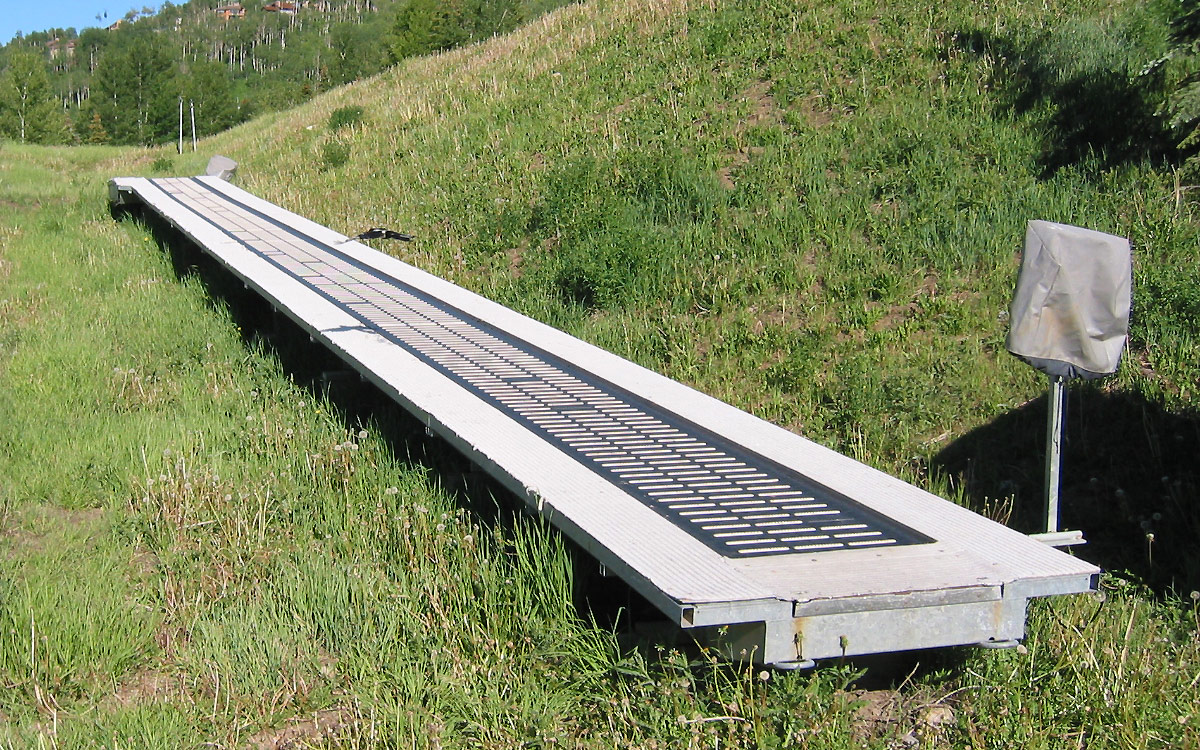
A surface lift which is rather like a conveyor belt.. Skiers and snowboarders simply step onto the surface, which is a continuous belt. Magic Carpets are more typically found in children's areas, but some ski areas also use them for beginning adults.
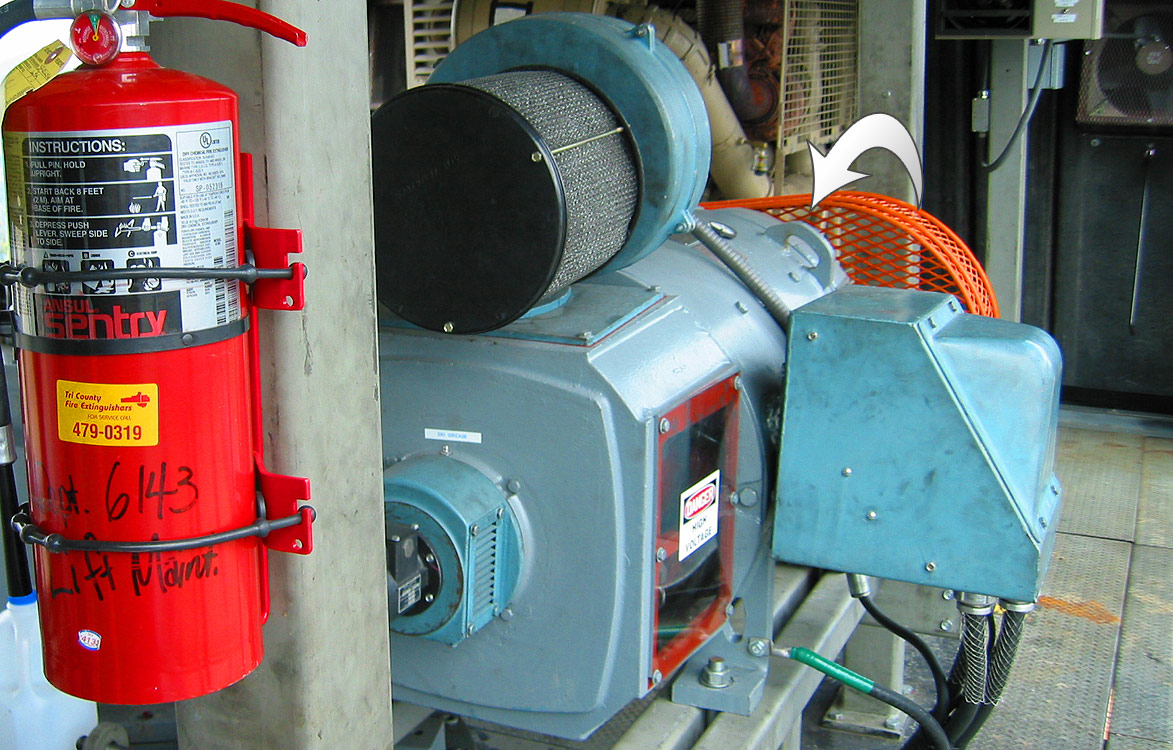
The motor that is the normal prime mover of the lift. It can be gas, diesel or electric. It may not necessarily be the motor with the highest horsepower.
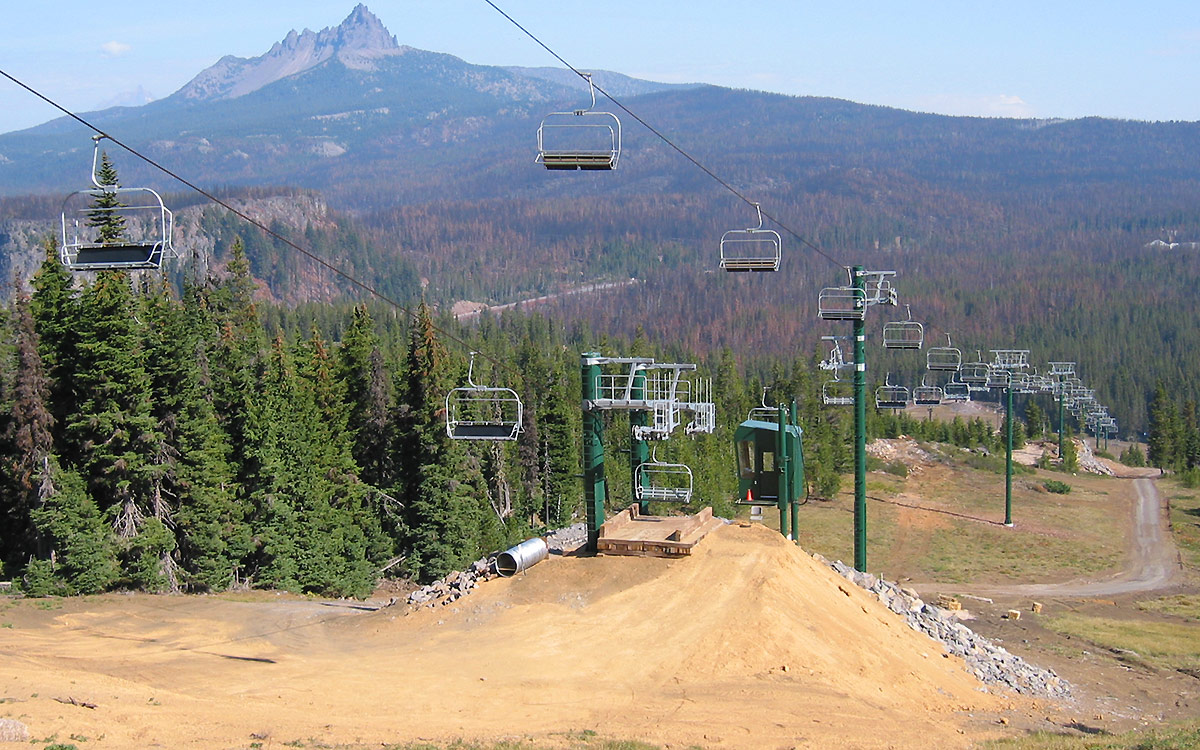
A structure somewhere on the line of the lift, between the top and bottom terminals, which allows skiers to either load, unload or both.
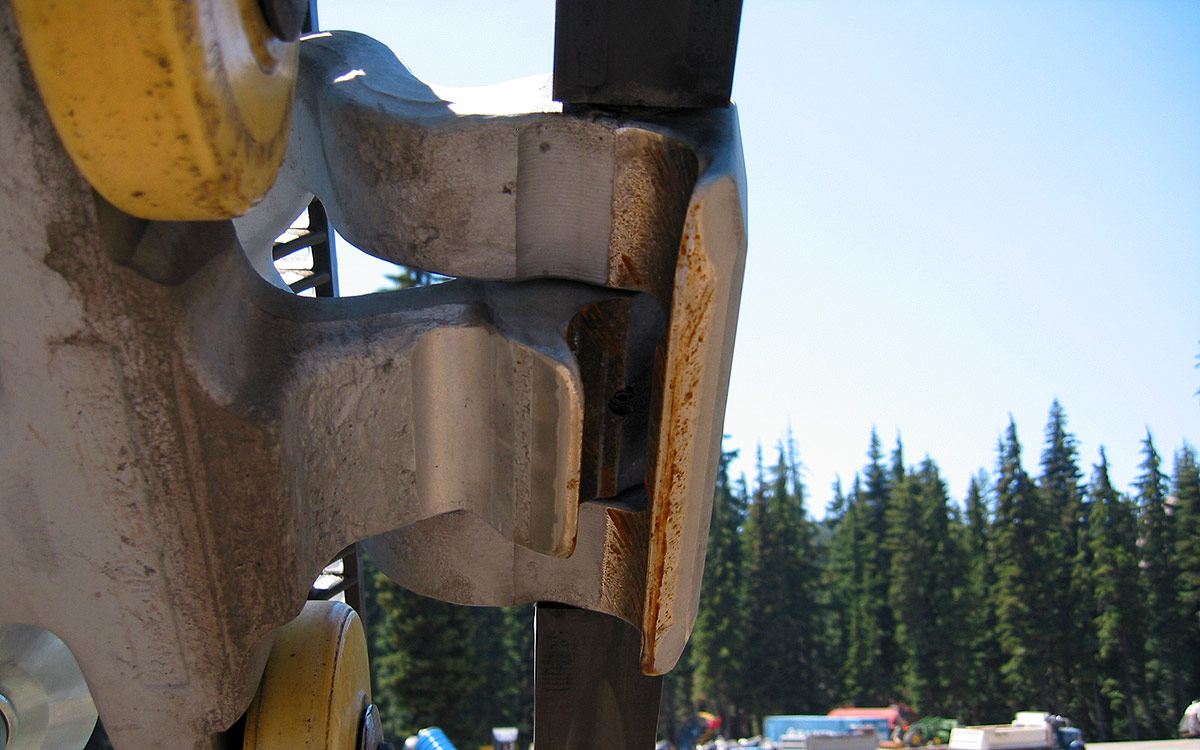
On a detachable grip, the mobile jaw is responsible for attaching and detaching itself from haul rope.
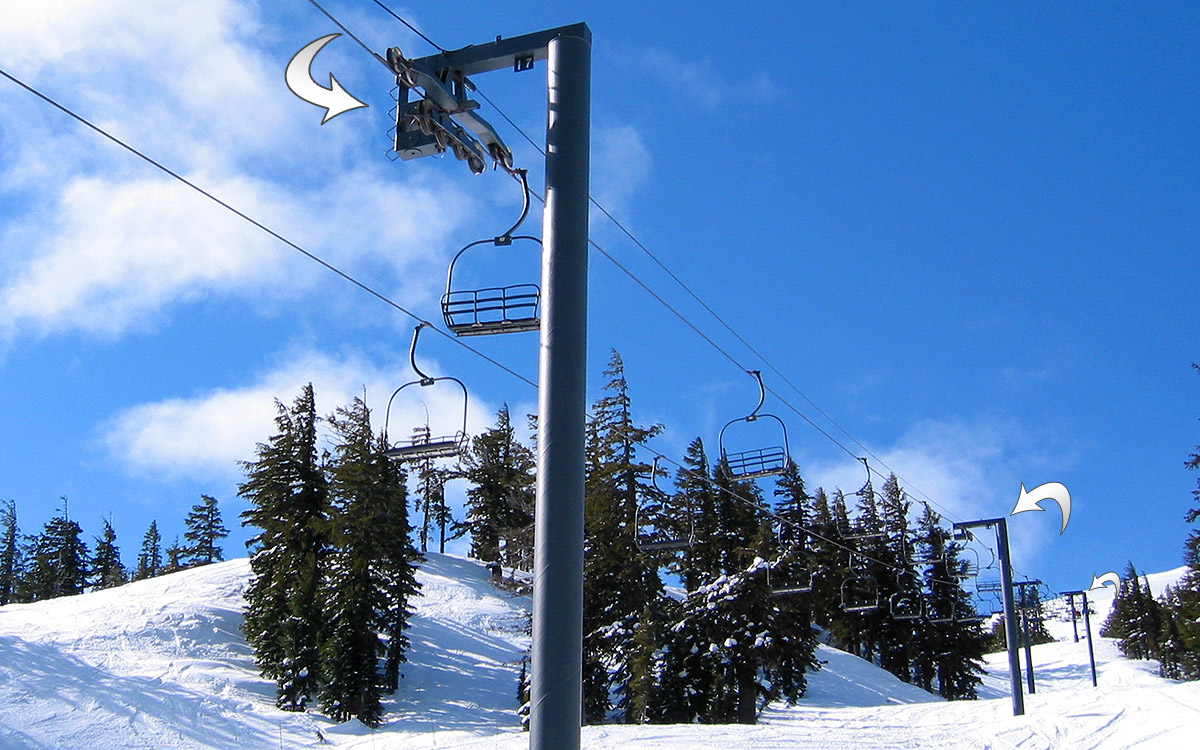
A tower that is offset from the normal center-line of the lift. The offset can help by providing a wider run for the skier. The tower cross arm is normally missing the down-line assembly. The lack of an assembly helps the manufacturer reduce costs. Also the larger down-line span helps absorb the energy generated by stops and starts in a lift with a fixed carriage.
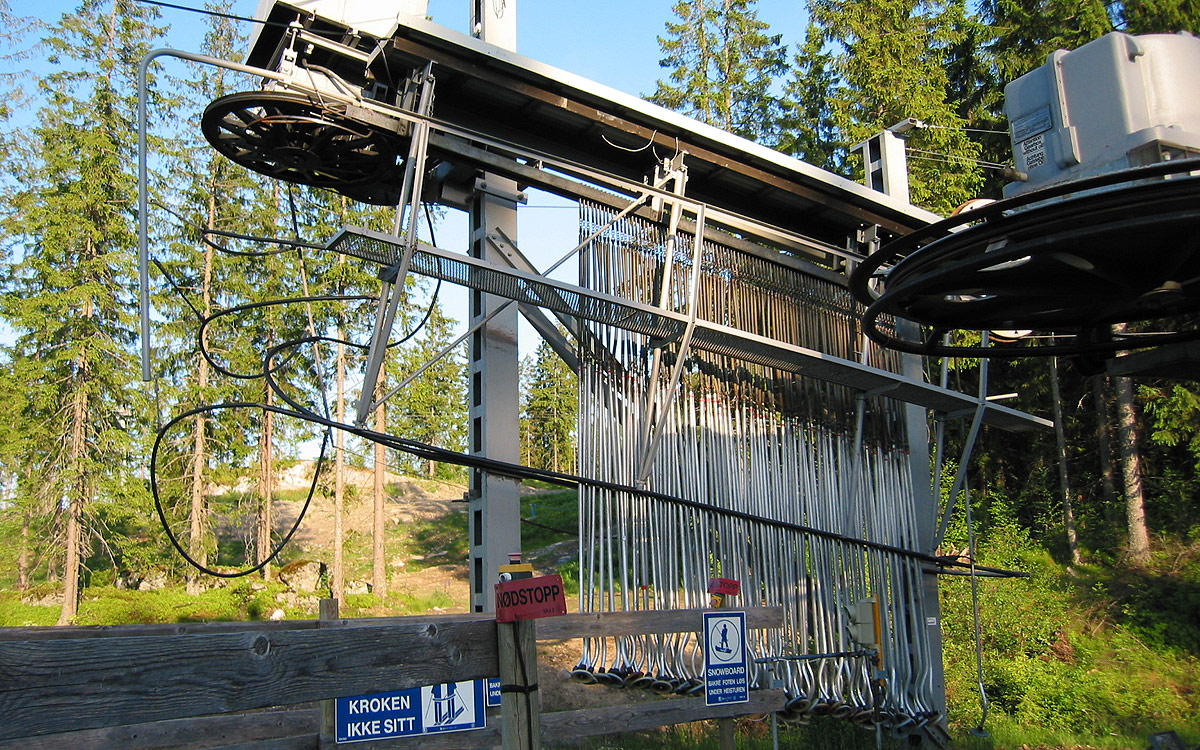
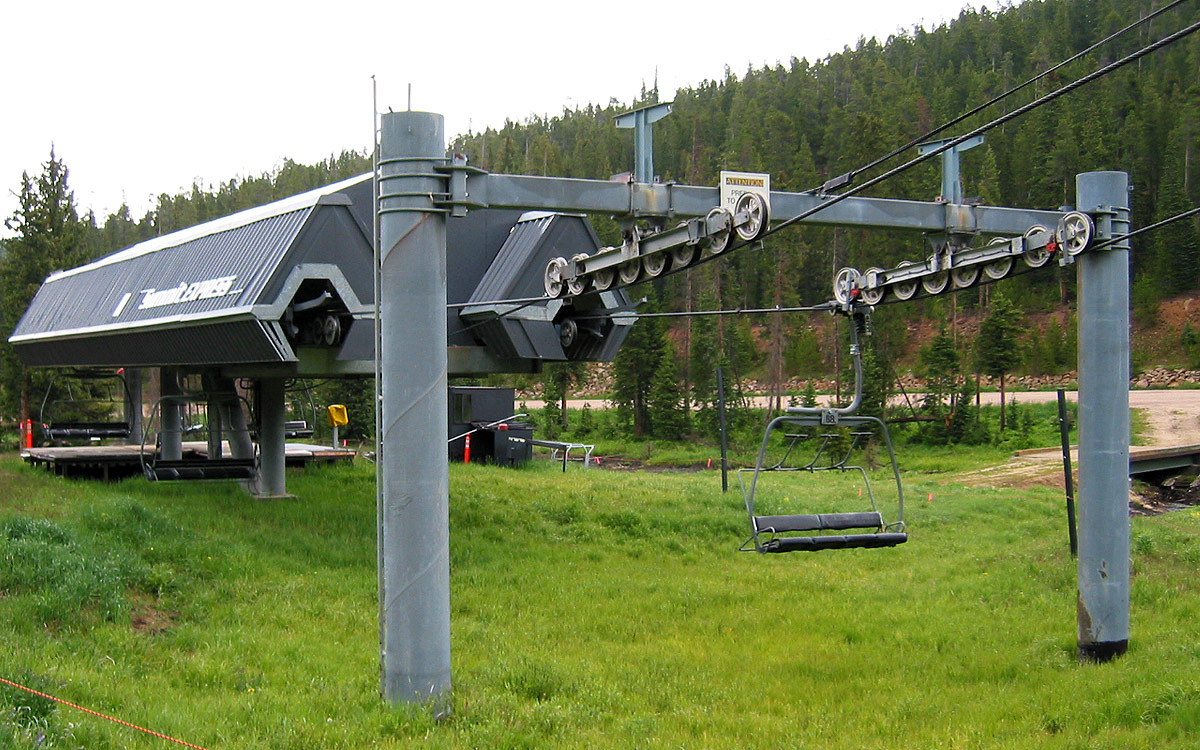
The area between the legs of the uphill end of a bottom terminal.
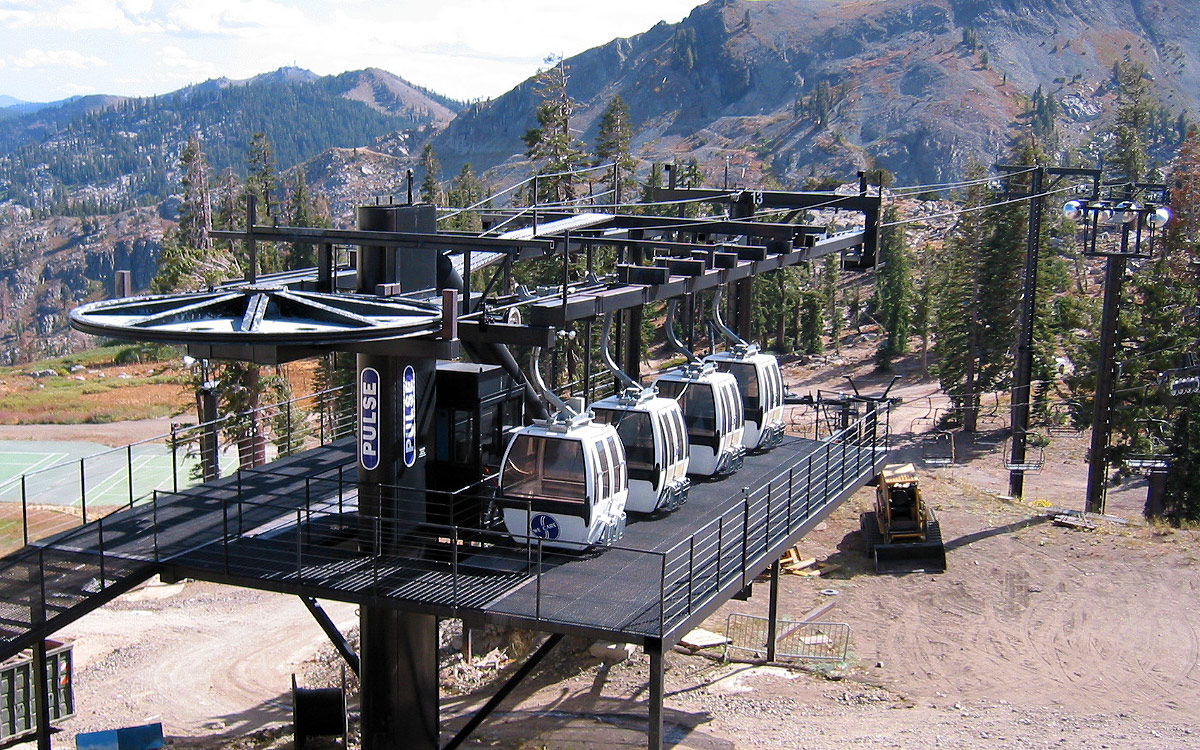
A type of aerial lift most commonly seen in Europe. Pulse lifts feature widely-spaced series of carriers - typically, gondola-type cars -- permanently gripped together in a train. The lift must stop at the terminals (hence the term "pulse") to load and unload. These are comparatively low-capacity lifts and are rarely built today.
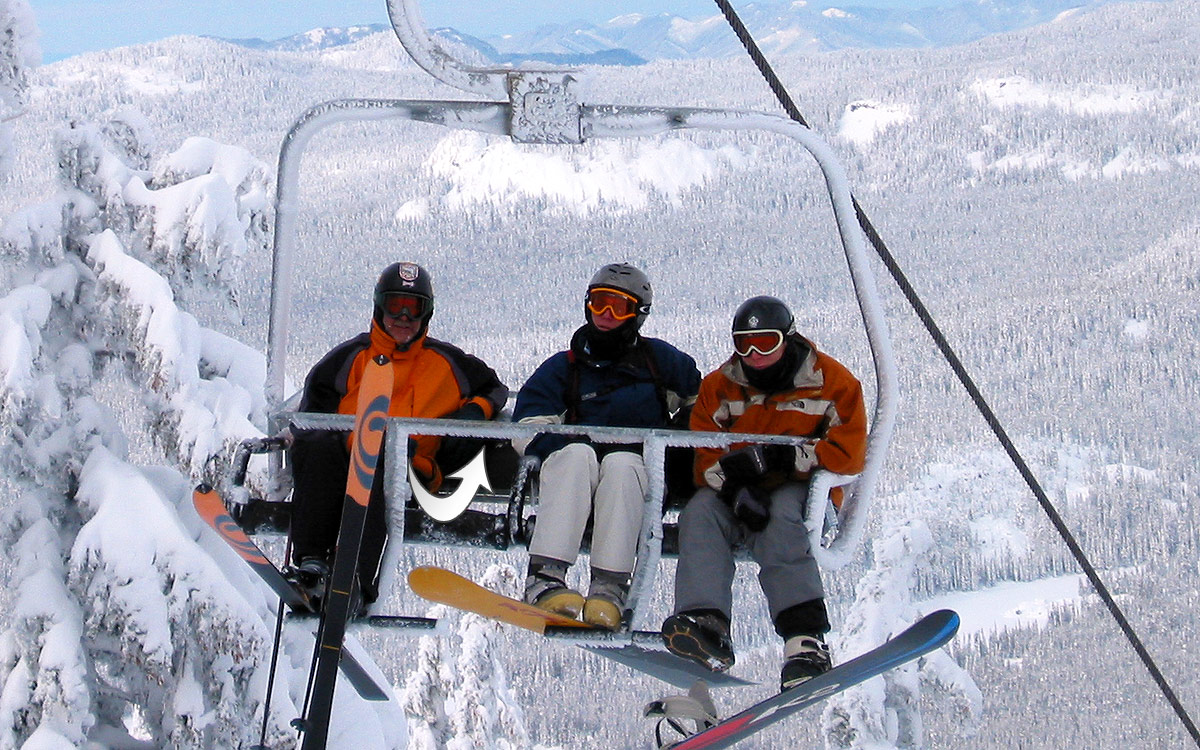
A device which can be lowered to help retain skiers and snowboarders in the chair on a chairlift. The presence of Retention Bars on chairlifts - and their use by passengers - is required by law in some states, including those in New England. They are not required by law in others, including Colorado, Utah and California, although they're found on may lifts in those states.
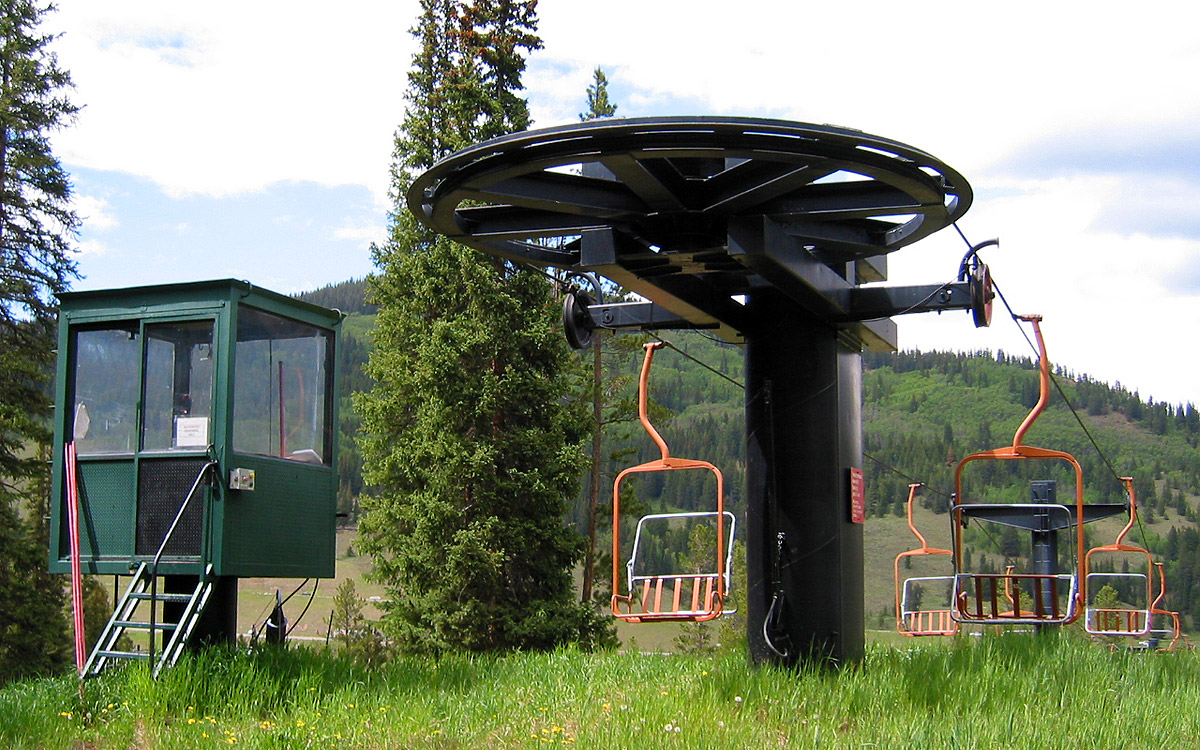
The terminal at the other end of the lift from the drive terminal.
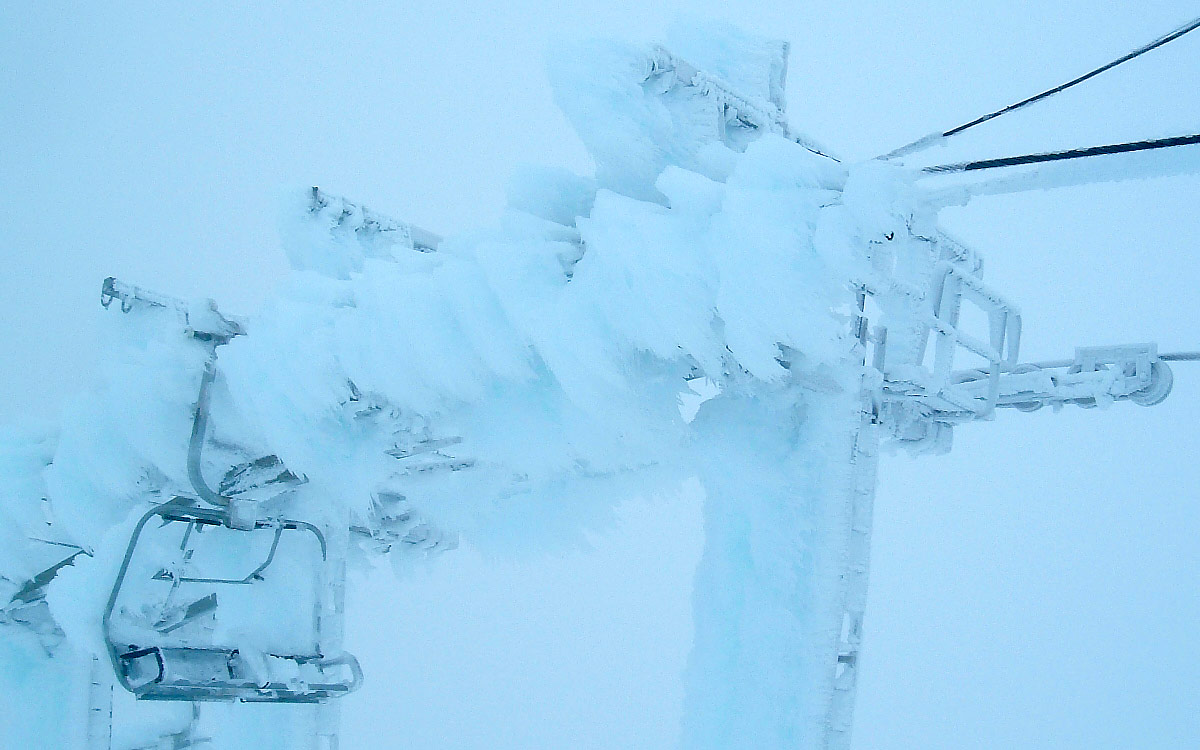
The formation and buildup of ice on a lift. This can take many hours to get the lift moving properly again.
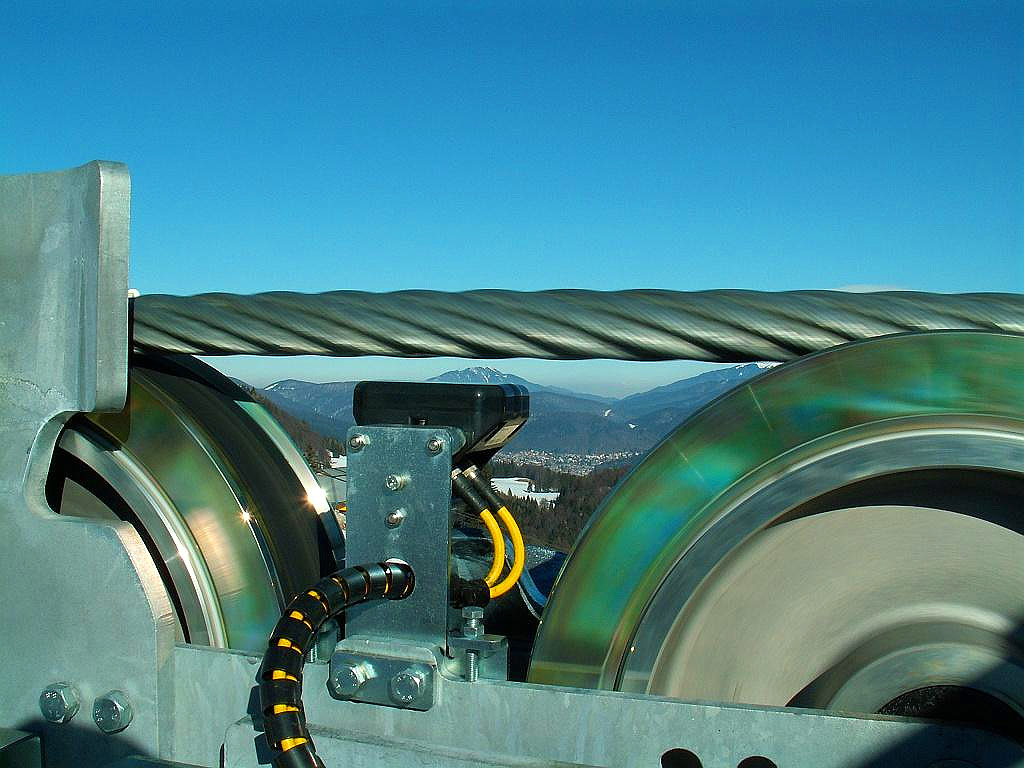
Another type of safety device used on some lifts to ensure that the haul rope is properly aligned. They're essentially metal detectors, and can detect movements in the haul rope of as little as _ inch. In the United States, they're required on all aerial lifts which travel more than 600 feet per minute.
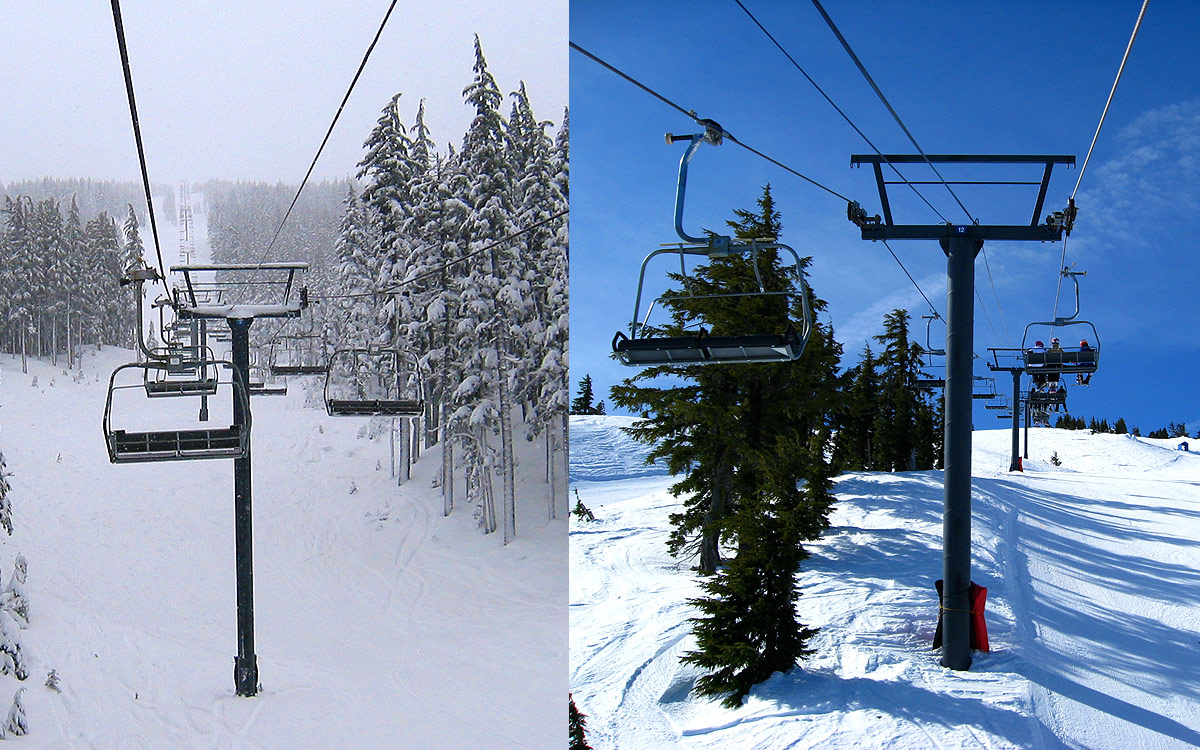
Left-hand-up: Rotation of the lift will have the up-line on the left side as you face up hill. Also called left-hand.
Right-hand-up: Rotation of the lift will have the up-line on right side as you face up the hill. Also called right-hand.
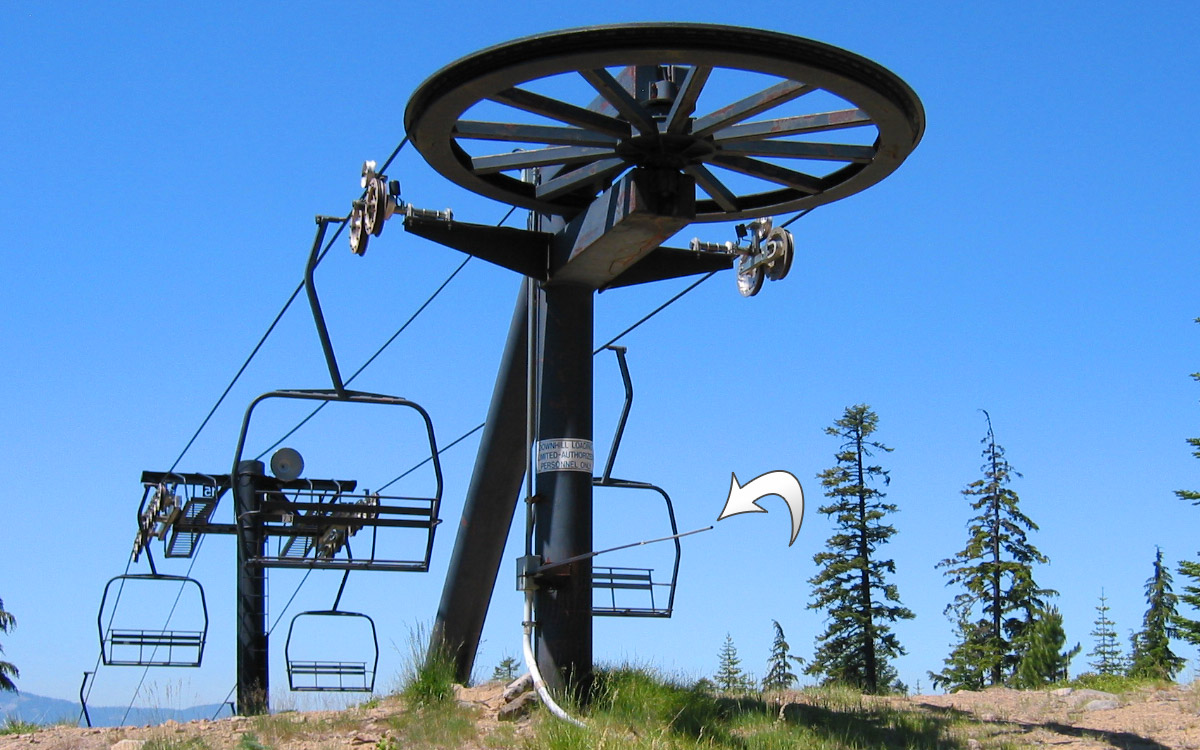
A device - usually a rope, metal bar or laser - at the top of lifts, hooked into the lift's safety circuitry. If a skier or snowboarder fails to unload properly, they'll trip the rope or bar, which throws a switch and stops the lift. If you ever have trouble getting off a lift, do NOT try to avoid this device - blast through it bravely, knowing that your troubles are nearly over!
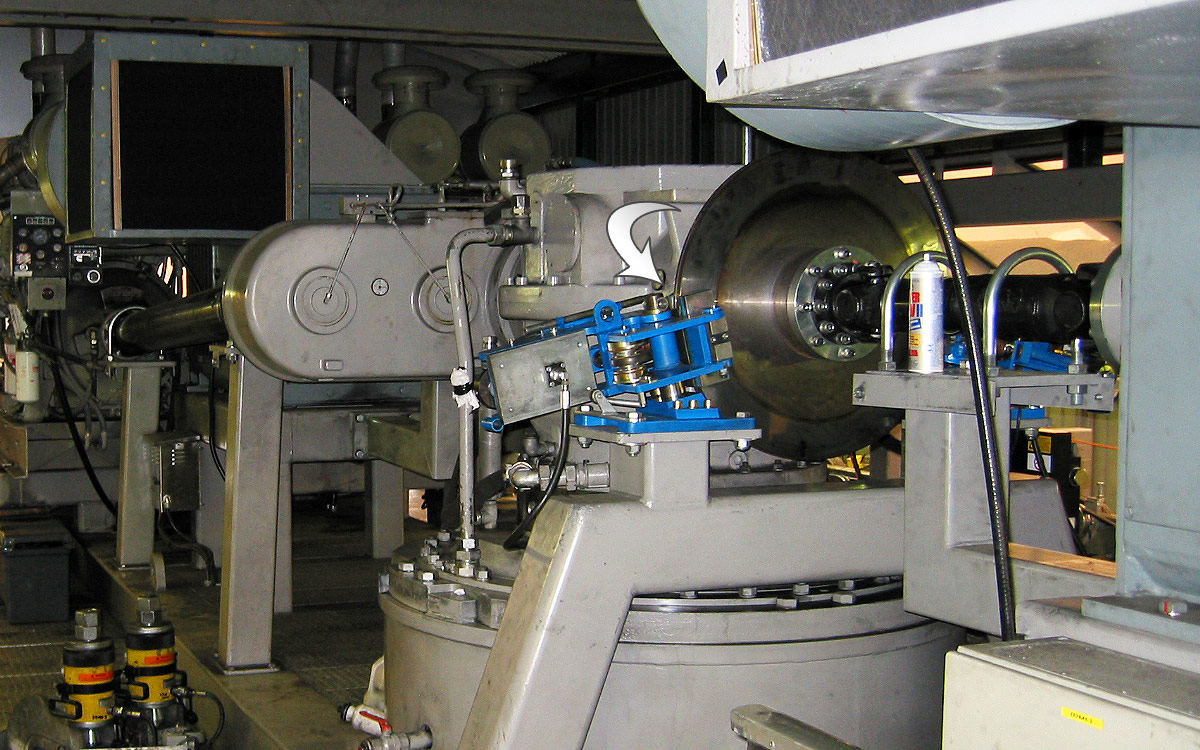
Acts upon the driveline to stop the lift.
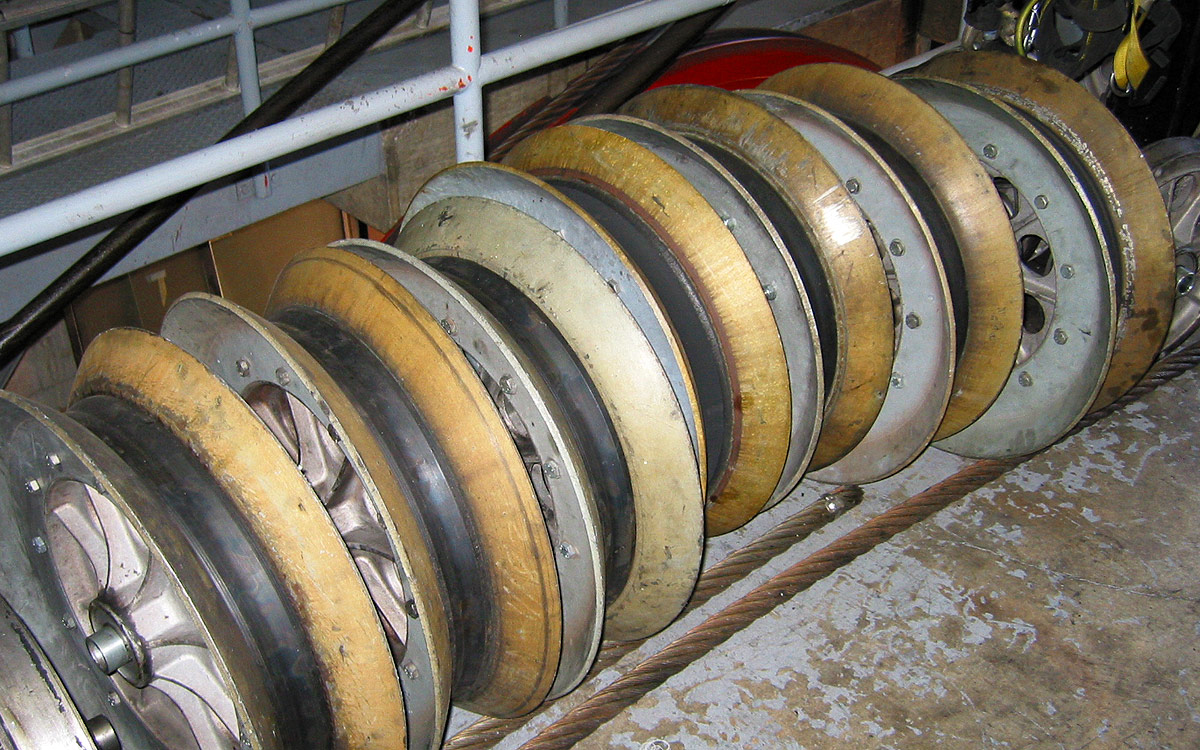
A metal wheel, lined with a special type of rubber, which either supports or depresses the haul rope.
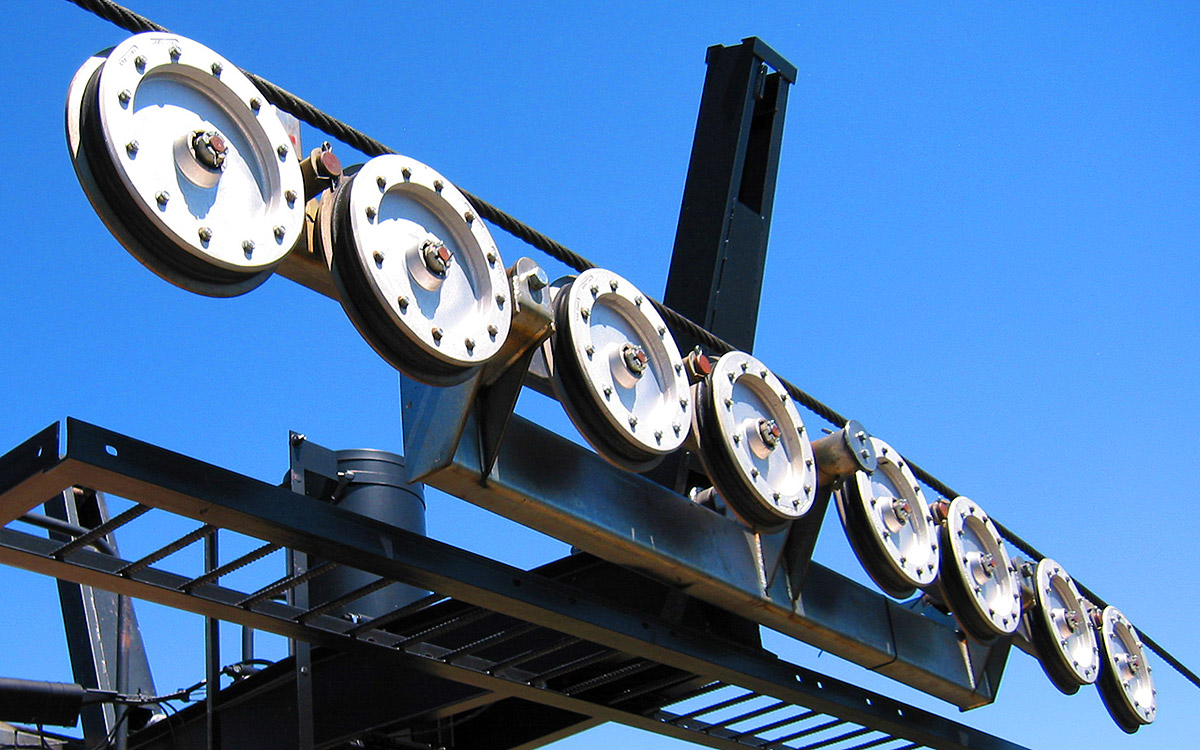
A series of sheave wheels, located on the crossarm of an in-line, top or bottom terminal. They're typically mounted in assemblies known as "Walking Beams," which allow the wheels to move up or down in response to the weight of the carrier and its passengers.
The linear distance covered by a lift. Think back on right triangles from your high school trigonometry class: the vertical rise of the lift is the vertical leg of a triangle, and the slope length is the hypotenuse.
A device on modern detachable lifts (gondolas and high speed chairlifts) which can advance or retard the speed a carrier as it moves through a terminal, in order to keep the proper distance between carriers.
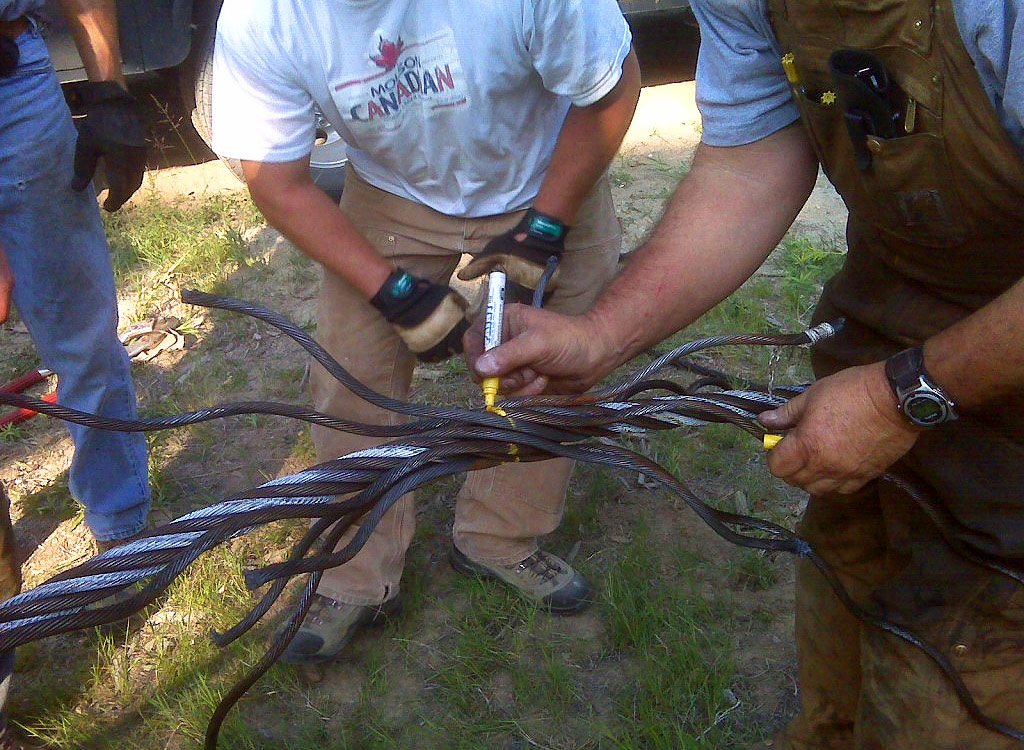
The process of weaving one end of a rope smoothly into the other in order to create a continuous loop. Also: the area of a haul rope which has undergone a splice. Splice length is a minimum of 1200 diameters, where extra length is left in the splice to make it easier to shorten later in it’s life.
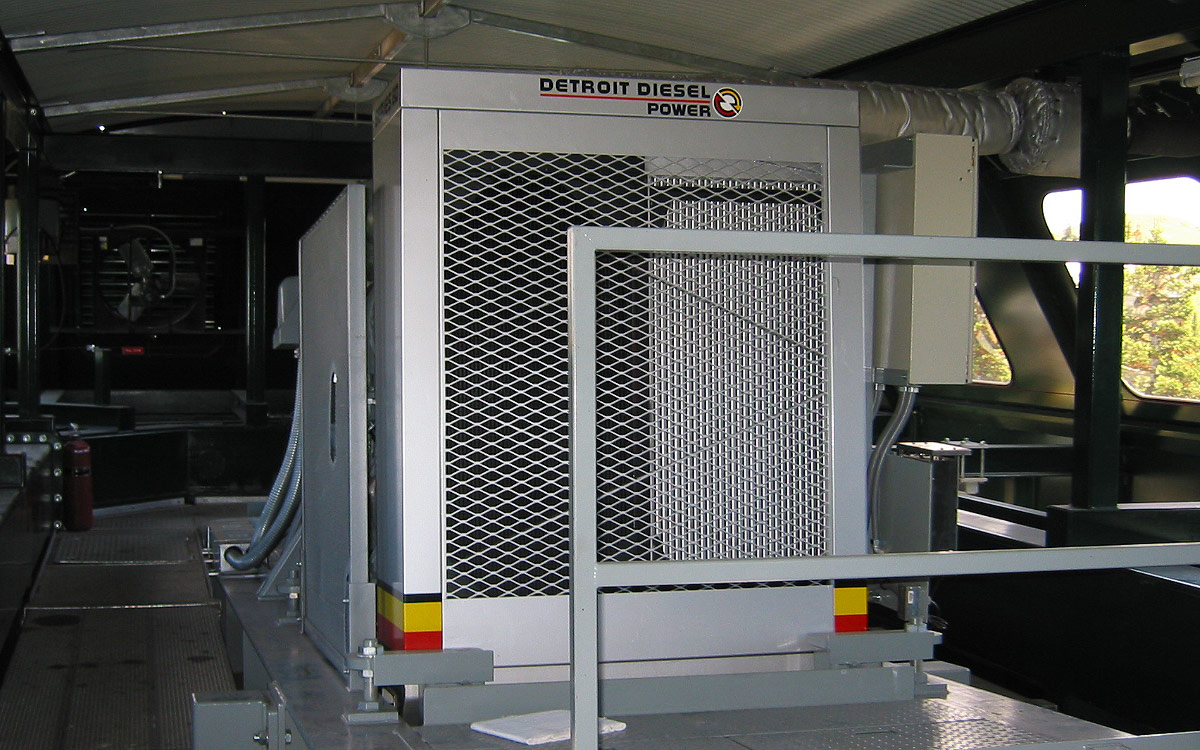
A gasoline or diesel engine which allows the lift to run in the event of power failure or problem with the main motor.
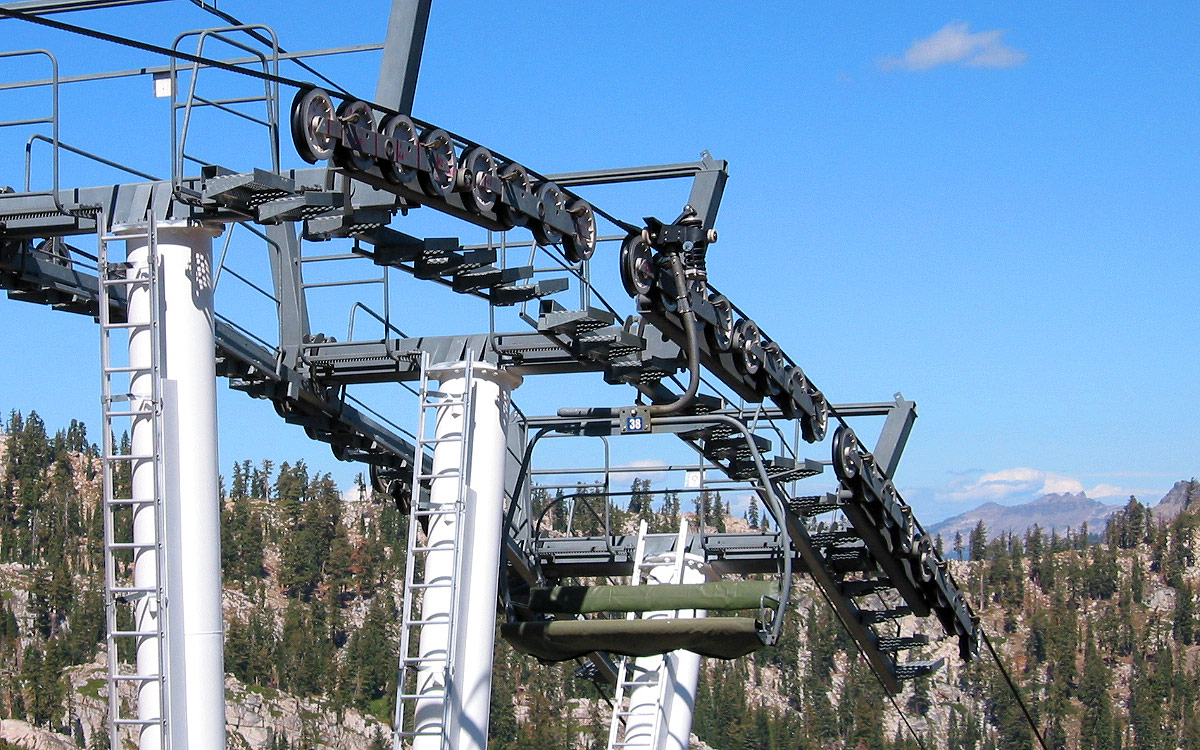
An assembly of sheaves that hold up the haul rope from the bottom side. Also called breakover assembly.
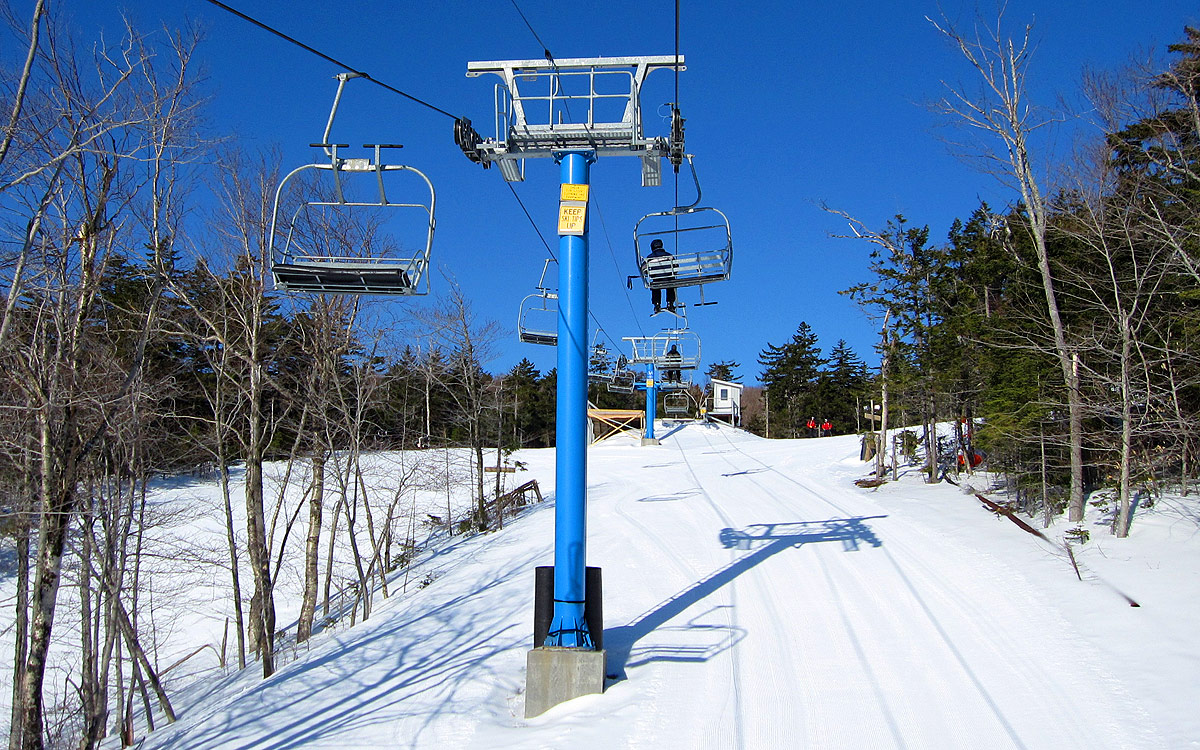
An in-line tower on which the sheave train supports the haul rope, rather than depressing it.
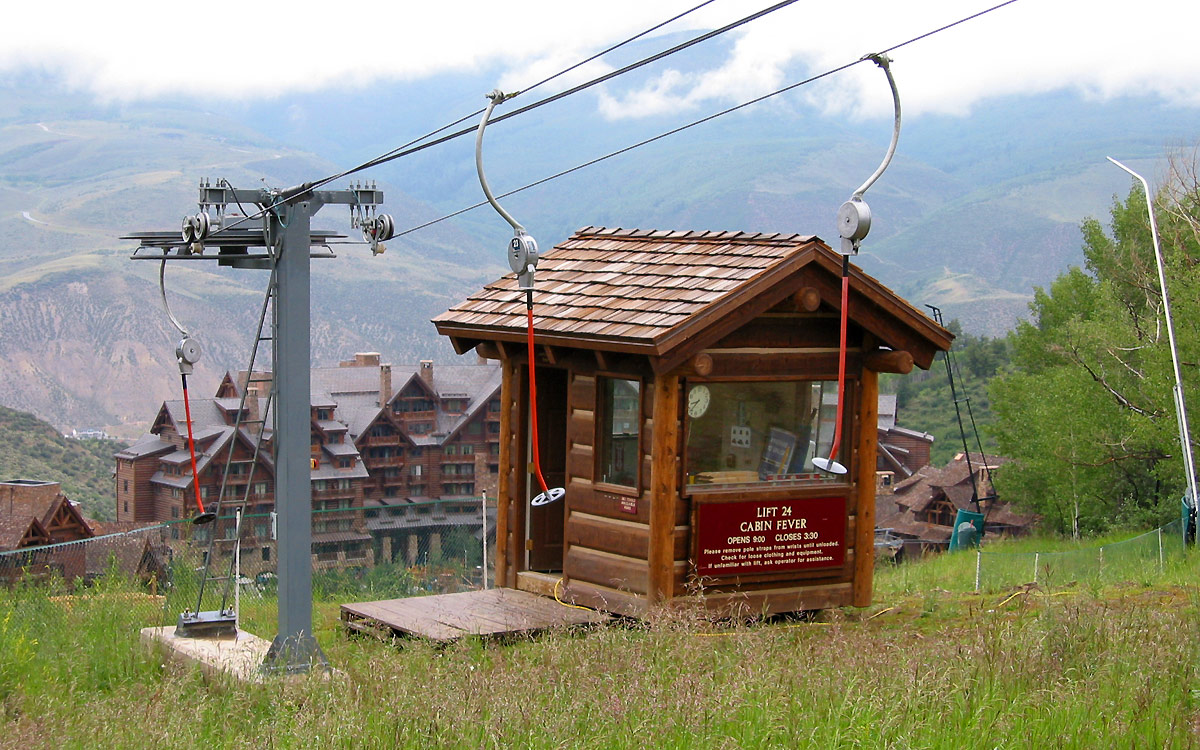
Any lift on which the skier or snowboarder's skis or board remains in contact with the snow. Surface lift types include Rope Tows, Handle Tows, J-Bars, T-Bars and Poma Lifts.
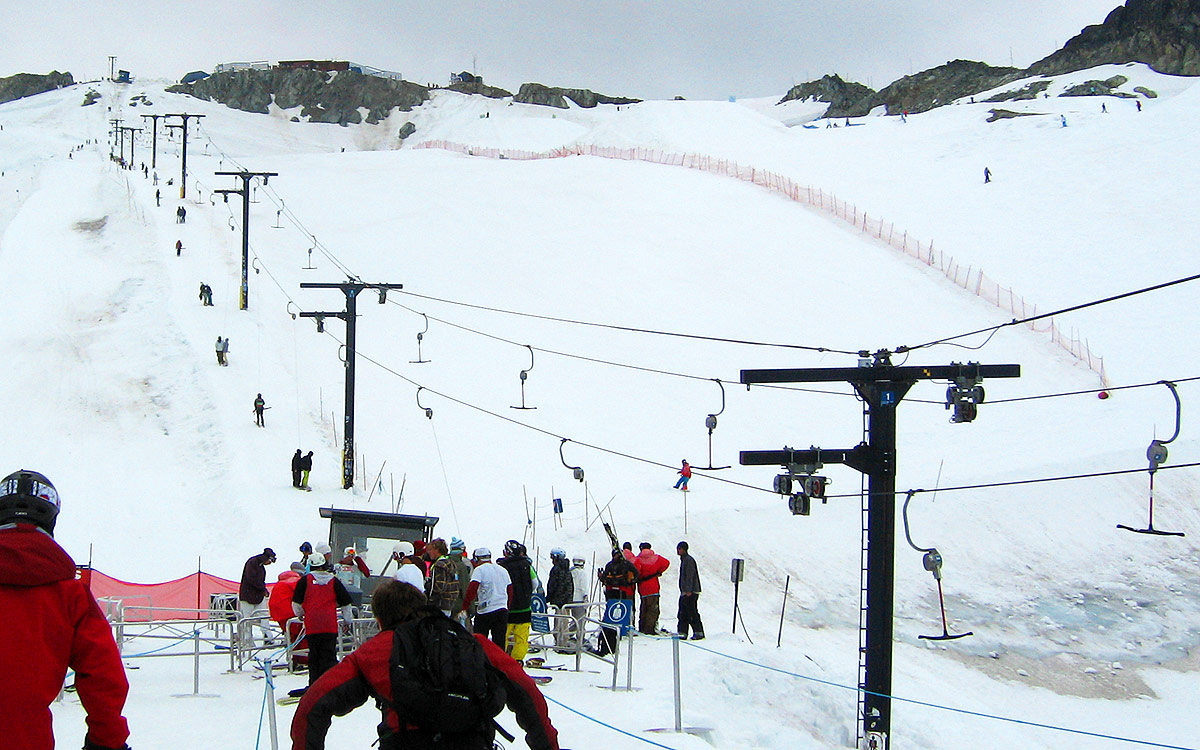
A surface lift similar in design and concept to a J-Bar, only with a T-shaped fitting at the bottom to allow two skiers to ride side by side. The device essentially tows you up the hill, and sitting down on it is always a mistake. Getting your boot buckles tangled with those of the person riding next to you is always interesting. Tall adults riding with small children have even more fun.
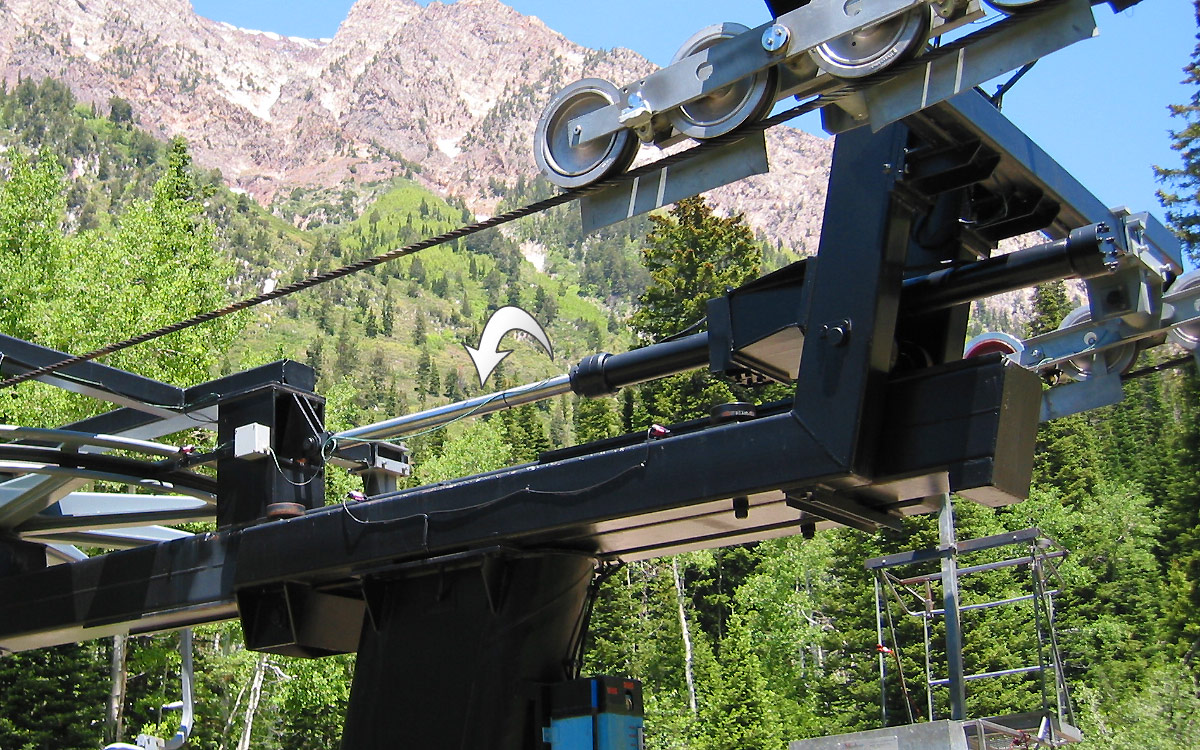
A device which keeps correct amount of tension on the haul rope - and therefore, the appropriate amount of friction between the haul rope and the wheel. Many new lifts are tensioned by either pneumatic or hydraulic tensioning systems instead of counterweights.
The speed at which a carrier goes through a terminal. On a fixed grip lift, terminal speed is the same as line speed. On a detachable lift, it's slower.
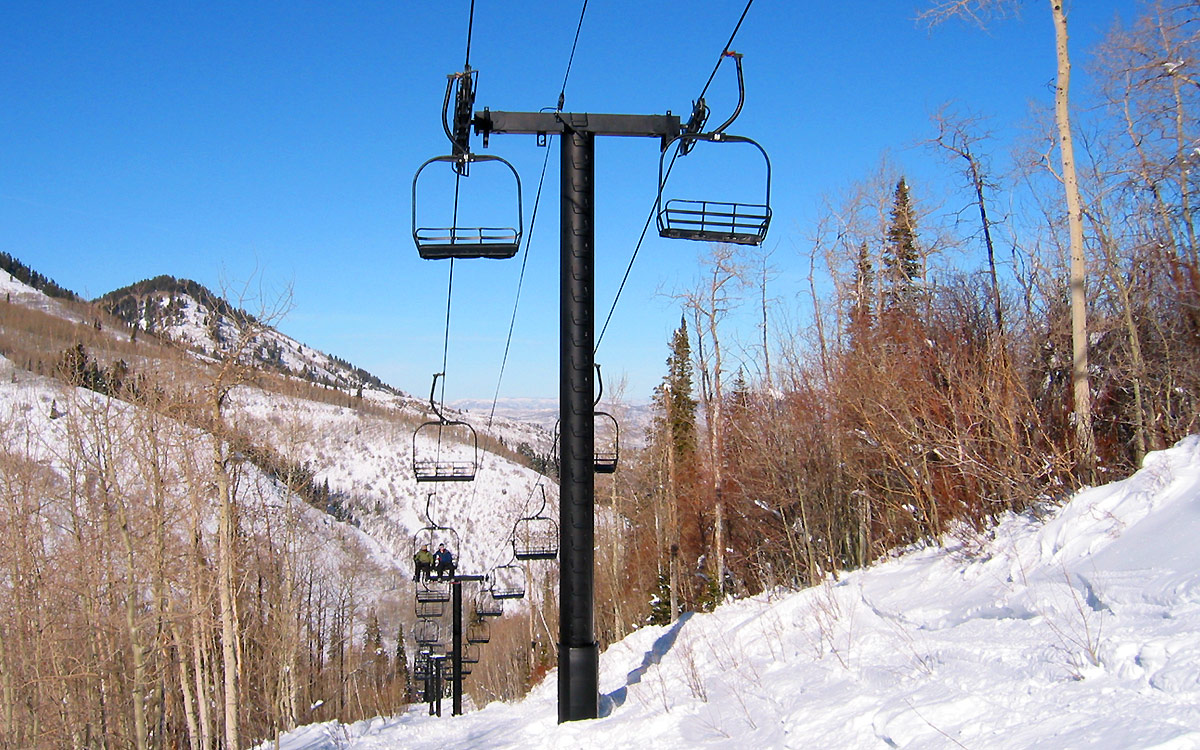
Any structure which either supports or compresses the haul rope. Most towers today are "tubes," or pipe. Towers on older lifts, and also very tall towers such as those used on trams, are typically constructed in lattice fashion. Towers are anchored to massive blocks of concrete, which are either buried in soil or pinned to rock. Lift manufacturers and ski areas also consider the terminals at either end of a lift to be towers.
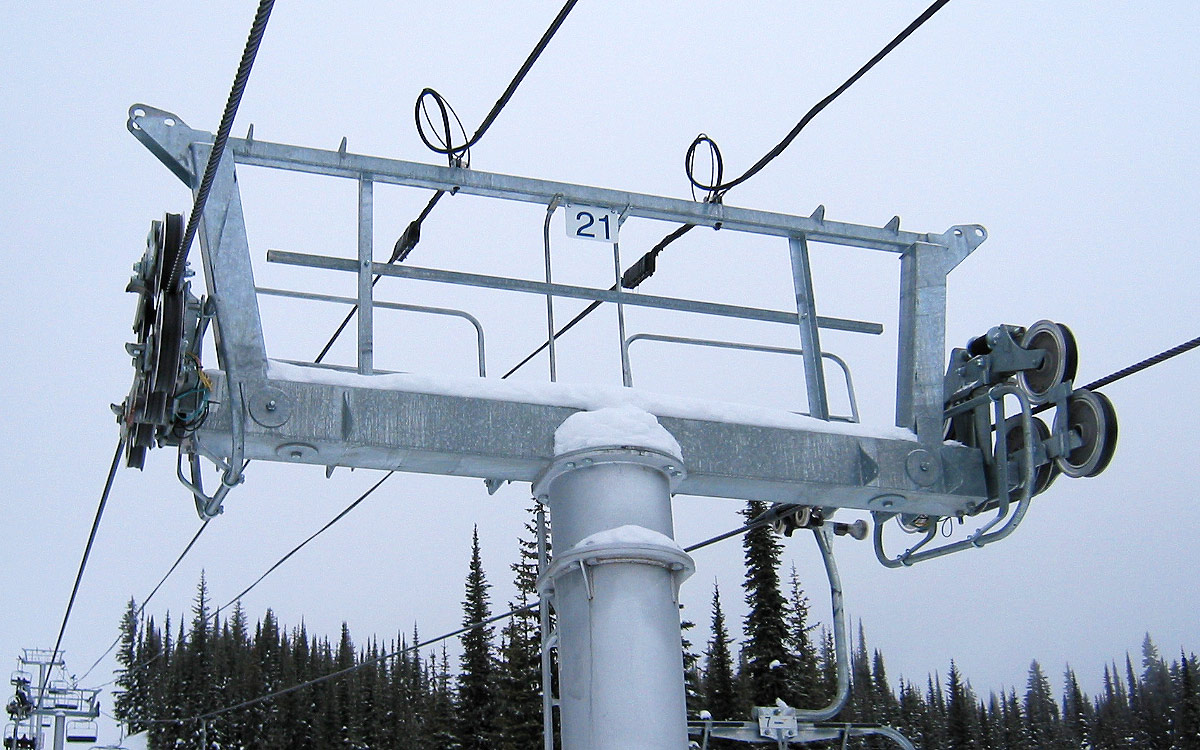
The assembly at the top of the vertical portion of a tower, including the cross arm, the sheave trains and the lift frame.
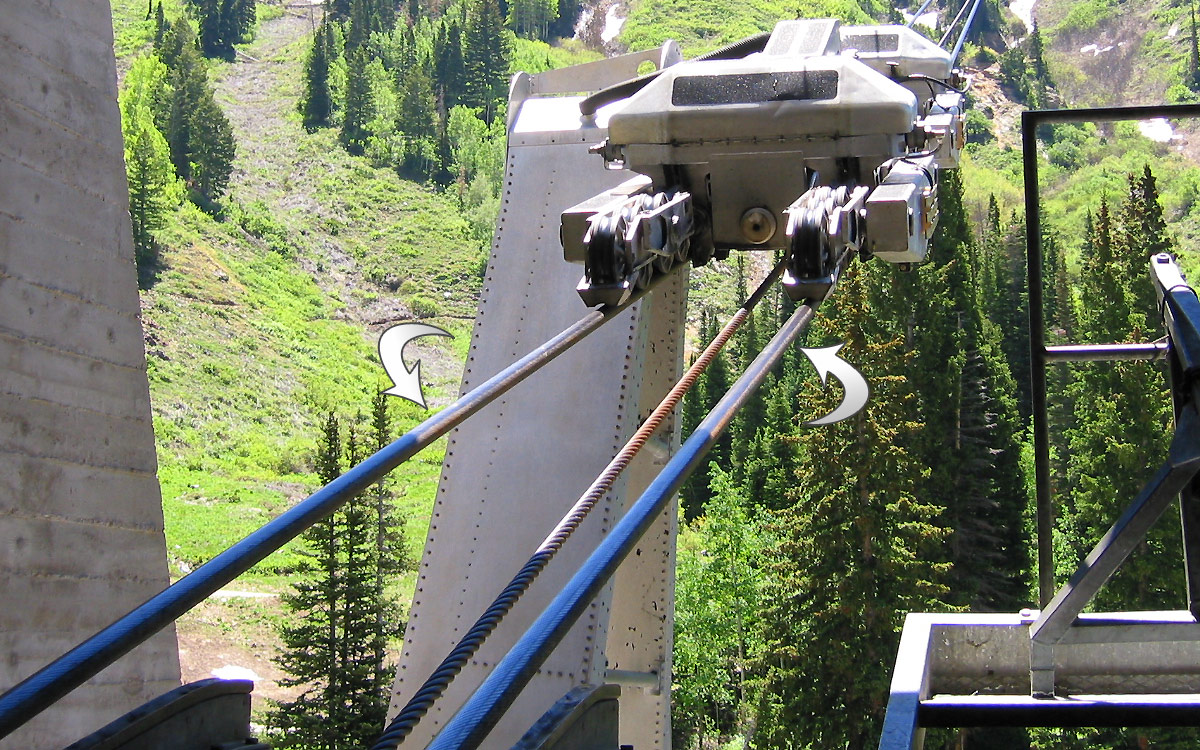
A smooth wire rope with the sole function of supporting a carrier. The carrier rides along the track rope on small wheels, which wrap around it. Lifts which have track ropes also have haul ropes to move the carrier. Track ropes are found on older-style (non-monocable) gondolas and aerial tramways.
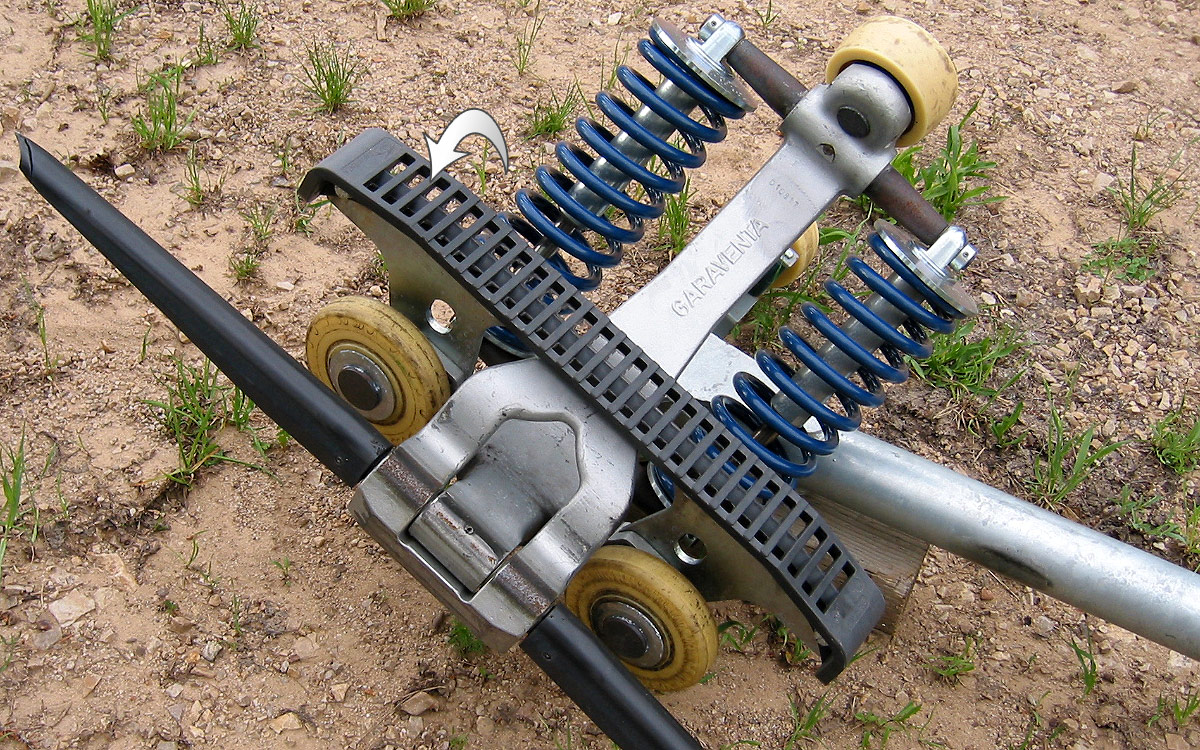
A plastic or metal plate found on the top or side of a detachable grip that allows the tire banks inside the terminal to accelerate, decelerate and propel the carrier around the contour.
For a demonstration, click here.
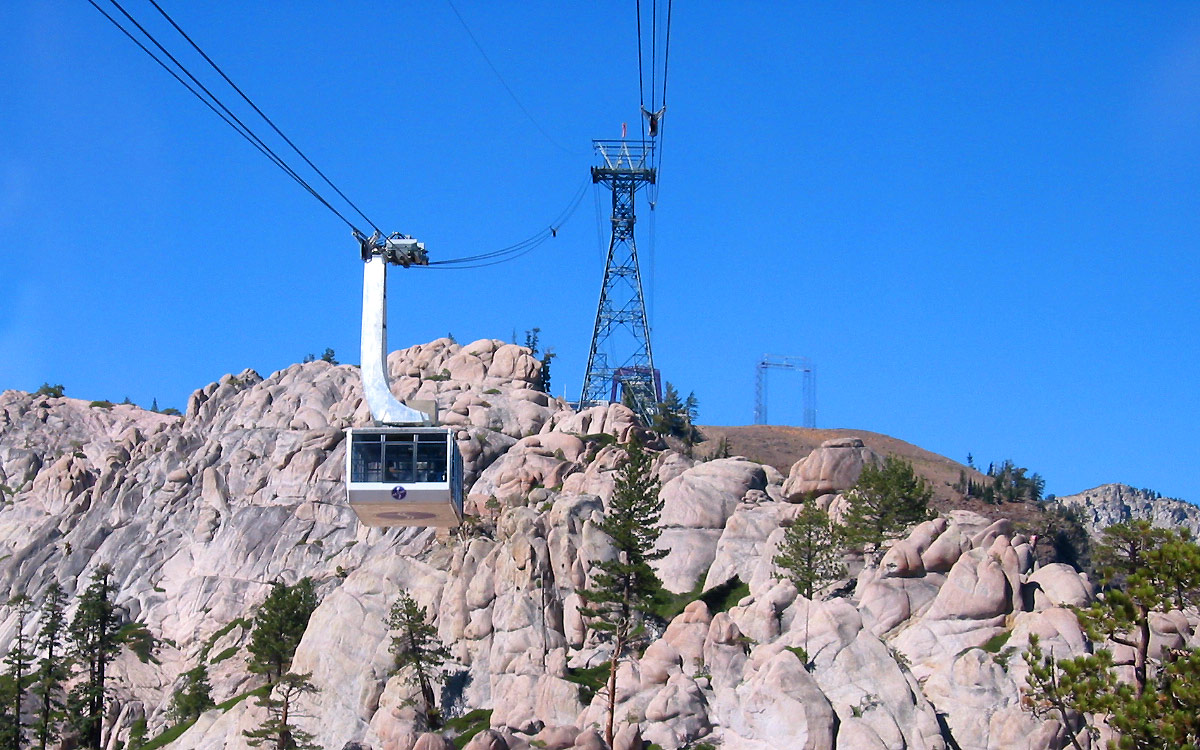
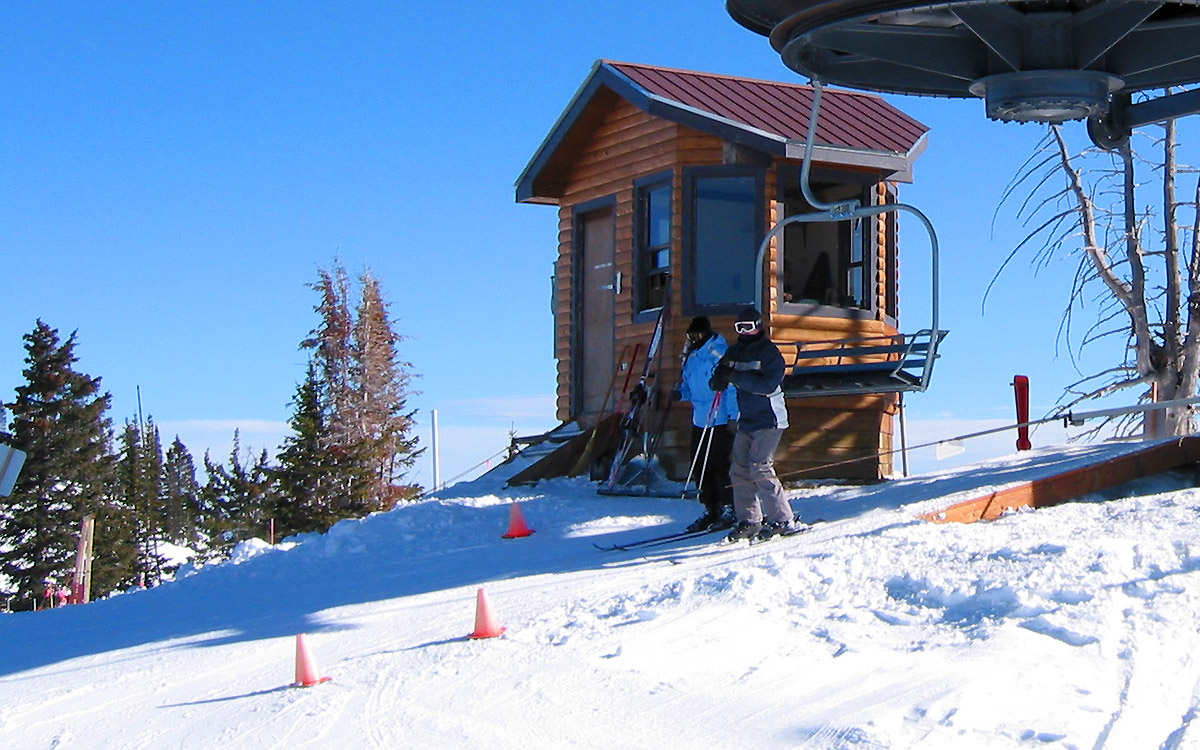
This is the area located from the unload point of a lift and down the ramp to a safe distance away, so the next passengers can safely disembark. This area is typically marked by orange cones or markers.
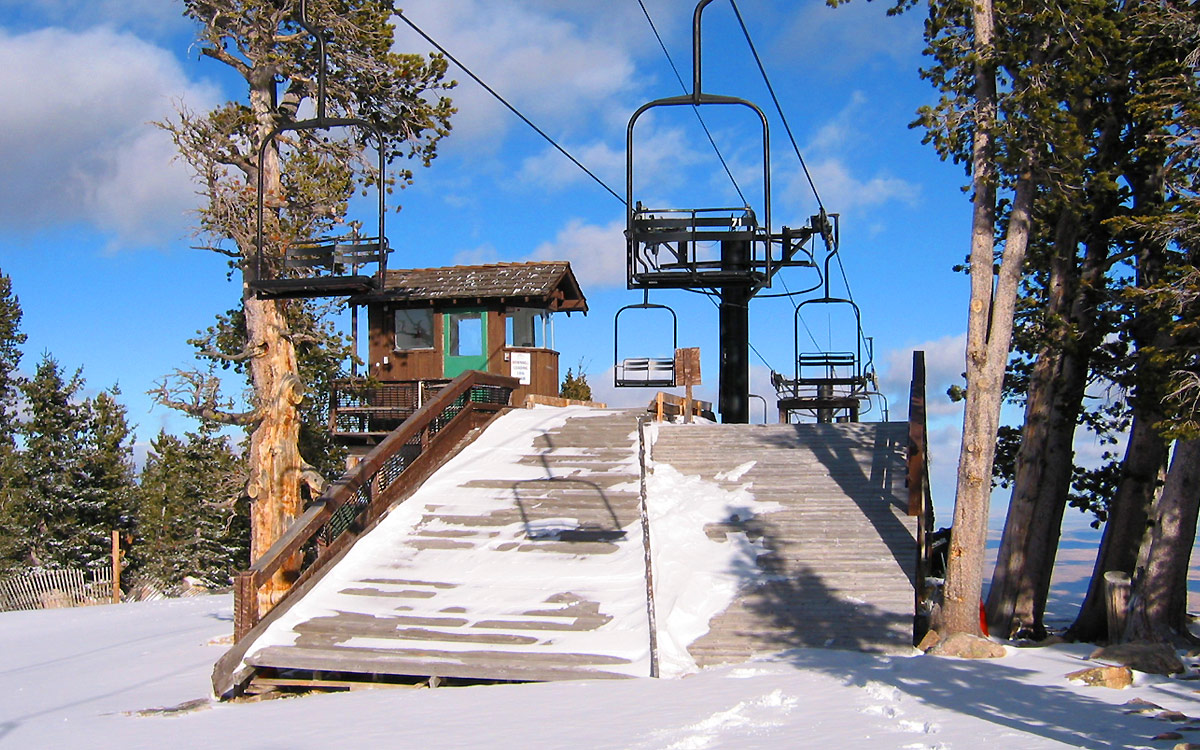
A ramp where lift passengers travel down when disembarking from a chairlift and some surface lifts and designed to propel the passenger away from the unloading zone.
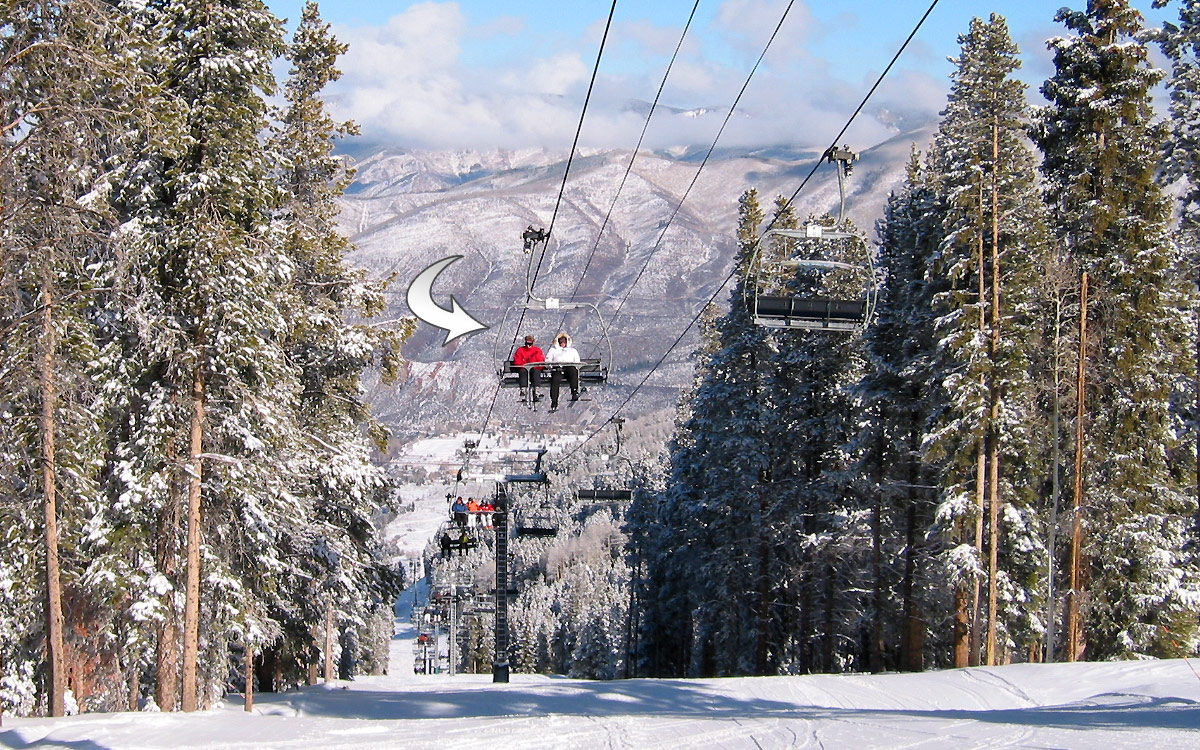
The side of the lift that the haul rope goes up the hill, typically referred to as the 'heavy side' since it's the side passengers ride up.
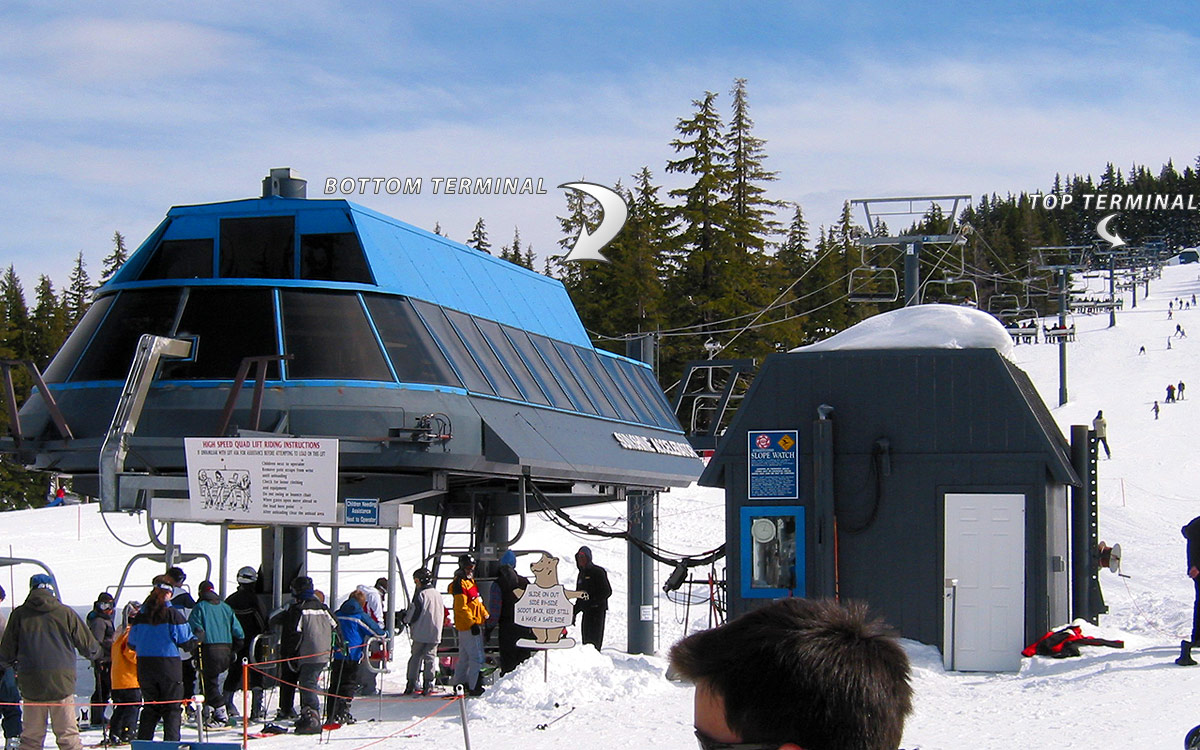
Vertical rise is the change in elevation between terminals.
A technical term used by lift manufacturers and some ski areas to describe a given lift's capacity. Essentially, it refers to the vertical rise in feet multiplied times the lift capacity in passengers per hour and divided by 1000. VTFH influences the horsepower requirement of the drive and therefore, the cost of the lift. For example, a high-speed quad which has a vertical rise of 1,200 feet and an hourly capacity of 2,800 has a VTFH of (1,200 × 2,800)/1000 = 3,360.
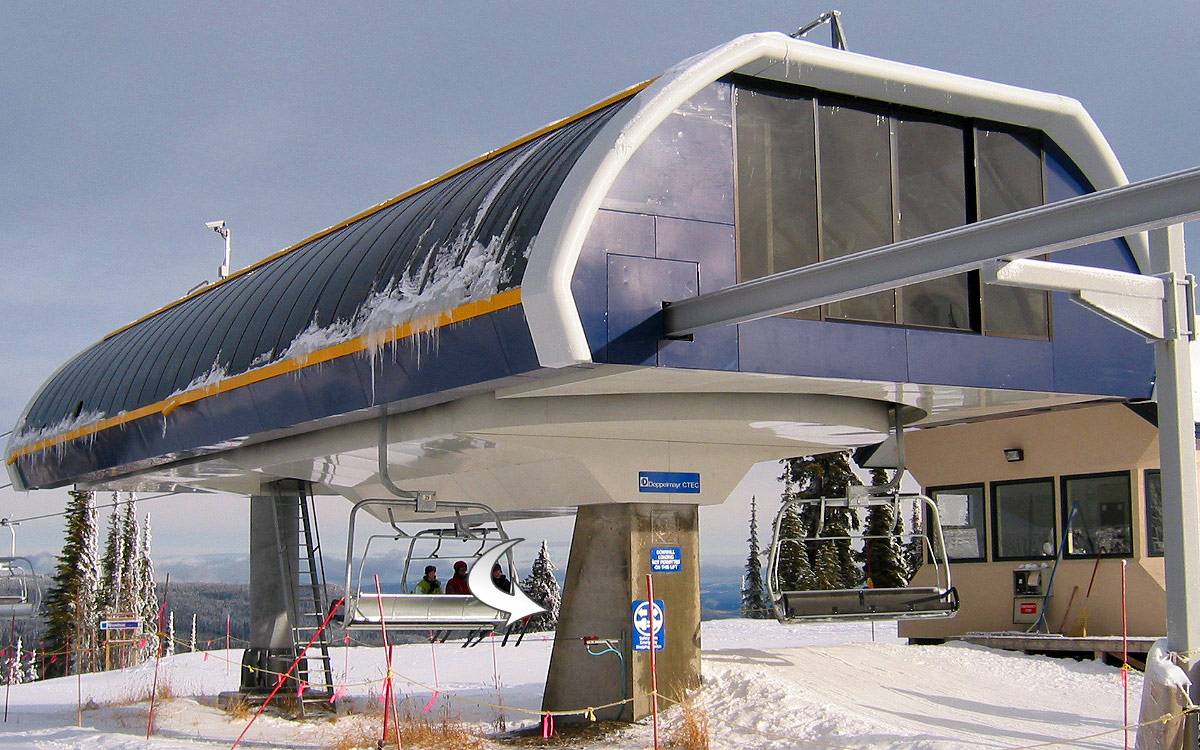
The main support of a lift's terminal.